


The Judicial Appointments Commission (JAC) was established in 2009 to safeguard judicial independence, yet the very body meant to depoliticise the bench is facing criticism over its legitimacy.
At a Malaysian Bar forum yesterday on strengthening judicial independence and the process of appointing judges, experts argued the JAC has overstepped its bounds, and that the executive’s grip on the judiciary remains intact.
Constitutional law expert Shad Saleem Faruqi said the problem is one of duplication, where the JAC has been handed a power that the Federal Constitution already gives the chief justice: advising the prime minister on who should sit on the bench.
According to Section 21 of the JAC Act (Jaca) 2009, the commission makes recommendations about judicial appointments to the prime minister.
However, Article 122B of the Federal Constitution states that, before judges are appointed by the Yang di-Pertuan Agong on the prime minister’s advice, the prime minister must consult the chief justice and other senior judges, with no mention of the JAC.
“Section 21’s constitutionality, in my view, is in doubt, as it has assigned (the commission with) a parallel task to the chief justice of advising the prime minister on appointments.
“So there are now two provisions. One empowers the chief justice to advise the prime minister. The other empowers the JAC to advise the prime minister,” Shad (above) said.
Shad, who served on the JAC from 2020-2022, argued that a body created by ordinary legislation cannot override the Constitution or usurp powers vested in the chief justice.

M Ramachelvam, co-chairperson of the Malaysian Bar’s civil law and law reform committee, echoed this concern, saying the Bar considers the JAC’s current framework to be constitutionally problematic.
However, he proposed amending the Constitution to formally incorporate the JAC’s role.
Ramachelvam, who is also president of human rights NGO Hakam, maintained that the JAC should channel its recommendations through the prime minister, who must then formally advise the Yang di-Pertuan Agong.
He said this preserves the constitutional framework, as Article 40A(1) states that the Agong is bound to act on the prime minister’s advice, which in turn gives the recommendations made by the premier a legal force.
“We are a constitutional democracy and constitutional monarchy. So the role of the prime minister cannot be removed.
“In the sense that we can put limits on how he acts, how he tenders that advice and so on, but that formal act is through the head of government to the head of state. So the formal role of the head of government is not removed,” Ramachelvam added.
Executive interference
Other concerns raised at the forum focused on the prime minister’s continued influence over judicial appointments, as well as the structure of the JAC.
The JAC has nine members. Four sit on the commission by virtue of their positions in the judiciary - the chief justice, Court of Appeal president, chief judge of Malaya, as well as chief judge of Sabah and Sarawak.
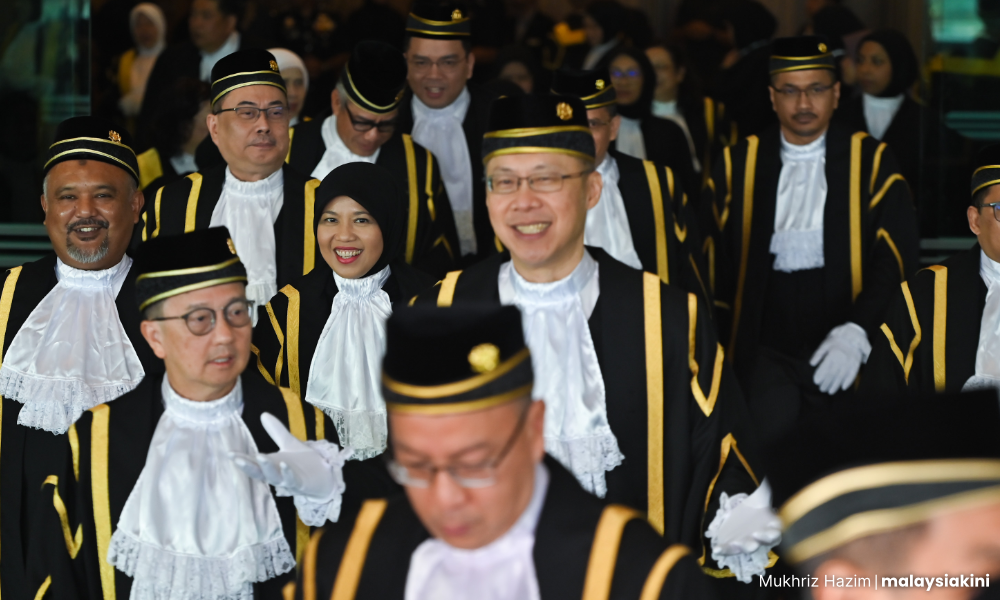
The remaining five are appointed by the prime minister. These include one Federal Court judge and four distinguished individuals who are not part of the executive or public service.
Since the prime minister’s five appointees hold a majority on the nine-member commission, those he selects effectively have the decisive vote in recommending who becomes a judge.
While the JAC conducts a secret ballot when deliberating on candidates - a measure designed to insulate the process from direct government interference - the prime minister’s structural majority means his influence over who sits on the bench remains considerable.
This concentration of power raises concerns about judicial independence, especially since candidates approved by the prime minister’s JAC appointees can hold key positions in the judiciary.
Shad also pointed out that despite reforms introduced under the Jaca, the prime minister still retains wide discretion in the selection process.
He explained that the JAC typically recommends three candidates for High Court positions and two for other superior judge positions. However, the prime minister can request additional names.
“In practice, this means the JAC may end up submitting up to six names, and surely that’s too much,” said the Universiti Malaya constitutional law professor.
Roadmap to reform
In response to these concerns, several reforms to the JAC were proposed to strengthen judicial independence and reduce executive influence.
They include restructuring the commission to include more diverse representation: three members appointed by legal bodies: the Malaysian Bar, the Sabah Law Society, and the Advocates Association of Sarawak, as well as the inclusion of the solicitor-general and a legal academic.

Another proposal is to limit the prime minister’s power in the judicial selection process.
According to Ramachelvam, under this model, the JAC would submit only one name for each vacancy.
The prime minister could reject a nominee once, but only with written, reasonable grounds, while a second nomination by the JAC would be binding.
Currently, the prime minister is vested with the power to reject nominations without providing reasons.
The recommendations aim to make the judiciary more reflective of society by promoting diversity, along with structural changes such as separating judicial and legal services and abolishing probationary terms for judicial commissioners to strengthen their independence.
Last year, former chief justice Tengku Maimun Tuan Mat opined that politicians pose the greatest threat to the Constitution, reaffirming her stance that the prime minister should stay out of judicial appointments.
Addressing a query from the audience at an Allianz Centre for Governance (ACG) event in Kuala Lumpur on Aug 19, she remarked that it is politicians themselves who endanger the sanctity and supremacy of the Constitution.
“The biggest threat would be the politicians. I’m so sorry, I think it would be best for me not to elaborate,” Tengku Maimun said with a nervous laugh, to a round of light chuckles from the crowd.
JAC controversies
The JAC has been embroiled in several controversies in recent times.
Last year, it became the subject of scrutiny after a Federal Court judge was accused of judicial interference during a commission meeting in May.
Queries by Malaysiakini to the judge in June 2025 led to a police investigation after the judge ordered an aide to lodge a police report.
Later in July the same year, purported minutes of the meeting leaked on social media.

This led to a full-blown judicial scandal, with fears that the executive was trying to exert control over the judiciary, with the judge in question allegedly poised to become chief judge of Malaya and then the chief justice.
The scandal died down after then-Court of Appeal judge Wan Ahmad Farid Wan Salleh was elevated as chief justice following Tengku Maimun’s retirement.
However, controversy reignited after Federal Court judge Ahmad Terrirudin Salleh was appointed to the JAC by Prime Minister Anwar Ibrahim.
The move garnered attention as it departed from the longstanding practice of assigning a senior Federal Court judge to the position.
Commenting on the issue later, Wan Ahmad Farid said the appointment was done with the prime minister’s discretion, and does not require consultation from any quarters, including the chief justice himself.
Wan Ahmad Farid also said the decision cannot be challenged. -Mkini

No comments:
Post a Comment
Note: Only a member of this blog may post a comment.