


Negeri Sembilan is facing a political deadlock that could possibly drag on for some time, with both constitutional and procedural barriers preventing any immediate change in government.
The crisis was triggered after BN’s 14 assemblypersons withdrew support for Menteri Besar Aminuddin Harun, raising the prospect of a change in leadership.
However, despite the shifting alliances, the mechanisms to remove the incumbent menteri besar appear effectively jammed.
There are two main ways to replace a sitting menteri besar.
The first is to prove majority support before the Yang di-Pertuan Besar, who has the constitutional authority to appoint a new head of government.
The second is to table and pass a vote of no confidence in the state legislative assembly.
At present, neither option appears viable.
The first option faces complications tied to Negeri Sembilan’s unique system, where the ruler - Tuanku Muhriz Tuanku Munawir - is elected by four undangs (chieftains).
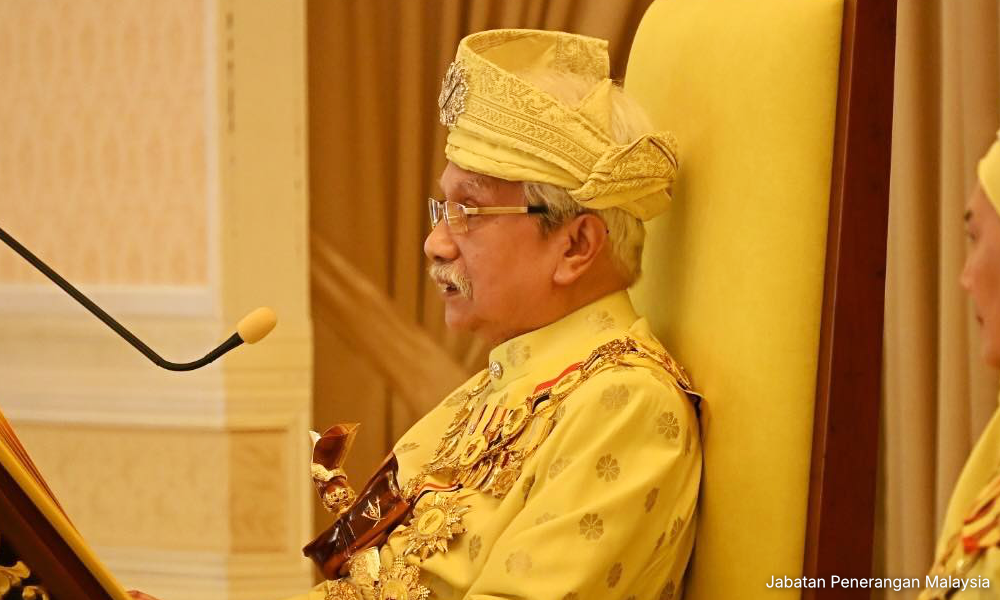
On April 20, the Undang Yang Empat moved in to depose Tuanku Muhriz and replace him with Tunku Nadzaruddin Tuanku Ja’afar as the new ruler.
The undangs claimed the decision was made after an investigation into Tuanku Muhriz found transgressions that besmirched the royal institution, but did not elaborate on the matter.
However, Aminuddin said the proclamation was invalid as one of the undangs, Mubarak Thahak, had been sacked earlier, prompting the undangs to accuse the menteri besar of lying and urged the state legislature to remove him.
Subsequently, Negeri Sembilan BN withdrew its support for Aminuddin yesterday due to the latter's failure to handle the ongoing royal dispute.
State BN chief Jalaluddin Alias said they fully support and defend the customary institutions, the constitution, and laws governing the Negeri Sembilan government.
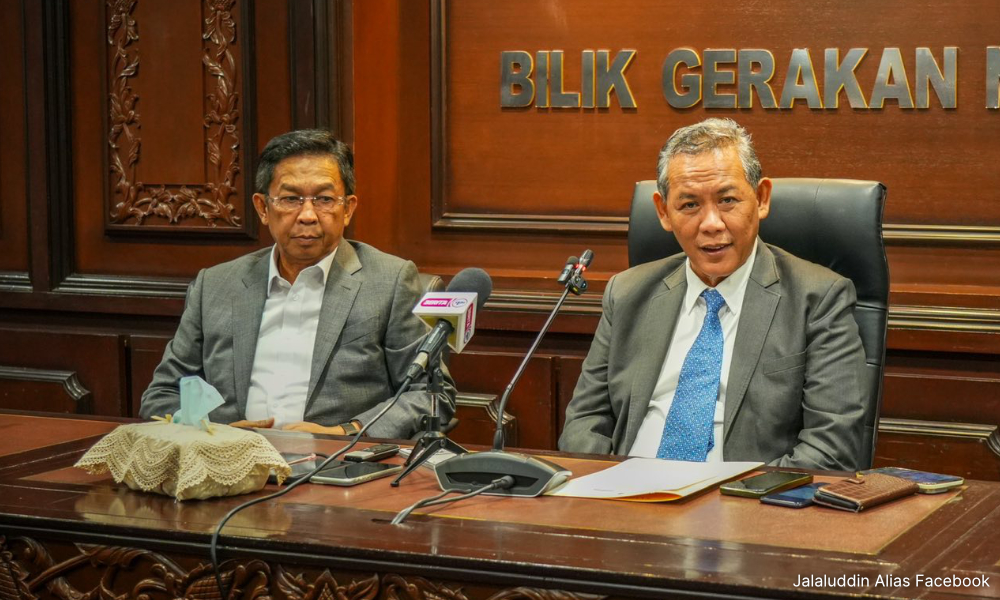
Right now, it seems the fates of Tuanku Muhriz and Aminuddin are politically intertwined. It was Aminuddin's refusal to recognise the undangs' move to remove the ruler that triggered Umno's withdrawal of support.
A ruler who grants an audience to those seeking to replace the very menteri besar who defended him would be acting against his own interests.
The dynamic is further complicated by the state constitution. Under its provisions, even if the undangs determine that grounds exist to remove the ruler, any proclamation to that effect must be issued under the hands of both the undangs and the menteri besar.
In other words, the menteri besar's signature is constitutionally required to formalise the ruler's removal. As long as Aminuddin remains in office, that signature will not be forthcoming - giving Tuanku Muhriz every reason to retain him.
Assembly route halted by adjournment
The legislative route is also effectively blocked.
The Negeri Sembilan assembly sitting was scheduled from April 23 to 29. However, after the assembly's opening ceremony on April 23, it was immediately adjourned to a date yet to be fixed.
Aminuddin said yesterday that the postponement was proposed by Umno, who could have instead tabled a no-confidence motion during the sitting.
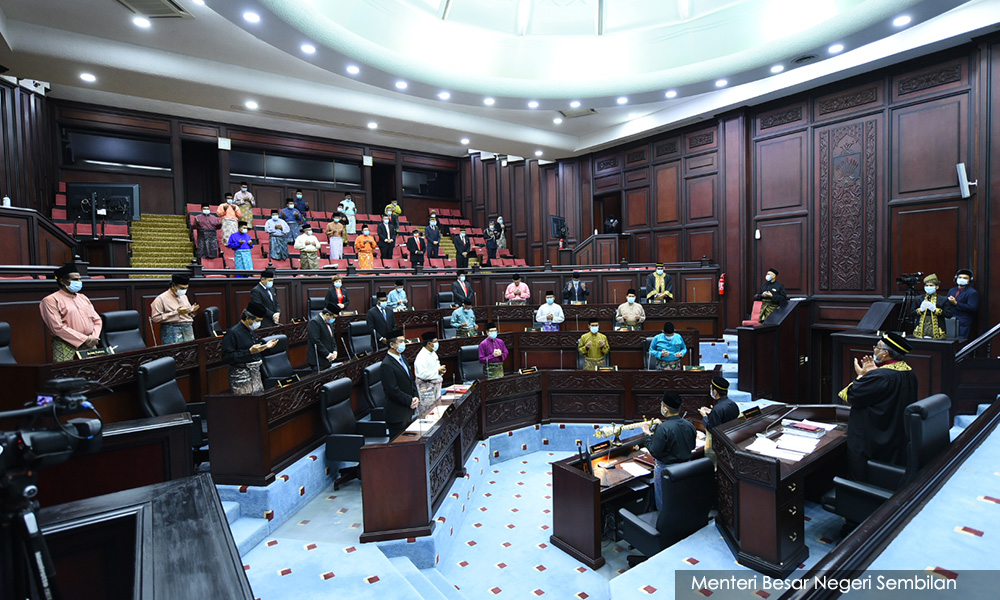
As long as the assembly remains adjourned, any attempt to formally test majority support cannot proceed.
This remains the case even if Umno secures backing from Perikatan Nasional’s five assemblypersons.
Minority govt continues
The impasse allows Aminuddin to continue governing as a minority administration - a characterisation he has publicly acknowledged.
Developments over the past 24 hours also suggest uncertainty within Umno's own strategy.
In a joint statement issued last night, Negeri Sembilan BN assemblypersons initially welcomed support from PN lawmakers, claiming the numbers were sufficient to form a simple majority government.
However, Jalaluddin appears to have shifted position today, calling instead for the dissolution of the state assembly to pave the way for a fresh election.
Six-month window limits options
Under the Negeri Sembilan constitution, the legislative assembly must meet at least once every six months.
This means the adjournment could, in theory, extend until Oct 23 - six months from the April 23 sitting.
The delay buys time for the Aminuddin-led administration but does not resolve the underlying instability.
The next decisive test is expected to come when the state budget is tabled.
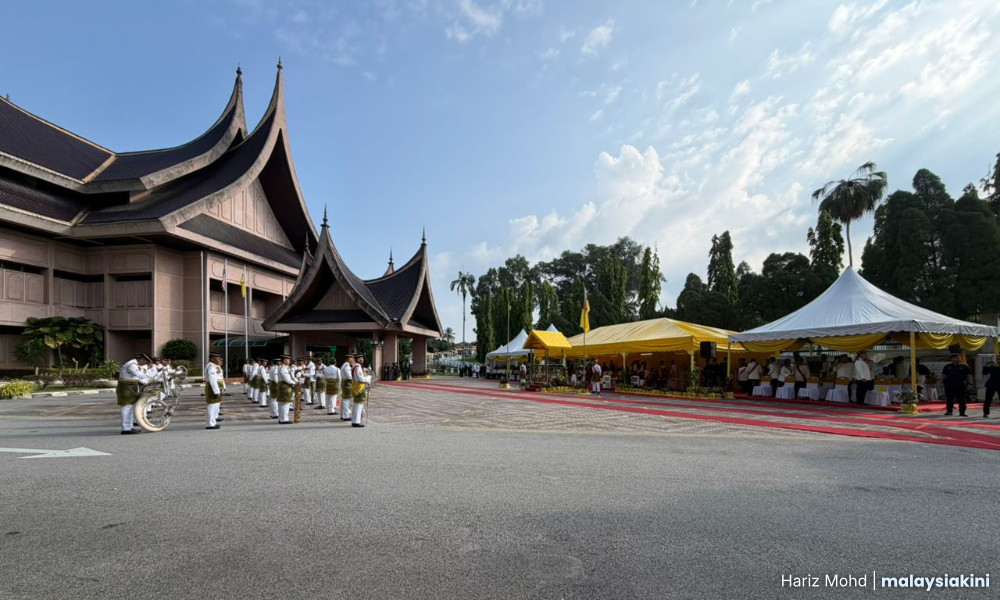
In parliamentary systems, failure to pass a budget is treated as a vote of no confidence.
If Aminuddin’s minority government is unable to pass the state budget, he would be compelled to step down.
This suggests that his administration's tenure may, at most, last until the next assembly sitting.
Federal implications
The standoff also carries implications beyond Negeri Sembilan.
A breakdown in cooperation between Umno and Pakatan Harapan at the state level risks complicating their working relationship in Putrajaya.
Prime Minister Anwar Ibrahim and Umno president Ahmad Zahid Hamidi are expected to meet to discuss a way forward, with attention now on whether the meeting can help resolve the deadlock.
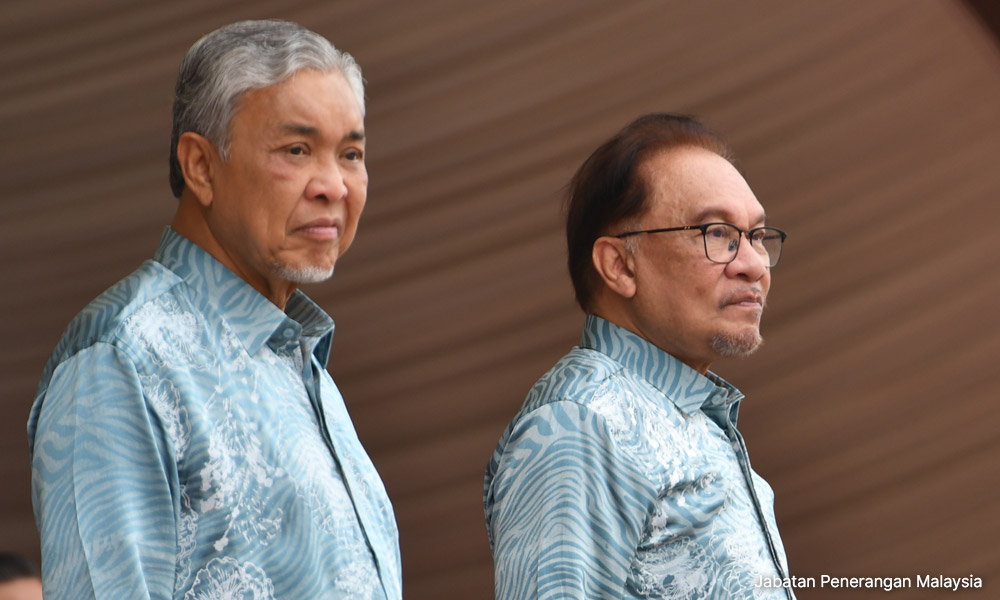
While Zahid has distanced himself publicly from the move, few believe Negeri Sembilan Umno would not have taken such drastic measures without at least a quiet nod from the party's top leadership.
Notably, Umno deputy president Mohamad Hasan is the Rantau assemblyperson, although he did not attend the press conference with Jalaluddin yesterday.
That said, the timeline remains contingent on any further political developments, and any sudden realignment could bring the crisis to an earlier resolution.
Earlier this afternoon, PKR information chief Fahmi Fadzil posted photos on his social media - showing Anwar, Zahid, DAP secretary-general Anthony Loke, and PKR’s Saifuddin Nasution Ismail meeting and engaging in a light conversation.
However, what was discussed during the meeting remains unclear.
- Mkini

No comments:
Post a Comment
Note: Only a member of this blog may post a comment.