


PUTRAJAYA, Jan 21 — Perak-born Haritharan Mugunthan, 24, says he should be recognised as a Malaysian as he was born to a Malaysian father and previously held a Malaysian passport.
“We also filed additional submissions by showing latest developments where footballers were given citizenship,” said lawyer R. Renuga Ramayah during a hearing of her client’s citizenship appeal at the Court of Appeal.
She was referring to the recent news of national football squad Harimau Malaya’s seven heritage football players being granted Malaysian citizenship.
She said Haritharan asked why he was still not a Malaysian citizen when “his father is Malaysian and he never met his mother, does not know whether the mother still exists or not, and has no citizenship of any other country and is still in Malaysia”.
In written submissions or arguments filed in court, Renuga had contrasted the footballers’ case with that of her client, by saying that “football players who are clearly foreign nationals and have no historical ties to Malaysia were granted Malaysian citizenship with greater ease”.
Based on court documents, Haritharan was born in April 2001 in Hospital Besar Ipoh, Perak, with his Malaysian father and Thai mother not being married when he was born.
The mother left him when he was one year and two months old, and both Haritharan and his father have not been able to find her.
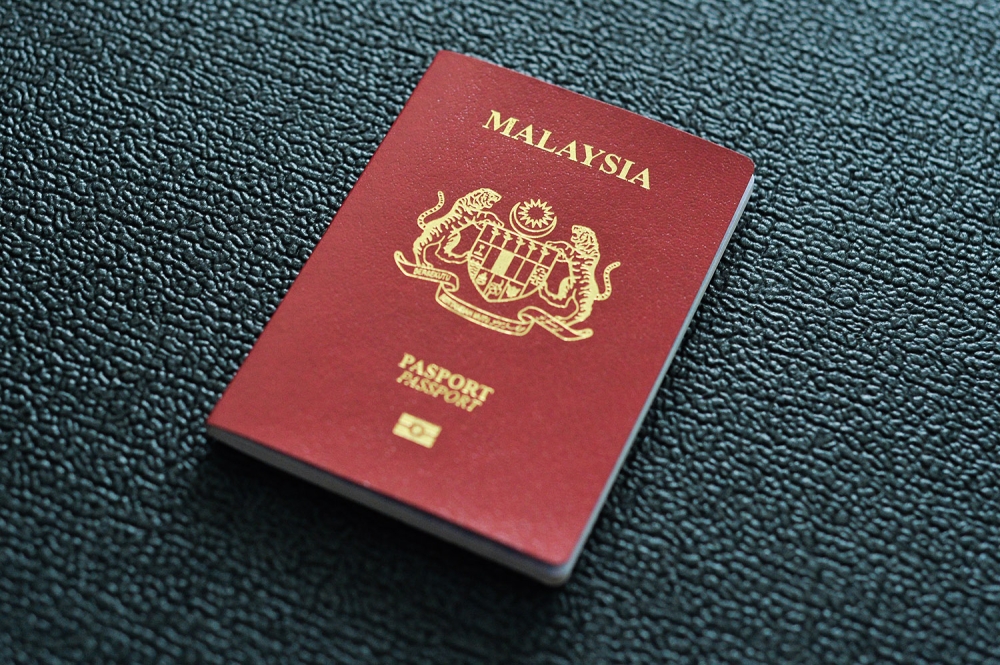
Haritharan was issued a Malaysian passport in June 2002 when he was just more than a year old, but it was discovered in 2009 as a Primary Two student that his birth certificate states that he is not a citizen of Malaysia.
This was discovered after his school requested for the latest version of his birth certificate, which then led to his father applying and getting an extract of the birth certificate from the National Registration Department (NRD). The old version of the birth certificate did not have any space to record Haritharan’s citizenship status.
Since then, Haritharan has completed his education up to secondary school in Malaysia, and has not left the country since he was born.
WIthout a MyKad and without citizenship, Haritharan previously told the courts that he faced problems applying for the federal government’s higher education loan under PTPTN to further his studies.
Haritharan said he also faced problems when he encountered the police, where his Malaysian father had to bring the relevant documents and explain the situation before bringing him home.
“He has a child now but his marriage cannot be registered because of this citizenship problem,” Renuga told the court today.
Since Haritharan’s wife is a Malaysian, his child is a Malaysian too and does not have to be stateless like him.
Before resorting to filing his case in the the High Court in August 2022 to seek Malaysian citizenship, Haritharan had applied for citizenship three times in 2009 (which was rejected in 2011), 2013 (rejected in 2015) and 2017 (rejected in 2022),
Renuga today asked why a case with similar facts had been given Malaysian citizenship while her client has not been given the same treatment, referring to the case of Klang-born Nalvin Dhillon who won his citizenship case at the High Court and who received his MyKad after the government did not appeal.
Like Haritharan, Nalvin too was born to a Malaysian father and non-Malaysian mother who were not married when he was born, and he also had a Malaysian passport before later finding out that the NRD recorded him as a non-Malaysian.
“If Nalvin’s case can receive citizenship and no appeal for that decision, why not yet for the appellant in this case?” she said, referring to Haritharan as the appellant and saying that the law must apply equally to everyone.
Holding up Haritharan’s passport in court, Renuga said he cannot even travel out of the country as he does not have any valid documents, and said the government has not proven that he has citizenship from other countries.
But senior federal counsel Shahidah Nafisah Leman, who represented the government, said Haritharan’s passport had been issued back when the Immigration Department’s system had not been integrated with the NRD’s system.
She also argued that having a Malaysian passport does not prove that Haritharan is a Malaysian citizen, and that having a passport is not a condition under the Federal Constitution for someone to automatically be a Malaysian.
She argued that Haritharan as a child born to a Thai mother would have Thai citizenship, based on Thailand’s laws.
Separately, the Court of Appeal also heard three other citizenship cases, which all also involved children born to Malaysian fathers who were not married to the non-Malaysian mother.
Lawyer Larissa Ann Louis, who represented the four children (J, D, SL and SF) in those three cases, said all her clients should automatically be Malaysian citizens under the Federal Constitution.
Among other things, Larissa said these four children were all born in Malaysia, and all have Malaysian biological fathers who are caring for them as well as DNA tests.
Since their biological fathers’ identity is known, Larissa argued that the children should be allowed to inherit the father’s Malaysian citizenship, even if they were born outside of a marriage.
While the Federal Constitution says Malaysia-born children are automatically Malaysians if they are not born as a citizen of another country, Larissa said children should not be asked to prove this fact as they have limited resources.
She said it should be the Malaysian government instead who should prove that these children had taken up the citizenship of other countries, but said the government has failed to give any conclusive proof that her clients have become citizens of their birth mothers’ countries.
In arguing that all four children are truly stateless, she pointed out that they had all obtained certificates from the Indonesian and the Philippines’ embassies in Malaysia to show they are not registered and not recognised as citizens of those countries.
Senior federal counsel Nurhafizza Azizan however argued that these were not sufficient proof that the children are stateless, saying for example that those documents only showed the child J was not registered as an Indonesian citizen but did not show that she had made an effort to register herself as Indonesian.
The government’s position is that all these children should follow the non-Malaysian mother’s nationality instead of the Malaysian father’s nationality, because they are “illegitimate” or born outside of a marriage.
The government and NRD were represented by SFC Nurhafizza and federal counsel Ng Wei Li in J’s case and D’s case, and by senior federal counsel Syahriah Shapiee in sisters SL and SF’s case.
Lawyer Ranee Sreedharan held a watching brief for non-governmental organisation DHRRA Malaysia in the citizenship cases of J, D, SL and SF.
The Court of Appeal has scheduled January 26 as case management in order to fix a decision date for all these cases today. - malaymail

No comments:
Post a Comment
Note: Only a member of this blog may post a comment.