


IT looks like the relocation of the pig farms in Selangor has run into major difficulties and controversies.
Considering that Selangor has a large rural and urban population and that most of its districts have major residential, industrial and agricultural development, resolving this sensitive problem will tax the mind of the state planners and the state government leaders to the utmost for a a win-win solution.
The state had been slow to address this problem positively during the Nipah virus outbreak, which decimated the pig-rearing industry in Selangor.
A possible solution to ending this problem is to opt for other neighbouring states that have sparse populations and large areas of land such as Pahang and Perak. Selangor farmers should forget about exports and only produce enough for the state’s needs.
Even though present day modernised pig farms can reduce both air and water pollution, the problems concerning the industry needs to be properly addressed if it going to be located close to residential or industrial areas.
Land prices could take a dip and other forms of urban development can be affected. Even other agricultural communities such as the Felda farmers near Bukit Tagar are against relocating the farms near their areas.
The northern areas of Selangor right from Rawang onwards have vast development prospects in the future, as central Selangor is saturated already.
Both the incinerator project and the relocation of the pig farms could affect the future growth potential of the northern districts. The Bukit Tagar landfill is already a disadavantage to nearby developments.
The southern outlying districts of Kuala Langat and Sepang too are witnessing rapid development due to investments and proximity to the airport.
A lot of seaside recreational and tourist projects also dot the southern Selangor coastline. As such riverine and air pollution from livestock rearing close to these areas, which were recently highlighted in the media, need to be averted.
As such possibly the best solution is to relocate the proposed centralised pig farms to Pahang and Perak. Negri Sembilan is another option.
The demand for pork has risen tremendously in Selangor due to additional demand for the meat by foreign workers such as the Vietnamese, Thais and Myanmarees not to mention the millions of Chinese tourists visiting Kuala Lumpur and Selangor.
As such the high prices of pork can profitably sustain the industry even if is imported from nearby states incurring additional costs.
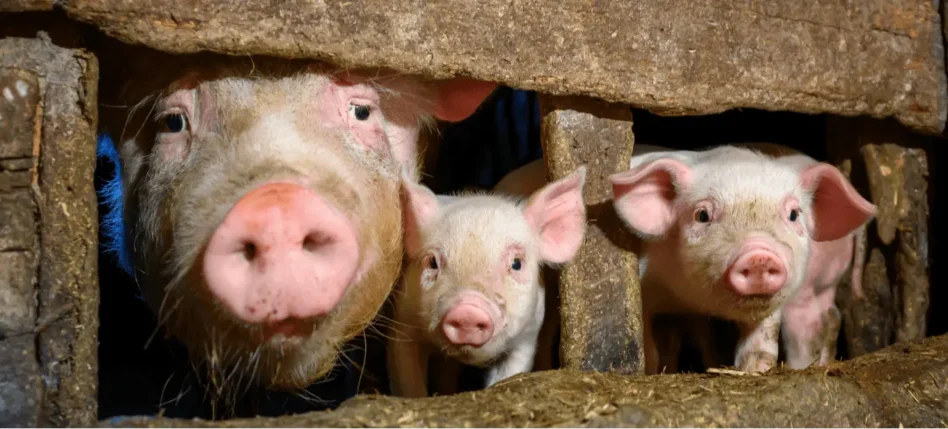
A centralised farming system—where everything from the abattoir to feedmills to veterinary services can be part of the set-up and the livestock farmers—can build up the industry, free from any problems or controversies, to meet Selangor consumers’ demand for pork.
It is good to note that the modern farms have minimal environmental pollution and even boast of zero discharge, a crucial feature which puts to rest the problem of riverine pollution.
It is hoped that all these can be implemented and not just a mere pipe dream.The federal government needs to help the pig-rearing farmers by getting the land as well as building the infrastructure for any centralised pig farming project for Selangor.
Ideally the project should be sited in an agricultural area especially in oil palm or rubber growing regions, which could act as a buffer zone.
The people of Selangor have to accept the reality that with increased urbanisation and development pig farming has become costly and unsustainable, and efforts need to be made to look elsewhere for the industry to carry on. To cite an example, Singapore imports all its pork and other meats for its requirements.
Although the centralised pig farms will be privately owned and operated, governmental supervision is extremely crucial to ensure that the Nipah virus episode is not repeated.
As many are aware the Bukit Pelanduk pig farms in Negri Sembilan near the Selangor border were reputed to be the largest in Southeast Asia but due to the intensive farming methods and over-crowding the farms became unsanitary and disease-prone, leading to the deadly Nipah virus outbreak in 1998.
Also there was minimum government veterinary department supervision on these private farms and this created dangerous and unsafe conditions to the livestock, workers and those living nearby.
Recall that there was a massive culling of the pigs to contain the spread of the outbreak, which killed 105 people. Large-scale livestock rearing leads to numerous problems such as disease outbreaks, pollution, disposal of waste and other issues.
As such it is advisable that the authorities take into consideration various inputs and feedback to avoid major criticisms.
V. Thomas
Sungai Buloh, Selangor
The views expressed are solely of the author and do not necessarily reflect those of MMKtT.
- Focus Malaysia.

No comments:
Post a Comment
Note: Only a member of this blog may post a comment.