


Political leaders warn that austerity measures could dampen economic growth and deepen the strain on essential public services such as healthcare.
Former finance minister Lim Guan Eng, citing media reports that Putrajaya plans to slash RM10 billion from the RM229 billion allocated for operational expenses under Budget 2026, cautioned that the move may undermine the country’s projected gross domestic product (GDP) growth of four to five percent and harm the delivery of critical public services.
In a statement today, the DAP veteran argued that cutting operational expenditure alone would be insufficient to address the RM43.4 billion shortfall, suggesting that the government instead consider emergency loan measures, of which large sums must be tabled in Parliament.
“The financial and economic implications of an austerity-like approach have further exacerbated the cuts in expenditure and shrinking investments from the private sector.
“A slowdown in economic growth will be disastrous not only for workers but also for businesses, especially micro, small, and medium enterprises (MSMEs),” he stressed.

Due to this, he highlighted the need for stronger support measures for businesses, including interest- and collateral-free loans for the first RM50,000 under Bank Negara Malaysia’s (BNM) RM5 billion SME Stabilisation Relief Facility, as well as a one-year moratorium on interest payments for existing loans.
On April 28, BNM introduced the facility, which aims to support micro, small, and medium enterprises amid the ongoing West Asia conflict through financing up to RM750,000 for a maximum of five years at a rate of 3.75 percent per annum.
Yesterday, the Finance Ministry confirmed issuing guidelines telling ministries and government agencies to reprioritise operational expenses in light of the global energy supply crisis and the government’s ballooning subsidy bill.
Free Malaysia Today reported that the Finance Ministry directive proposed that RM10 billion could be saved by reducing operating expenses.
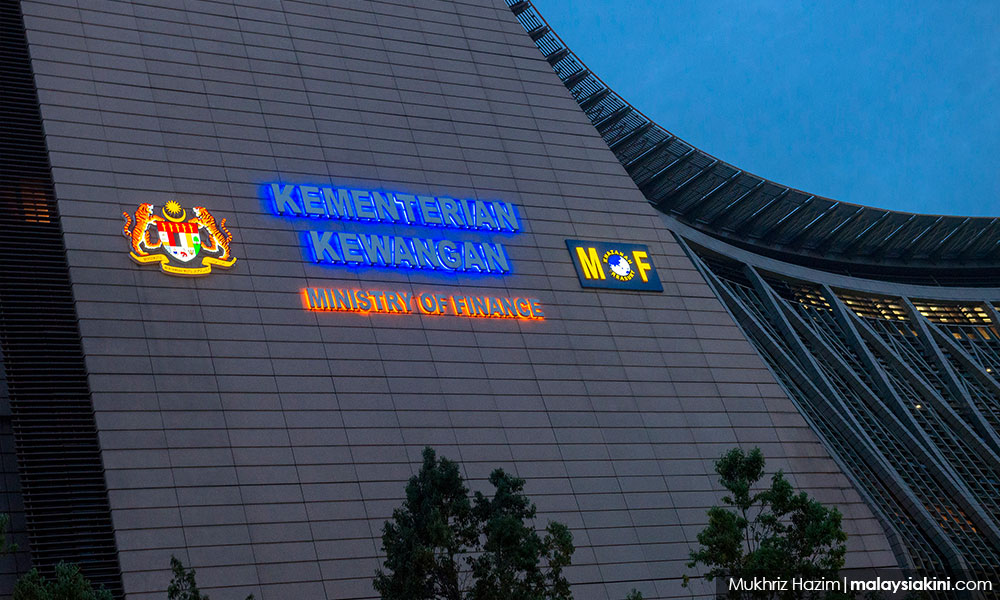
Of these, RM3.06 billion could come from the Health Ministry’s RM46.5 billion budget, while RM2.39 billion could come from the Higher Education Ministry’s RM18.6 billion budget.
Worsening healthcare manpower crisis
In a separate statement, Warisan health bureau chief Dr Istefan Koh highlighted the risks of cutting healthcare spending amid mounting systemic pressures, pointing to a severe shortage of doctors in Sabah as evidence of a widening gap between policy and reality.
Citing recent data, Koh said Sabah faces a shortfall of 4,526 doctors, with a doctor-to-population ratio of about 1:775, which lies significantly below the national target of 1:400.
He warned that reducing Health Ministry funding under such conditions could further strain an already overburdened system, further deepening gaps in access to healthcare services.

“Reductions in operational spending are not merely administrative adjustments on paper; they carry direct consequences for the ability of hospitals and clinics to function effectively.
“The implications of such measures extend beyond the immediate term and risk creating deeper, long-term challenges,” he said.
Koh added that insufficient investment could hinder efforts to recruit and retain healthcare workers, potentially accelerating the migration of doctors to the private sector or overseas, while increasing burnout among existing staff.
He also questioned how the government plans to address Sabah’s longstanding healthcare disparities if funding is reduced, warning that such measures risk being seen as disconnected from on-the-ground realities. - Mkini

No comments:
Post a Comment
Note: Only a member of this blog may post a comment.