


JPJ runs a meticulous system for registering new vehicles, but a shockingly lousy one for deleting old ones.
From Yap Yok Foo
A few years ago, a startling headline swept across Malaysian newspapers: “More motor vehicles than people.” According to figures from the relevant government sources, there were over 38 million registered vehicles against a population of just 34 million – a ratio of more than 1,100 vehicles per 1,000 people.
I couldn’t believe it. By per capita income, Malaysia does not rank among the world’s highest. Our motor vehicle taxes are among the steepest on the planet, cheaper only than Singapore’s. How could we possibly have more vehicles than citizens? The answer, I soon discovered, reveals a quiet administrative scandal: the road transport department (JPJ) runs a meticulous system for registering new vehicles, but a shockingly lousy one for deleting old ones.

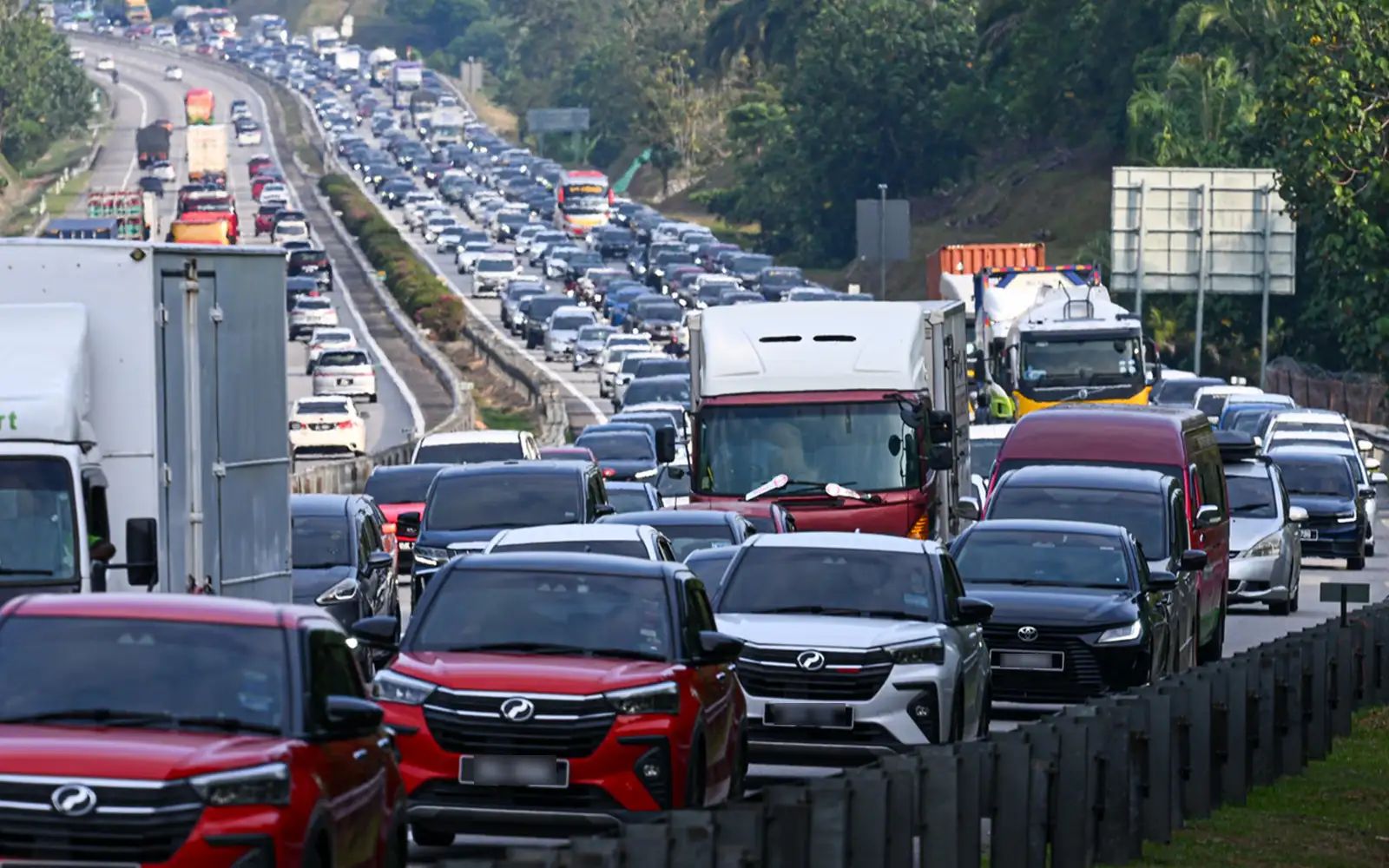
Anyone sitting in a bumper-to-bumper crawl on the Federal Highway knows something doesn’t add up. How can a country with highly restrictive automotive taxes and a middle-income per-capita ranking outnumber nations with deeply entrenched car cultures like the US or Germany?
The answer does not lie in a sudden explosion of unbridled wealth or multi-car garage ownership. It lies in a systemic, bureaucratic anomaly.
Tracking the ‘ghost fleet’: active vs dead registers
The root cause of Malaysia’s bloated motorisation rate is the way data is catalogued. JPJ, formerly known as the Registrar and Inspector of Motor Vehicles, apparently has a register for birth, but none for death.
Unlike developed nations that clean their registries annually, Malaysia includes virtually every vehicle ever registered that has not been explicitly reported as scrapped. In essence, millions of “zombie vehicles” – rusted chassis sitting in remote kampungs, decades-old motorcycles abandoned in back alleys and vehicles long cannibalised for parts in scrapyards – remain permanently active in JPJ books.
This oversight warps international comparisons. When evaluating the metric of motor vehicles per 1,000 inhabitants, Malaysia appears neck-and-neck with the most motorised nations on earth.
High taxes, high penalties and no incentives
Malaysia’s tax structure deepens the mystery. The country imposes some of the world’s highest excise duties on imported vehicles, second only to Singapore within the region. While this protects local manufacturers like Proton and Perodua, it makes automotive acquisition a serious financial commitment.
Logically, high costs should suppress a vehicle population. The fact that the register says otherwise exposes the lack of an exit pathway for old metal.
The problem is simple. There is no penalty for failing to report a scrapped vehicle – in fact, there is a significant disincentive. To deregister a dead car, an owner must tow it to a Puspakom inspection centre (recently liberalised, but still a costly hassle) to verify chassis and engine numbers.
A person with a rusting hulk in their backyard is not going to pay for a tow truck. Instead, they abandon it on public roads or sell it to a scrapyard for cannibalisation. The result? The vehicle remains “alive” in JPJ’s database forever.
The danger of designing roads for ‘ghosts’
This is not a harmless quirk of government paperwork; it is a critical issue for public finance and infrastructure layout.
Road planners, urban engineers and transport ministries rely heavily on per-capita vehicle statistics to forecast highway expansions, design mass rapid transit systems and allocate federal budgets. When data inputs are artificially inflated by millions of non-existent vehicles, the models fail. Overestimating active vehicular volumes can result in misallocated funds, poorly optimised public routes and inaccurate environmental emissions forecasting.
Furthermore, a constipated registry locks up a massive public asset: desirable registration numbers. Thousands of highly-sought-after, standard and vintage licence plates (e.g., JAW 1, B 88, B 888) are tied to vehicles that have been crushed into metallic cubes or buried under dirt for twenty years, or, for that matter, recycled into reinforced steel and are now holding up part of the Petronas Twin Towers.
A policy roadmap: purging the registry
To transform Malaysia’s transport data from a work of fiction into a reliable planning asset, the transport ministry must implement structured, pragmatic systemic updates.
1. The five-year automated ‘dead car’ purge
The most immediate fix is a rolling bureaucratic sunset clause. Any vehicle that has failed to renew its road tax (annual licence) for five consecutive years should be automatically classified as inactive or dead, and purged from active transport planning databases.
For true automobile collectors, vintage enthusiasts or restorers keeping an antique car off the pavement, a “resurrection pathway” can be created. Re-registering a purged vehicle would simply require a strict inspection and a specialised restoration fee, ensuring that genuine assets aren’t permanently erased while cleansing the background noise of millions of scrap cars.
2. Liberalising inspection and scrapping incentives
The recent steps toward liberalising the vehicle inspection market by breaking old monopolies must be extended to include authorised treatment facilities for end-of-life vehicles. If local certified scrapyards are given the legal digital authority to deregister a vehicle instantly via a smartphone app upon receipt, the friction vanishes. Owners could even be offered minor tax rebates on their next vehicle purchase if they turn in an old clunker to a certified facility.
3. Unlocking federal revenue via plate auctions
Automated deregistration would instantly free up an immense archive of alpha-numeric combinations. The government could systematically reclaim these dormant, high-value license plates and re-release them through the JPJ e-Bid system. This clean-up process turns a data maintenance chore into a multi-million ringgit revenue generator for the national treasury.
Malaysia is not the car-obsessed anomaly that headlines suggest. We are simply a country that forgot to bury its dead. JPJ’s register is a graveyard of zombies – millions of motorcycles and cars that exist only on paper. By introducing an automatic deregistration after five years of unpaid road tax, charging a modest resurrection fee, and auctioning freed number plates, we can clean the registry, raise millions in number plate auctions and finally give planners the reliable numbers they deserve.
It is time to stop counting ghosts and start counting real vehicles. Our roads – and our Treasury – will thank us. - FMT
Yap Yok Foo is an FMT reader.
The views expressed are those of the writer and do not necessarily reflect those of MMKtT.

No comments:
Post a Comment
Note: Only a member of this blog may post a comment.