


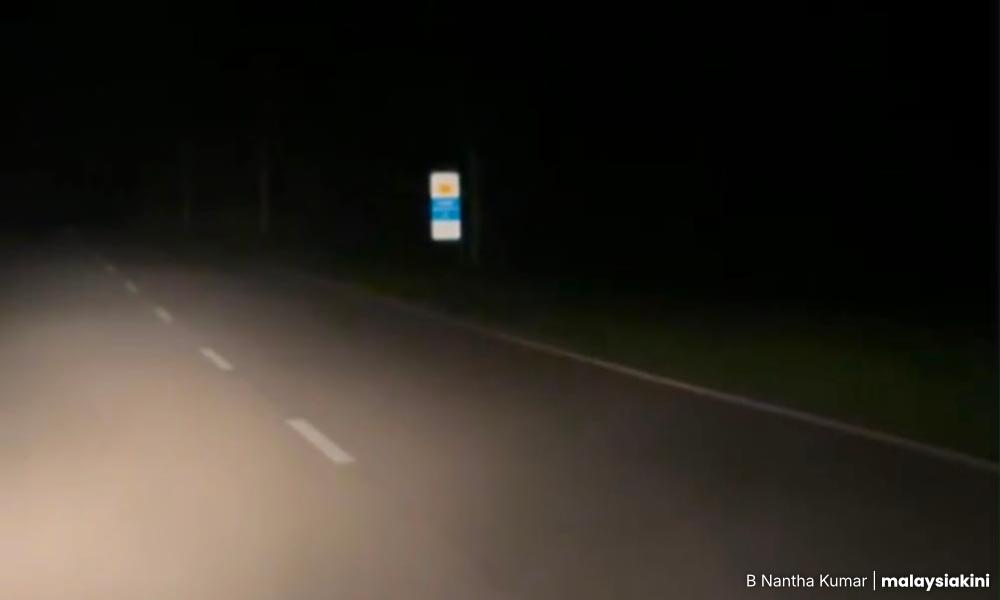
JOHOR POLLS | That night was pitch dark - a familiar scene along the 50km stretch linking Yong Peng to Paloh.
Every winding bend has to be negotiated without a single street lamp. When high beams cut through the darkness, motorists often encounter snakes and carcasses of monitor lizards crushed by passing vehicles.
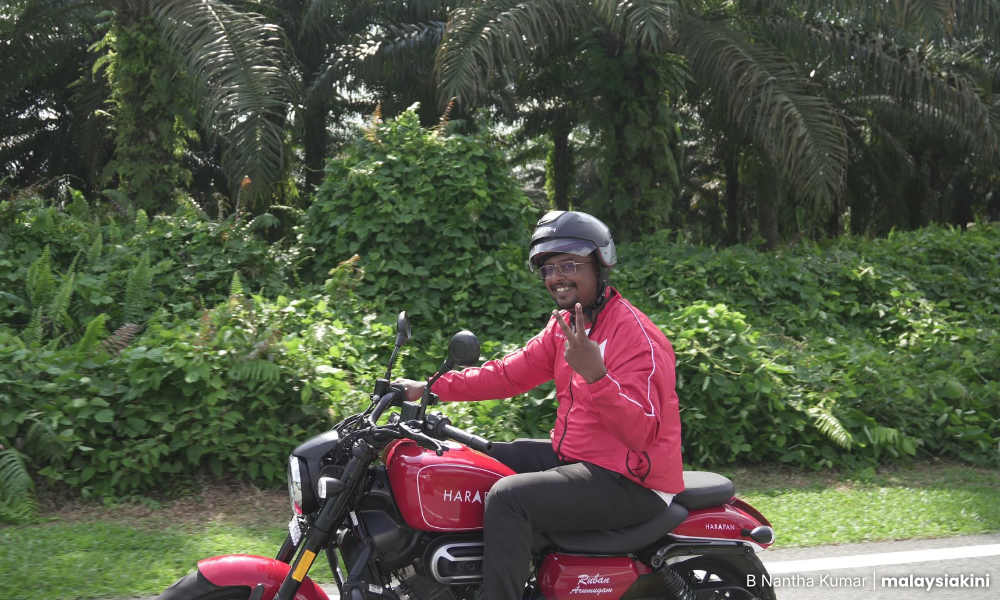
According to Dr Ruben Arumungum, the Pakatan Harapan-DAP candidate for the Paloh state seat, the road has become a deadly stretch that has claimed many lives.
“Just last month, three fatal accidents were reported, including a heartbreaking tragedy that claimed the lives of three children of a teacher, while a government employee is now in a coma,” he said.
Upon hearing the complaint, incumbent Paloh assemblyperson and BN candidate Lee Ting Han immediately expressed his condolences.
He acknowledged that dangerous black spots along the route remained a pressing concern.
“The Public Works Department (PWD) had previously attempted to install reflective road markings at several locations, but their effectiveness is limited,” Lee conceded.
For him, road safety is a shared responsibility that transcends political differences because human lives are at stake.
“A more suitable approach would be the installation of solar street lights and improvements to road safety infrastructure at high-risk locations based on safety audits.
“I will continue urging Johor PWD to accelerate implementation in phases,” he told Malaysiakini.
Upon entering Paloh town, however, the darkness gives way to a different kind of gloom.
Lonely reality
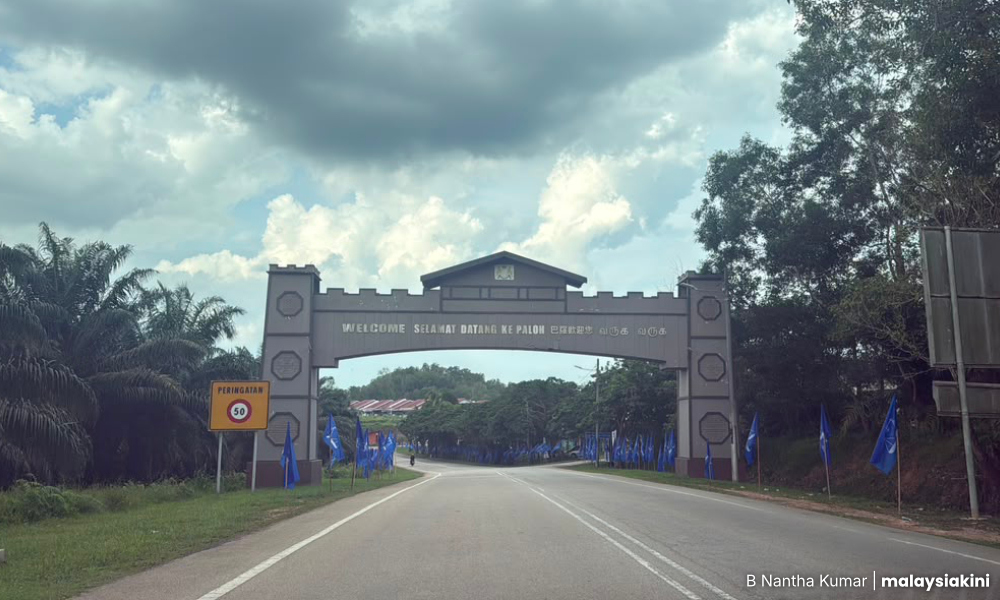
Located in Sembrong, the parliamentary stronghold of former Umno vice-president Hishammuddin Hussein, Paloh is lined with rows of ageing shophouses dating back to 1956, alongside residential neighbourhoods.
On the surface, it appears to have the necessities of a town: restaurants, supermarkets, a health clinic, public fields, schools and houses of worship representing various faiths.
But beneath that ordinary facade lies a deeper problem. This is a town slowly losing its lifeblood. Its young people are leaving.
At a restaurant, Malaysiakini met a 65-year-old resident who was initially hesitant to speak but eventually shared his lonely reality.
The retiree, who requested anonymity, said his wife died two years ago, while his three children had moved away from Paloh.
“Now I live at a Hindu temple. The house is too quiet... I am alone. At the temple, at least I can meet other people and spend time with them,” he said.
Perikatan Nasional candidate Jeevakumar Dayalan described the issue of “abandoned parents” as a “silent cancer” affecting Paloh.
He said the lack of factories and industrial opportunities had forced young residents to move to Kuala Lumpur, Johor Bahru and even Singapore, leaving behind an ageing population.
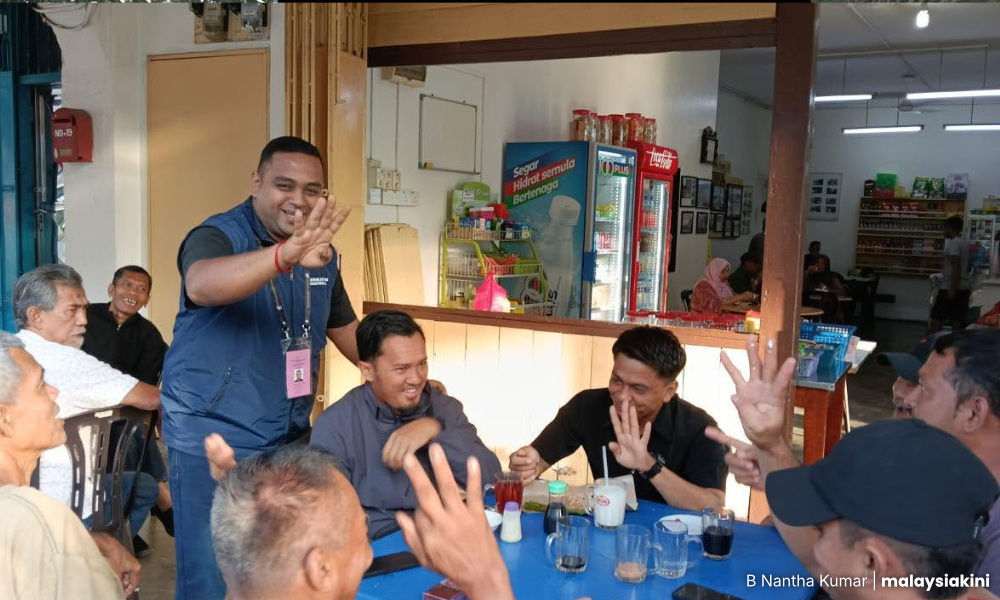
“I also know the uncle who stays alone at the temple. From morning, he goes there, eats there and chats with the monks because there is no one left at home for him to talk to.
“No one wants to leave their hometown if there are opportunities here.
“As a local who grew up in a rubber tapper and lorry driver family, I see the gap in facilities between Paloh and the nearest town like Kluang as a form of discrimination,” he said.
Jeevakumar believes the long-term answer lies in creating micro-entrepreneurship programmes to help local youths earn a living without abandoning their elderly parents.
Looking after the elderly
Ruben, meanwhile, views the plight of isolated senior citizens through the lens of welfare and emergency care.
Recognising that bringing migrant children home will take time, he has launched community initiatives aimed at providing a safety net for elderly residents.
“We set up an emergency hotline project to register these elderly residents. If something bad happens at home, our team will be the first to respond,” he said.
Ruben is also pushing for the local health clinic to be upgraded and ambulance services to remain available after midnight.
“When emergencies happen late at night, these elderly people often have no family members to take them to the hospital,” he added.
Creating jobs
For Lee, addressing migration requires a comprehensive development strategy rather than short-term solutions.
He believes “moving from zero to one” remains the hardest step for rural areas like Paloh.
“Many young people migrate because of better job opportunities in big cities or Singapore. That is a reality we need to change,” he said.
The MCA politician, whose previous state executive council portfolio included investment, said his focus over the past four years had been building the foundations needed to attract investors.

“Now, we will realise a high-value modern textile project in the Kluang-Paloh corridor, which is expected to create more than 500 new job opportunities.
“This project has already been brought in during this term. We hope the groundbreaking ceremony can take place by the end of this year.
“At the same time, the Rumah Malaysia Sembrong project will help young people own their own homes, while the opening of the Paloh-Bekok road will create a new growth corridor,” he said.
Lee acknowledged that real development meant giving young people a reason to stay and build their futures in their hometown.
But beyond jobs and street lights, one issue continues to flow through residents’ complaints - water.
Crumbling facilities
At a children’s playground, an elderly man known only as “Uncle Tan” sighed deeply while pointing towards a water tap.
“During festive seasons like Chinese New Year, the yellow water issue becomes many times worse,” he said.
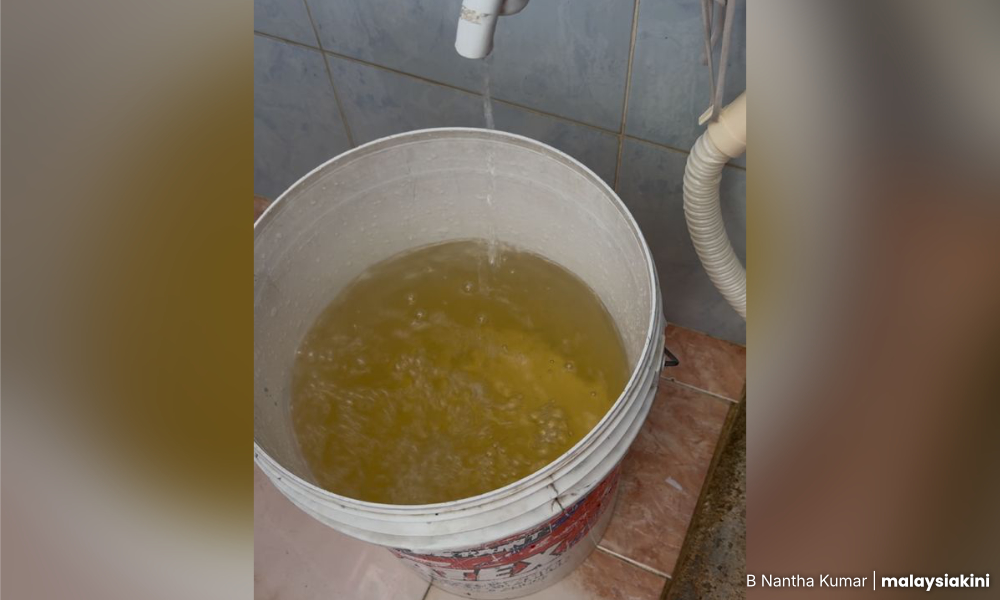
Jeevakumar agreed, adding that Paloh’s problems extend beyond discoloured tap water.
He pointed to inadequate banking facilities and an ageing fire and rescue station as further sources of frustration.
Residents from Paloh and nearby estates often have to travel to Kluang even for routine matters such as handling official documents and banking needs.
Responding to complaints over water quality, Lee said his side did not want to make empty promises or offer temporary fixes.
“Based on RSAJ Kluang’s (Ranhill SAJ manages and operates 47 water treatment plants) statement throughout 2026, only four complaints regarding water quality issues in Paloh were received.
“The Water Quality Department reviewed all complaints. The water quality complied with the required specifications,” he said.
Lee added that he would continue pushing Ranhill SAJ, Pengurusan Aset Air Berhad and the National Water Services Commission (Span) to prioritise rural areas like Paloh under pipe replacement programmes.
‘Most hantu town in central Johor’
However, Malaysiakini’s checks at three separate locations found visibly yellowish tap water.
Tan, who was born in Paloh, believes many residents have fallen ill because of poor water quality.
“If possible, solve the water and street lighting issues first,” he said.
Another elderly Chinese man sitting nearby suddenly interrupted. “You are from KL?” he asked.
When told “yes”, he gave a sarcastic smile.
“In KL, you have many buildings and lights. If you take 10 percent of those lights and install them here, the roads here would already be okay.
“What is the point of asking me about these issues? You should ask the minister! You call Paloh a cowboy town, but I am the one living here. This is the most ‘hantu’ (ghost) town in central Johor,” he said.
When asked for his name, he laughed.
“If you publish my name, I won’t receive government assistance anymore!” he said.
Votes in oldtimers’ hands
Perhaps Paloh’s biggest irony is the arrival of the Electric Train Service (ETS).
On paper, travelling from Paloh to Kluang by ETS takes just 10 minutes, compared with 45 minutes by car.
Yet because of work schedules, costs and accessibility issues, many workers still rely on motorcycles - travelling along dark roads at night.
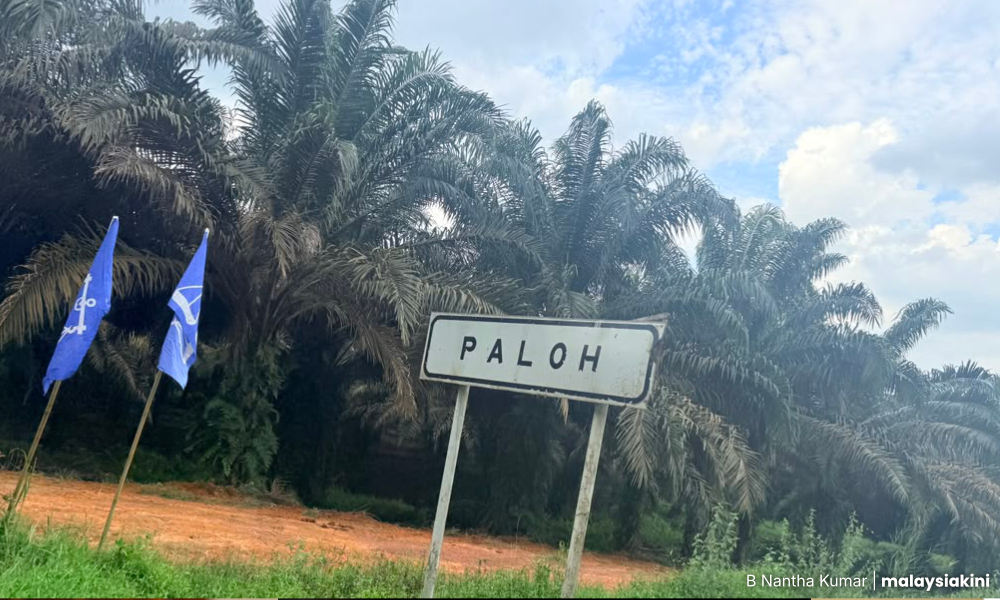
In this state election, Paloh has 25,831 registered voters, with a relatively balanced ethnic composition: Malays make up 47 percent, Chinese 37 percent and Indians 15 percent.
In the 14th general election in 2018, Harapan candidate Sheikh Umar Bagharib Ali won the seat with a majority of 783 votes.
But in the 2022 Johor state election, held amid the Covid-19 restrictions period, Lee reclaimed the seat with his majority expanding to 3,176 votes.
Now, as the Johor state election campaign heats up, Paloh has once again become a battlefield of competing narratives.
For a town where the lights remain off, the water remains murky, and many homes have grown silent, the remaining elderly residents hold the most powerful answer of all - their votes. - Mkini

No comments:
Post a Comment
Note: Only a member of this blog may post a comment.