


For Johoreans, the new industrial zone may mean better roads, increase in rental income and higher wages, but it also has to lead to a better life for them, says expert.
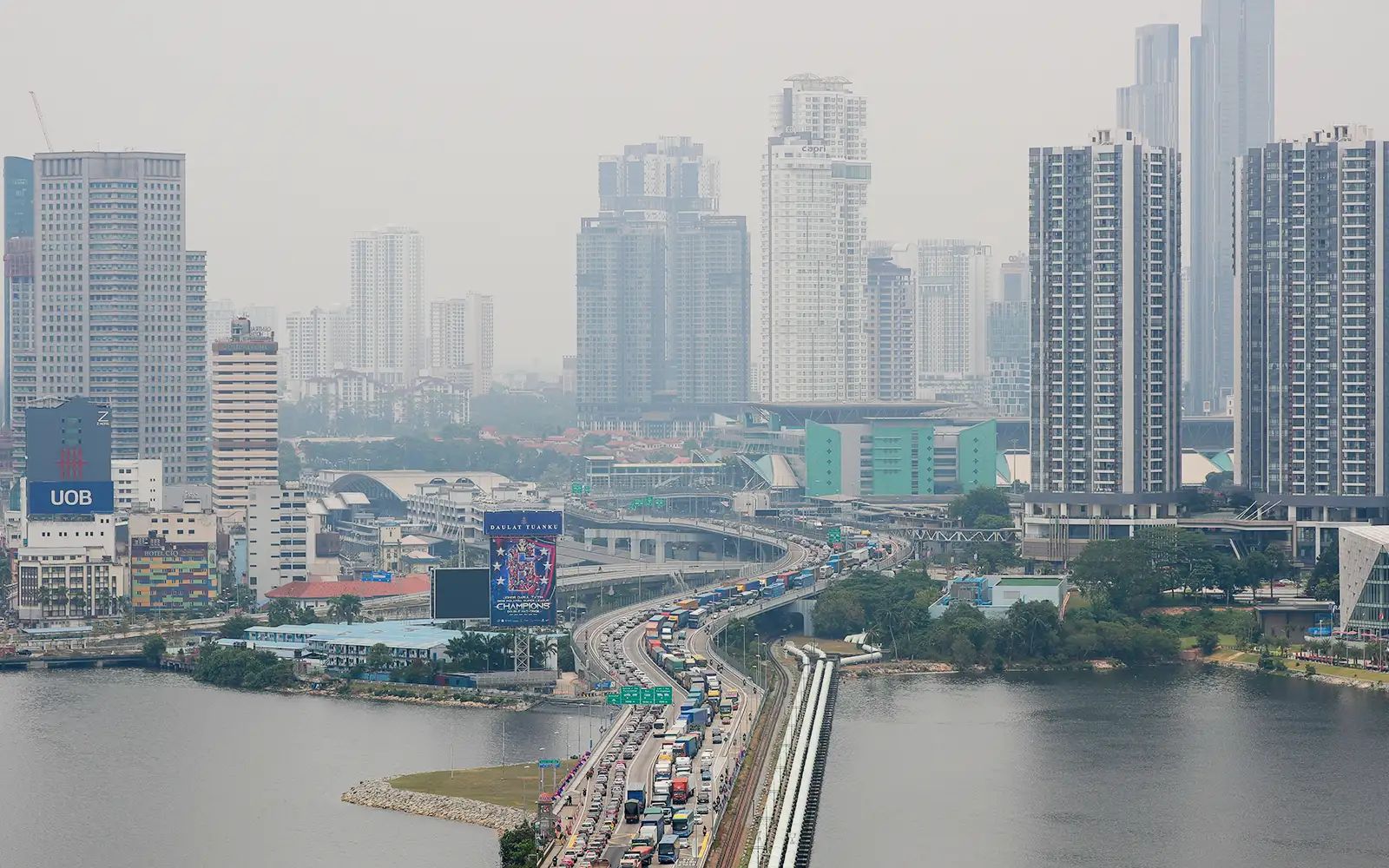
But for ordinary Johoreans, the real test of the JS-SEZ will be whether those investments translate into better wages, jobs they can qualify for, manageable commutes and rents that do not price them out.
What jobs could come first?
Malaysia and Singapore are targeting 20,000 skilled jobs within the first five years of the JS-SEZ launch, with early demand expected in manufacturing, logistics, data centres, business services, energy, tourism and professional services.
Yusof Saari, chief economist at the think tank Centre for Future Studies, said the first wave of job openings would likely be in sectors that can “scale up quickly” using Johor’s industrial base, ports, logistics networks and proximity to Singapore.
However, he pointed out that new jobs created to serve those industries will not be confined to high-skill ones such as engineering.
Larger and more immediate are opportunities for mid-skill jobs that require lower qualifications such as certificates, diplomas, technical training and industry exposure, he said.
“This means local workers can benefit if skills training, reskilling and employer-led training are aligned early with the needs of investors,” he added.
“For Johoreans, it is quite simple — while skills matter, wages matter more,” Yusof said.
“An agenda to arm workers with the right skills will only be meaningful if it improves purchasing power, enables upward mobility, and ensures that the worker can afford a decent standard of living,” he added.
The domino effect
The Johor chapter of the Federation of Malaysian Manufacturing (FMM) said the rapid expansion of the data centre sector is further accelerating Johor’s emergence as a regional artificial intelligence (AI) and digital infrastructure hub.
“This is driving strong demand for talent that is highly specialised in data centre facility management, critical engineering systems, and AI-enabled cooling and energy optimisation technologies,” it said in response to a query from FMT.
“It is also generating broader opportunities in support infrastructure, digital operations, and advanced technical services across the wider data ecosystem,” it added.
The FMM also noted that growth in logistics, renewable energy and technology-led industries is expected to create higher-quality, better-paying jobs and, in the process, moves Johor away from reliance on low-skill labour.
Linking the components
Transport expert Wan Agyl Wan Hassan said transport is not merely a supporting component of the JS-SEZ, but one of its fundamental enablers.
The Mara Liner CEO said the real competitive advantage of the JS-SEZ would not be measured only by factories or industrial parks, but by how effectively people are connected to jobs, businesses to markets and talent to opportunities.
Wan Agyl said congestion is often viewed as a road-capacity problem when the real issue is the lack of attractive alternatives to driving.
“When public transport is reliable, affordable, predictable and seamlessly connected with first- and last-mile options, people naturally diversify their travel choices,” he said.
That is why infrastructure delivery will matter as much as investment approvals, especially if new job clusters emerge faster than roads, buses, utilities and last-mile links can keep up, he added.
Under Budget 2026 the government has allocated RM3.4 billion for JS-SEZ infrastructure, including roads, water supply, electricity, broadband and flood mitigation.
That is where the RTS Link comes in, as one of the clearest examples of how transport infrastructure is being used to support the JS-SEZ.
The Malaysia-Singapore cross-border rail service is scheduled to begin operations on Jan 1, 2027. The 4km shuttle service will connect Bukit Chagar in Johor Bahru with Woodlands North in Singapore, with capacity of up to 10,000 passengers per hour in each direction.
Once operational, it is expected to strengthen cross-border connectivity by giving commuters a faster rail alternative to the Causeway and could handle 30% to 40% of cross-border movements.
To complement the system, the federal government is also putting forward the elevated autonomous rapid transit (e-ART) system as a solution to the last-mile connectivity challenge, while reducing congestion in Johor Bahru city centre.
Transport minister Loke Siew Fook has reiterated Putrajaya’s commitment to expediting the e-ART project, including by bearing part of its construction cost.
FMT reported on July 6 that transport experts viewed e-ART as crucial to ensuring RTS passengers arriving at Bukit Chagar can be dispersed efficiently to other parts of Johor Bahru.
Property pressure
Property expert Consilz Tan said higher investment and job growth would increase demand for homes, shoplots and industrial properties near business and industrial clusters, pushing up prices.
She said existing owners, developers, higher-income professionals and cross-border workers may benefit from rising demand, while younger workers, first-time buyers and local small businesses could come under pressure.
She added that by focusing on data centres, digital economy, and business services, the JS-SEZ zone in Kulai could see more global hyperscale operators relocating there.
“In 2025, Kulai recorded a 2.1% to 6.3% increase in price for one and a half storey semi-detached factories, thanks to the growing demand for industrial plots suitable for warehouses and data centres,” she said.
What it means for SMEs
FMM Johor said SMEs in precision engineering, automation, packaging, logistics, maintenance services, industrial software and professional services could benefit by positioning themselves within the supply chains of multinational corporations entering Johor.
However, it warned that without support, high-value work could be captured by multinationals and external vendors, while local firms remain in lower-value segments of the supply chain.
Yusof said the biggest risk is that the JS-SEZ becomes “a high-growth investment zone, but with weak spillover to the wider Johor economy”.
“The real success of JS-SEZ is not only whether it attracts big firms, but whether those firms help upgrade local businesses, local workers and the wider Johor economy,” he added. - FMT

No comments:
Post a Comment
Note: Only a member of this blog may post a comment.