


I RECENTLY came across a tongue-in-cheek post claiming that people born in the 1970s and 1980s have somehow managed to get the worst deal at every stage of life.
When we were children, if we misbehaved or failed to pay attention in class, the teacher scolded us and, in those days, might even have reached for the cane. Some parents would tell teachers, “Please be strict with my child.”
Then we grew up and became parents ourselves.
Now, when our children misbehave or perform poorly at school, it is often the parents who are summoned and asked why we have not done a better job of disciplining them.
At moments like these, one cannot help doing the mental arithmetic: more than 30 years have passed, so why am I still the one getting into trouble?
There is plenty of exaggeration in the joke, of course. But ours is certainly a generation that has lived through extraordinary change.
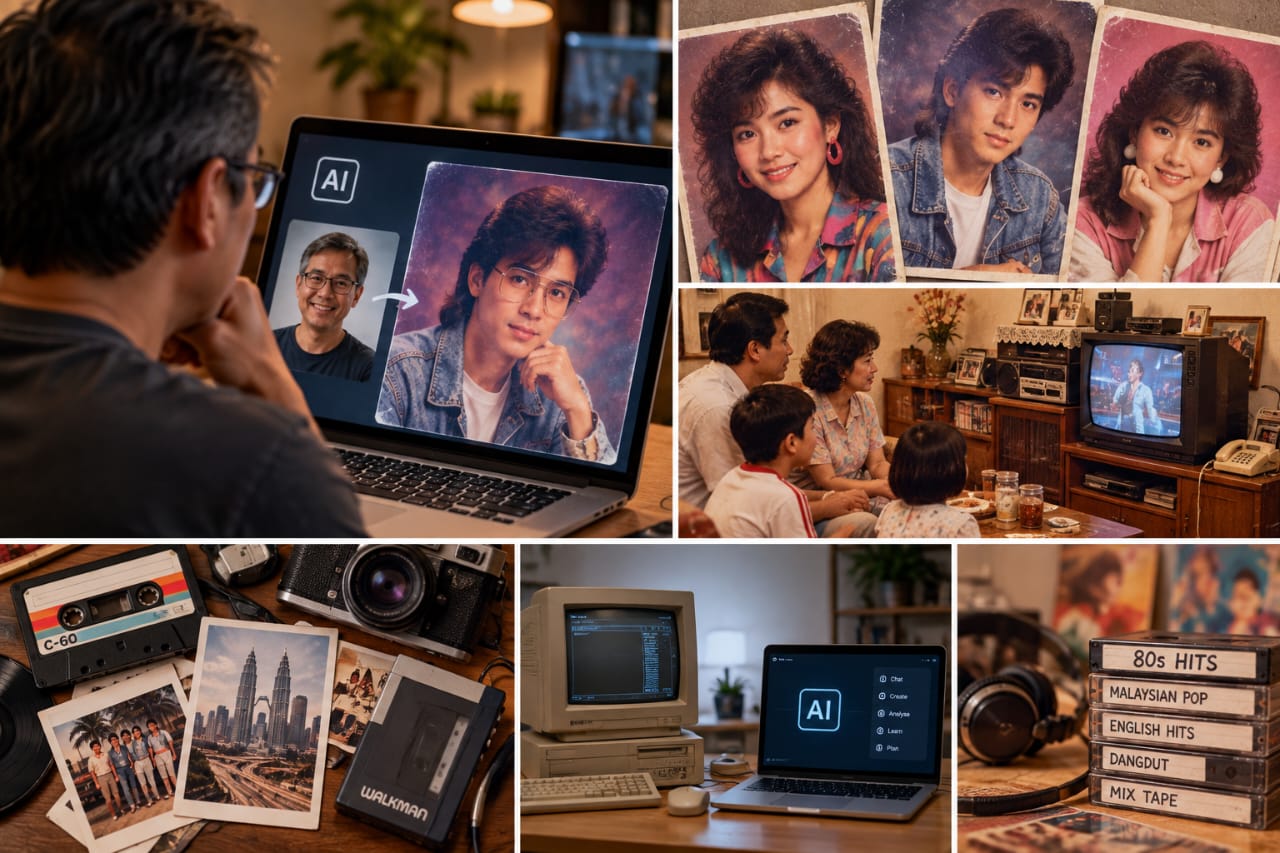
Perhaps that also explains why so many middle-aged people seem to be enjoying a recent AI trend that recreates us in the style of the 1980s.
But more on that later.
We grew up without smartphones, social media or artificial intelligence. We came of age around the turn of the millennium, when Vision 2020 still represented Malaysia’s idea of the future.
Computers were the future, and information technology was one of the most sought-after fields of study. Getting into computing or engineering felt like choosing wisely.
Fast-forward two decades, and the future has changed again.

Artificial intelligence has arrived at astonishing speed. Skills that once seemed cutting-edge can quickly feel dated, and this anxiety extends far beyond the technology sector.
Many middle-aged workers who have spent decades building their careers are discovering that experience alone does not guarantee confidence about what comes next.
In our youth, learning about computers was supposed to prepare us for the future. Now, in middle age, many of us are learning about AI simply to keep up.
Some online advertisements even turn this anxiety into a joke: a middle-aged employee stares helplessly at a computer screen while younger colleagues whisper behind him, “How can he not know how to do that?”
Then there is family.
Many of us have become part of what is often called the “sandwich generation”, worrying about our children on one side and ageing parents on the other.
Some older parents struggle with the pace of digital change. They prefer a familiar world of television, radio and paper documents.
Tell them that printed utility bills or bank statements will no longer be issued, and the response may be an indignant: “How can you do this to old people?”
I witnessed this exchange myself.
The employee delivering the news, quite possibly middle-aged too, can only reply helplessly: “I’m just here to inform you. There’s nothing I can do about it.”
Other elderly parents have adapted rather too enthusiastically.
They watch videos online, forward clips to friends and spend hours scrolling through their phones. Some become fascinated by AI-generated dramas; others discover health products and supplements promoted online.
Their middle-aged children acquire a whole new set of worries: Will they fall victim to a scam? Are they taking something they should not be taking? Are they spending too much time staring at a screen?
And then there is the middle-aged person in the mirror.
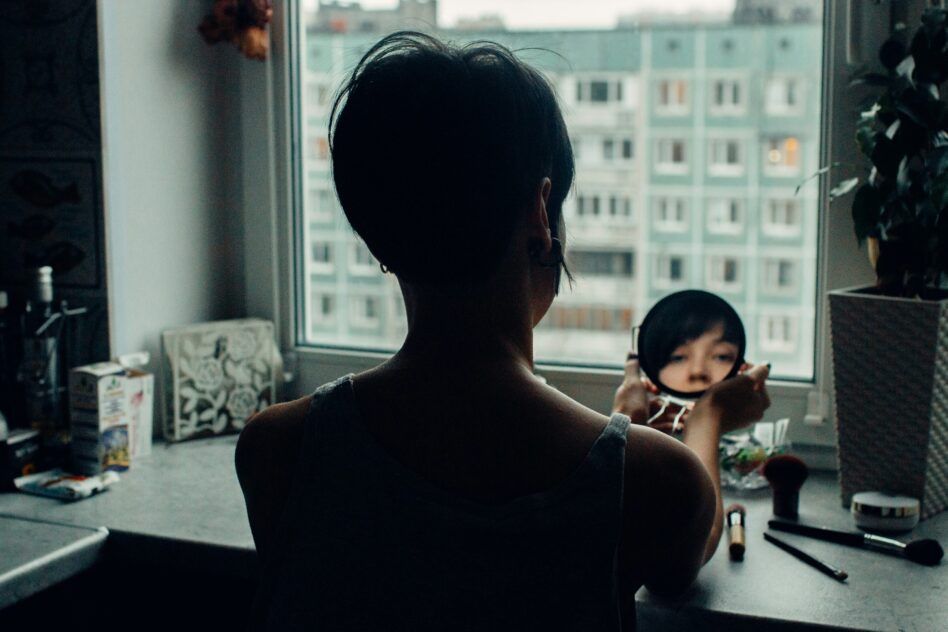
One familiar sight is someone with one pair of glasses perched on their head and another sitting on their nose. It is not a fashion statement. One pair is needed for reading up close; the other for seeing farther away.
Forget both, and the world becomes wonderfully equal: everything is blurry.
A few flights of stairs can suddenly feel more demanding. The knees begin issuing occasional reminders that they, too, have been around for several decades. Body fat, meanwhile, seems to arrive with very little effort and an impressive determination to stay.
By the time some of us reach the swimming pool, it may appear that we have brought our own flotation rings.
Perhaps that is why, amid all the practical and occasionally absurd realities of middle age, we become increasingly susceptible to anything that reminds us of youth.
Recently, AI-generated 1980s portraits have been circulating widely on social media. People upload photographs of themselves and ask AI to recreate them with voluminous hair, retro clothes, studio lighting and the unmistakable aesthetic of another era.
From what I have observed, many of those enthusiastically generating and sharing these images are middle-aged.
Young people may look at the hairstyles and clothes and wonder what makes their parents, uncles and aunties so fascinated by the trend. But perhaps the attraction has very little to do with fashion.
For many of us, the 1980s aesthetic evokes an earlier, seemingly less complicated time: cassette tapes, printed photographs, scheduled television programmes and days when nobody expected us to be permanently reachable.
Those born in the late 1980s may barely remember the decade itself, but that is not really the point.
The person in the AI-generated image may not look exactly like who we once were, yet something about it feels strangely familiar. What these images bring back is not necessarily a specific decade, but the feeling of being young.
Perhaps what we miss is not really the 1980s at all. We miss the people we were then, and perhaps the people our parents were too.
Back then, our parents were young and strong. Family meals meant more time talking across the table, before smartphones gradually found their way into our hands and, too often, into the spaces between us.
The future still seemed far away and full of promise. How impatient we were. All we wanted was to grow up a little faster.
The author, Dr Gan Yee Chin is a senior lecturer from the Faculty of Languages and Linguistics, Universiti Malaya.
The views expressed are solely of the author and do not necessarily reflect those of MMKtT
- Focus Malaysia.


/file/attachments/orphans/MohdAzamAbdSamat2_621182.png)