


Lawyer Latheefa Koya has urged the Indian community and other minorities in Malaysia to stop being defensive whenever confronted with racial issues and disputes involving places of worship.
Speaking at a forum at the Kuala Lumpur and Selangor Chinese Assembly Hall yesterday, the co-founder of Lawyers for Liberty stressed that issues affecting non-Muslim places of worship are no longer merely about legal validity or land status, but instead reflect deepening racism.
“We should stop being defensive. I am telling this to the Indian community. We should stop being defensive and trying to insist on proving our patriotism.
“That is not the issue. The issue is that there is serious racism happening, and increasingly, it is being normalised.
“Society seems to have grown accustomed to discrimination to the point that it is seen as something unchangeable,” she said as a panellist at the “Conflict Over Places of Worship: Challenges and Solutions” forum, organised by an Indian youth grassroots movement in Kuala Lumpur.
An excessive focus on technical legal arguments, she said, will only destroy the community because legal arguments can always be manipulated to justify the authorities’ actions.
“If I use a legal argument, someone else will use another legal argument to justify it.
“We are experiencing the tyranny of the majority,” she pointed out.
Other panellists included PSM deputy chairperson S Arutchelvan and PSM lawyer K Kunasekaran.
Latheefa, a former MACC chief commissioner, said Malaysians must channel their efforts into combating racism strategically and effectively.
The issue of “illegal” temples returned to the spotlight last year following the controversial relocation of the century-old Dewi Sri Pathrakaliamman Temple in Jalan Masjid India, Kuala Lumpur, to make way for the construction of a mosque.
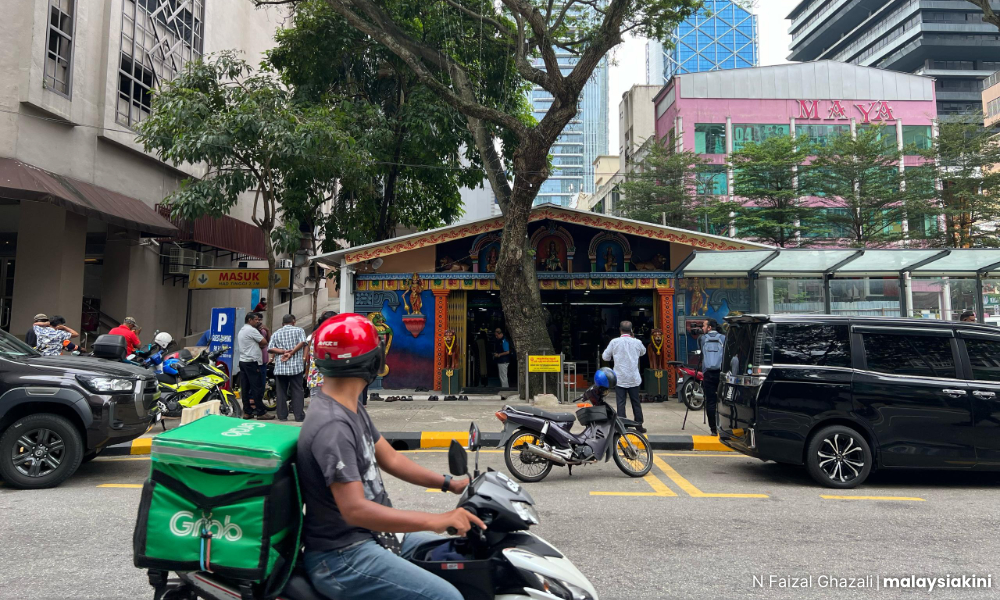
The development sparked public debate that divided opinion, particularly over the legal status of Hindu temples, with some focusing on technical aspects of ownership and legalities.
At the same time, Latheefa criticised certain individuals within the Indian community, describing them as “self-hating Indians”, who she said worsen the situation for influence on social media.
‘Fight back intellectually’
Latheefa compared the situation in Malaysia with India, which she said presents a different context but stems from the same root problem - the oppression of groups lacking significant political power.
“Political leaders often lose moral leadership because they see certain communities’ votes as small and lacking strategic value.
“We have lost moral and political leadership because there is no value (in the votes). So what do we do? We must continue to fight.
“Fight and push until they begin to question their own moral credibility. Do not bow your head. Focus on the issue of racism and fight back intellectually,” she urged.
For the record, India’s ruling party, Bharatiya Janata Party (BJP), has faced criticism from scholars, rights groups and some international observers over policies alleged to disproportionately affect the Muslim community in South Asia.
For example, the Citizenship Amendment Act, passed under the BJP administration, has been criticised for excluding Muslims from a fast-tracked path to citizenship and is viewed by critics as discriminatory against Muslim minorities.
Meanwhile, the Babri Mosque controversy in India, where the mosque was demolished in 1992 by radical Hindu groups before a court later ruled that the site be handed over for temple construction, is often seen as a symbol of religious tension and majority dominance over the Muslim minority.
The Babri Mosque is believed to have been built around 1528 during the reign of Babur, founder of the Mughal Empire in India. - Mkini

No comments:
Post a Comment
Note: Only a member of this blog may post a comment.