`


THERE IS NO GOD EXCEPT ALLAH
read:
MALAYSIA Tanah Tumpah Darahku

LOVE MALAYSIA!!!


16 SEPTEMBER 2026

Sunday, April 30, 2017

Act 164 amendment has nothing to do with liberal Islam


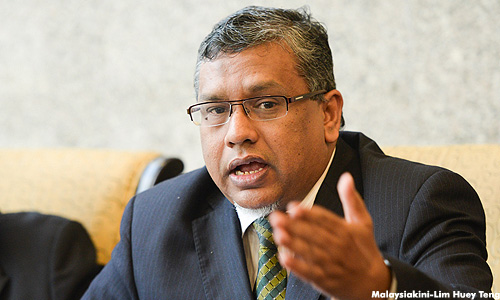
MP SPEAKS | One of the great Muslim ‘saints’ in Morocco, namely Sidi Ahmad Zarruq, was deported to Libya for defending the rights of non-Muslims. He later died, not in his home country of Morocco, but he passed away and was buried in Libya. That was the price the Muslim ‘saint’ had to pay for championing the rights of non-Muslim in a Muslim majority country.
Historically speaking, it was nothing unusual for the Muslims to fight against injustice to the non-Muslims even if such an injustice had been perpetrated by the Muslims themselves. Islam categorically teaches the Muslims that justice is the bedrock of their religion.
In the Muslims’ prime source of reference, ie the Quran, it is replete with explicit commandments to dispense justice. In verse 4: 105 of the Quran, the same was revealed to the Prophet Muhammad (peace be upon him) in order to guide him to do justice to a Jew. The verse enjoined the Prophet (PBUH) not to defend the Muslims when they were in error.
The verse is concerned with a false allegation made by some Muslims against the Jew. A Muslim by the name of Tu’mah Ibnu Ubayriq committed an offence of larceny but his own people, due to nationalism and tribalism, attempted to defend him by making a false accusation against the Jew. The Prophet almost imposed a punishment against the Jew simply because the stolen property was found on the Jew’s premises. Nevertheless, the verse was revealed to rectify the mistake.
What was the lesson from the said story? Simple. Fairness and justice dictate the Muslims to be steadfast in establishing justice irrespective to whom it is directed. In fact, in another verse (5: 8) the Quran expressly states that justice ought to be done even to Muslim’s enemy.
Be that as it may, I am really puzzled when some PAS leaders reportedly labelled any Muslim who has demanded that the government amend Act 164 as a liberal Muslim. In Muslims’ vocabulary, liberal Islam connotes a very negative imputation. Many Muslims unfortunately seem to agree that liberal Muslims must be wiped out as suggested by PAS.
I concede that, in Parliament, I was one of the Muslim MPs who asked the government to amend the Act 164. When MP M Kulasegaran (DAP) stood up in Parliament lamenting the delay in amending the said Act, he was duly supported by MP Ram Karpal Singh.
I was the only Muslim MP who also stood up and agreed with YB Kulasegaran. I told the Parliament that Act 164 badly needed necessary amendments. As Muslims, it is not right for us to ignore the problems of Act 164 particularly the problem of legal custody and unilateral child conversion. I added that the Muslim should not sweep the problems under the carpet. I must say that many Amanah leaders especially its MPs also share my sentiments.
Attempting to find workable solutions
I am not sure whether the PAS leaders who voiced out on this issue really understood the problems faced by Muslims and non-Muslims alike with some provisions in the Act. if they really understood, it would be utterly weird for them to simply ignore the problems. If they did not understand, how on earth would they simply pass any judgment against any Muslim who understood the problem and attempted to find workable solutions.
One of the problematic section in Act 164 is section 51 involves the issue of jurisdiction of the court when one of the spouses, contracted the marriage under the Act 164, converted to Islam. Normally, this Muslim husband or wife would simply go to the Shariah court either to dissolve the marriage or determine the custody of a child, if any.

On many occasions,the Shariah court would normally decided in favour of the Muslim simply because the hearing was heard ex parte ie the non-Muslim party was not duly heard. Thus it caused a lot of problems so much so many non-Muslims felt that they were unfairly and unjustly treated.
Thus, in my view, a workable and fair solution needs to be found out. That is why the idea of amending the Act has been mooted out. It has nothing to do with liberal Islam.

MOHAMED HANIPA MAIDIN is the MP for Sepang.-Mkini

T'erengganu PAS to field candidates in all seats


MUKTAMAR | Terengganu PAS will field candidates in every seat during the next general election, leaving no room for PKR.
PKR had fielded one candidate for Parliament and six for state legislative assembly in Terengganu during the last general election.
At the time, the only PKR candidate that won was Azan Ismail, who now represents Bandar in the state legislative assembly.
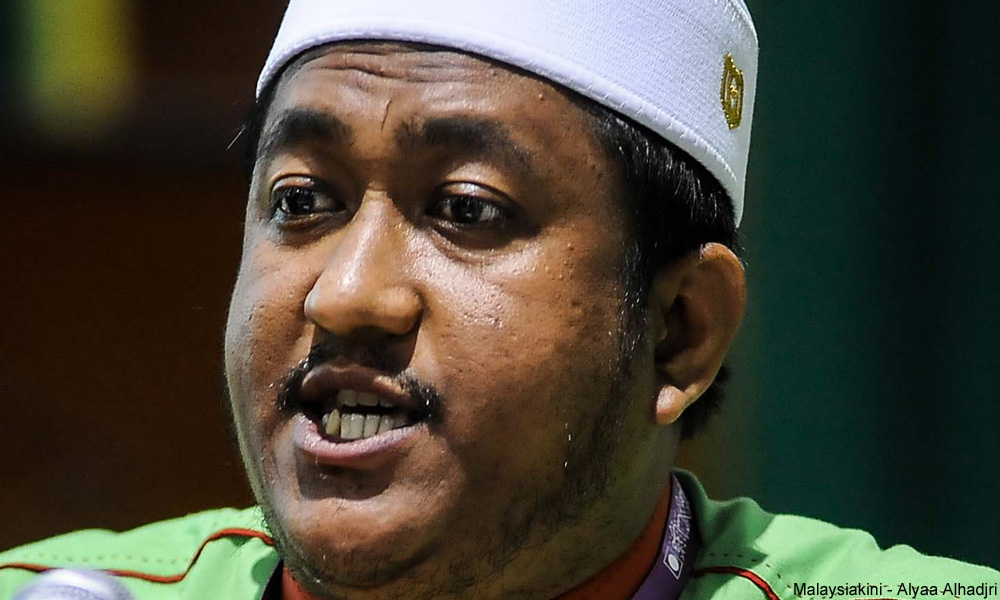
Terengganu PAS' ambitions were laid out by delegate Kamaruzzaman Abdullah who said the party will field eight candidates for parliament and 32 candidates for the state legislative assembly seats.
He did not mention sharing seats with PKR or any other parties.
PAS had campaigned alongside PKR in Terengganu since 1999. During the last general election, Umno formed the state government with a two-seat majority.
Spruce up party's 'tarnished' image
Kamaruzzaman also urged the party to repair its "very tarnished" public image.
Among others, Kamaruzzaman said PAS was seen as an ally of Umno, although this was "illogical".
He suggested that party leaders must present the party in the correct light on social media or instant messaging applications.
"Organise courses for PAS leaders at all levels, so that what they post on social media and WhatsApp groups really represent PAS
"Do not allow conflict to happen, especially when we have the media, who is always monitoring what we say and do," he said.
Critics, said Kamaruzzaman, were claiming that PAS was losing its "pro-rakyat" image, but this was far from the truth.
"These are all lies and slander, we are always with the people. That is why PAS and its supporters must be proactive in their fight against slander," he said.
Don't neglect professionals
Kamaruzzaman also proposed that PAS must create the perception that the party was a combined effort of the professionals and ulamak.
He reminded that several leaders, described as professionals, have left the party to form splinter group Parti Amanah Negara and Pakatan Harapan.
Kamaruzzaman said PAS needs to win the hearts of youth, especially young women, to realise the party's dream of recapturing Terengganu.
The age group in question represents 70 percent of new voters, he noted.
He acknowledged that it is a challenge to attract votes from young women as this is the "life-line" of Umno.

"Can PAS approach the grassroots, supporters of BN or Umno, who have lost faith in their party? PAS should approach them so that they can support us," he said.
"We should also focus on the second generation from Felda, who are now exposed to much information.
"If we can do all these, God willing, our plan to capture five states in the coming polls will not remain rhetoric but become a reality".- Mkini

Being Malay not licence to attack other races - PAS delegate


MUKTAMAR | A PAS delegate has urged party members to stop attacking those of others races and religions.
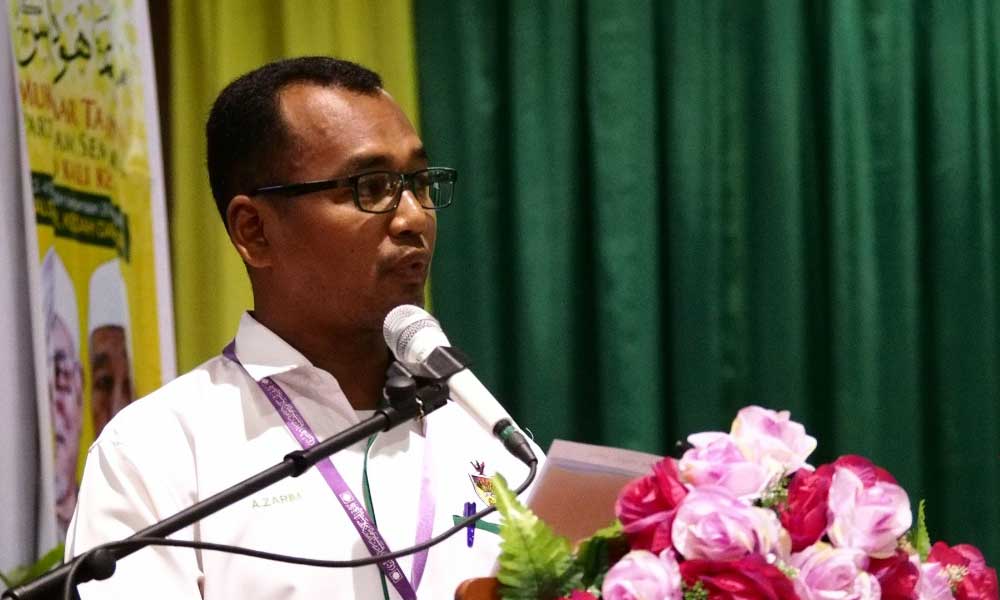
Negri Sembilan delegate Abu Zarim Abdul Rahman said while Malays and Islam do have a special position as stated in the federal constitution, it is not a reason to attack others.
"It should not be a licence to insult or sideline other races and religions in this country," Abu Zarim said at the 63rd PAS muktamar in Alor Setar, Kedah today.
"Instead of giving in to our anger and fanning racial sentiments, it is better if we be professional and use our movement and aim bullets at those who make such offences.
"There is no need for us to blame other races or religions," he said.
Abu Zarim said he had noticed a rise in such racist rhetoric on social media, coming from cybertroopers whom he said appear to be PAS supporters.
He said while they could be fake accounts, such posts reflect badly on the party.
‘Stop attacking other parties’
Abu Zarim also said insults towards other political parties should also be stopped.

"To face the next general election, we need to be close to members from other parties.
"How are the people going to get close to us is we are insulting and belittling their parties?" he said.
The Negri Sembilan delegate also urged PAS leaders to stop posting photos of their holiday trips overseas, and instead start working the ground to help the public.- Mkini

Prisoner's perseverance results in MBA degree


Fattah A* (not his real name) entered Kajang prison in 2001 as a teenager.
He spent three years behind bars before he was convicted for drug offences. As a minor, he was sparred the gallows and sentenced to life imprisonment.
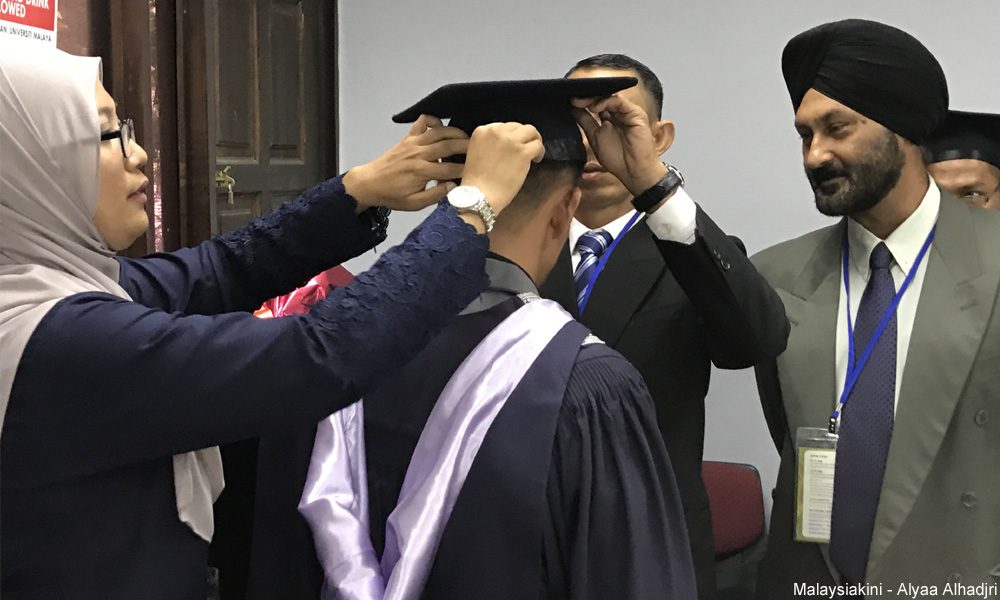
After 16 years in prison, Fattah, along with another Kajang inmate, today joined over 600 graduates who received their certificates from Open University Malaysia.
The two Kajang inmates were awarded a degree in Master of Business Administration.
"Education is important because I can see the difference within me.
"In the past, when I make any decisions, I would only think of my own satisfaction. Now, I will think of the consequences to the society," the 30-year-old Sabahan told reporters before the convocation ceremony in Kuala Lumpur today.
Fattah had enrolled in the Sekolah Integriti Kajang programme and sat for his SPM examinations in 2006. He would later pass his STPM exams and complete a Bachelors Degree in Business Administration - also through OUM.
"I will continue my studies so long as I am given the opportunity to do so.
"I have ambitions to keep improving myself," said Fattah, adding that his next goal was to pursue a doctoral degree through OUM.
Stigma as a convict
Fattah does not know when he will be released. He was sentenced to life imprisonment, under the pleasure of the Agong and has to depend on a pardon if he was ever to be released.
Even if he is eventually released, Fattah said that he was prepared to face the possibility that his qualifications may not remove the stigma of being an former convict.
"But it all depends on me. How I deal with the situation," he said, adding that his family has been giving him a lot of support.
OUG vice-president Shaari Abdul Hamid was honoured to cooperate with the Prisons Department and offer inmates a second chance.
"I was informed that he will be graduating today and was keen on further studies. So I came to meet him to inform him of the available options," he said.

According to Prisons Department director Nordin Muhamad, there are 167 inmates who will be taking the SPM examinations this year under the Integrity School programme.
He said inmates who were offered a chance to pursue their education goals are less likely to become repeat offenders.
To date, OUM has enrolled 45 inmates in various programmes. Six have graduated thus far.- Mkini

Tahfiz school defends warden, 'wanted to give second chance'


The Johor religious school where an 11-year-old student had died allegedly due to abuse has defended the hiring of the suspect, an assistant warden with a prison record.
Madrasah Tahfiz Al-Jauhar in Kota Tinggi, Johor, in a statement today said they were aware of the suspect's past but wanted to give the former convict a second chance.
"He admitted his past after he was accepted for the job. And this made us believe that he was sincere in changing his life,” said the school.
The school said it was told the assistant warden received early release for good behaviour.
“We thought if he was released early, surely that means he has changed.
“Can’t we, as members of the public, give him a second chance, too?” the school asked.
The tahfiz school, which teaches recital of the Quran, had been criticised following revelations that the 29-year-old suspect had been in jail for 30 months for theft.
It said after two weeks of criticisms, it felt the need to clear the air about the incident lest the public made assumptions about the school.

'Not what you think'
The school also defended the treatment of the victim had allegedly been subject to, claiming the public's perception of the abuse of the student as extreme, “ruthless” and “torture” was off mark, and they had 24-hour CCTV footage to prove it.
“If that's what you all think, then it's completely wrong.”
The footage, said the school, has been handed to the police and “hopefully the police can assess professionally if the caning (received by the victim) can be called torture,” said the madrasah.
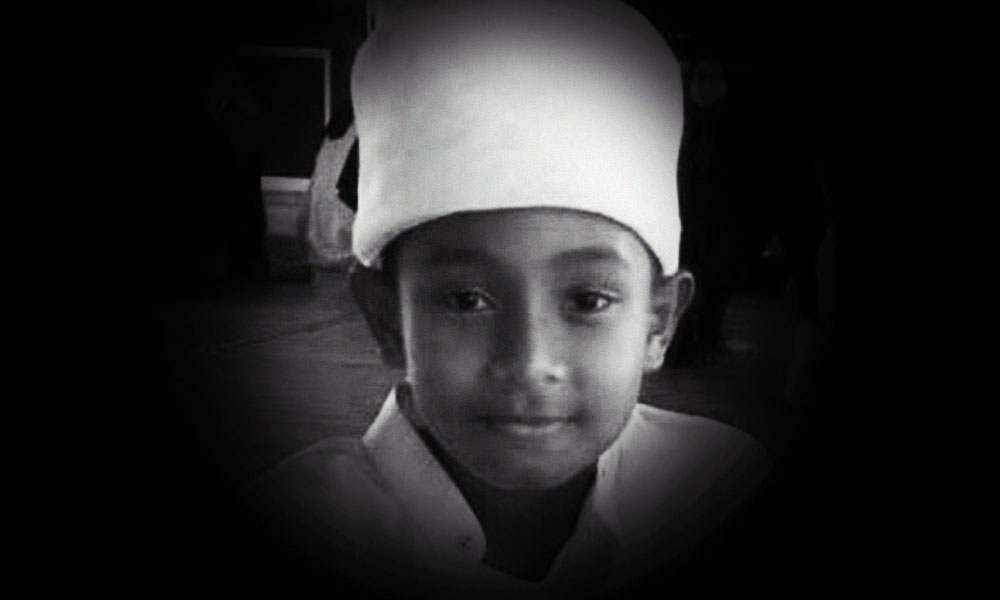
The victim Mohd Thaqif Amin Mohd Gaddafi died last week after being warded for severe beatings, which had resulted in his limbs having to be amputated.
The case is being investigated under murder.


Read more: https://www.malaysiakini.com/news/380780#ixzz4firKJAHY

PUTTING RACE ABOVE RELIGION, WHERE CAN ‘VILLAGE CHAMPION’ HADI TAKE MALAYSIA BUT NOWHERE

SOMEONE, please put Abdul Hadi Awang out of his misery.
He should be allowed to say what he truly believes. He should be allowed to take his political enemies to the cleaners without worrying about political correctness.
He must be free to slag off DAP as chauvinists and dismiss Dr Mahathir Mohamad’s Parti Pribumi Bersatu Malaysia as political nobodies.
Hadi must be allowed to be himself. He mustn’t feel the need to try and sound like a statesman or the Malaysian version of Barack Obama with talk of inclusiveness and moderation.
 Why?
Because a good number of Malaysians have tracked the political rise of the PAS president and they know the real Hadi. They know that he stewed uncomfortably for years as Tok Guru Nik Aziz steered PAS onto the middle path, a path that saw the Islamic party join forces with Anwar Ibrahim’s PKR and Lim Kit Siang’s DAP to loosen Barisan Nasional’s vice-like grip on power in Malaysia.
Tok Guru didn’t see all things through race or religious lenses. He wanted a better Malaysia and was willing to share the same platform with others who were like-minded in this pursuit of justice and integrity.
Hadi has always been his own man. With Tok Guru Nik Aziz no more, he set about to mould PAS in his image. Those who have spoken to him recently say that more than anything else, he is concerned about the loss of political power by the Malays.
He is not interested in taking advantage of a weak Umno, believing that without strong political power in the hands of Malays (read: Umno/PAS), the primacy of Islam in Malaysia will be challenged.   ‎
In short, Hadi is not interested in being part of any coalition to take down Umno and form the next government if that move results in a dilution of Malay political power.
In his world, a truce with Umno (not an electoral pact) is more desirable than working with PKR, Amanah, DAP and Bersatu because it will give him the best path to secure Malay political power in Malaysia.
He is entitled to do whatever he wants to achieve his political objective. As PAS president, he is entitled to lead his party down any path.
But he is not entitled to dream big dreams.
The Malaysian Insight

ONCE, MALAYSIA WANTED TO KICK OUT 60,000 SINGAPOREANS… BUT WHY?

Malaysia and Singapore have a long and intimate history. We share pretty much the same ethnic background, languages, and we were even originally one country; when we both got conquered by the British, we were together known as Malaya. We both fought the Japanese, and back in 16th September 1963, we even formed “Malaysia” together! (which is why we celebrate the “Malaysia Day” public holiday, in case you didn’t know.)
But as with every close and significant relationship, there is bound to be some conflict and friction. And in the case of Malaysia and Singapore, we’re of course, referring to the time when we split up in 1965. 😥 The relationship soured way more than a basket of lemons, to the point where both countries were ready to deport each other’s citizens back home! Thankfully we were separated by sea or else someone would probably have suggested to build a wall.
The Johor-Singapore Causeway in present day.

Operation Swop: A Disaster that almost happened

Okay, at first we actually imagined this story in the style of old black and white movies, and how both countries would be sending thousands of people back and forth, with both immigration officials working in panic mode while the Benny Hill theme played in the background. But it’s not that kinda scenario la.
Like this but with more old people. Gif from giphy.com
Even though we broke up with each other, there were still 50,000 Malaysians and 60,000 Singaporeans working in each others countries. That’s about 10,000 less things compared to what some girls leave at their ex-boyfriend’s house. But after the split, Malaysia and Singapore began to tighten control over its’ citizens crossing the Causeway. For instance, it used to be that you only need to report to the nearest police station, but proper passports were now required.
Singaporean workers being refused entry. Photo from nas.gov.sg.
Now responsible for the own fate, the little island of Singapore had much work to do, and among other things, it was solving their rampaging unemployment rates. Singapore’s solution was to save its jobs for Singaporeans, by issuing more work permits to their citizens, and give less jobs to foreign workers (mostly Malaysians).

In typical post-break up fashion, when emotions were high, we say things we don’t mean while we mean things we don’t say, and Operation Swop was that thing that was said.
Our gomen was obviously not pleased with Singapore’s actions, and decided to respond with Operation Swop, where all Singaporean workers would be shipped back, in exchange for all the Malaysian workers to return. Singapore initially agreed to it, but to the people’s relieve, both gomens decided to call it off, because they themselves realised it was TOO IMPRACTICAL.
And that was how the story went, and how this click bait article was conceived… But, why did it have to come to this? What happened between our two countries? Aren’t we good enough for each other?!
Malaysia and Singapore had very different visions for the future
I thought we were happy family… Image from flickr user niqohlee.
Though at one point we were a couple country, the leadership for both were still separate. The ruling political party in Malaysia at that time was “The Alliance” (ancestor of today’s BN) [honestly, this name is cooler], while in Singapore, it was the People’s Action Party (PAP). As they began to work together, the two parties realised that they really have problems seeing eye to eye. PAP had more socialist principles, and this put them at odds with The Alliance (particularly UMNO), on matters such as the special position of Bumiputeras and the national language in relation to the growth of the country.
“I am a Malaysian, I am learning Bahasa Kebangsaan (the national language) and I accept Article 153 of the Constitution (the special rights of the Malays) …. I said that while I accepted Malay as the sole official language, I did not see how it could raise the economic position of the people.” – Lee Kuan Yew, The Singapore Story: Memoirs of Lee Kuan Yew
But wait, how can two people  countries just get together without first understanding their differences and deciding whether they were a good match? It’s almost a natural process for people, countries won’t just rush into things right???
tumblr_o039x6kPtF1ur722go1_500
Back when we were still known as Malaya, as part of their strategy to keep us under control, we were forced to split up by our British masters due to the fact that Singapore was Chinese dominant. In the process, many families were split up, and reuniting with Malaysia became sort of a big dream for a lot of the people in Singapore. At the same time, the communist threat was still afoot, and the British wanted PAP to retain power for the British’s own military and economic interest in Singapore.
Hence, PAP used the reunion with Malaysia as an election promise in Singapore, while the British persuaded Tunku Abdul Rahman to include Singapore in the merger, saying that it would help stop the communist from spreading further, and even offered to include Sabah and Sarawak to merge, for access to their natural resources. After much pleading and bargaining, Tunku Abdul Rahman accepted.
Though for about 2 years we’ve tried to make it work, the disagreements soon became too much to bear. PAP’s repeated calls for a “Malaysian’s Malaysia” challenged the Alliance’s principles, and they even organised a political convention with other opposition parties. Sparks were flying, and things such as this were said:
“If the Malays join other parties especially those that are led by non-Malays, the consequences will be very grave.” – Inche Samad Idris, Deputy Menteri Besar of Negeri Sembilan, Utusan Melayu (April 21st, 1965)
Eventually, to prevent the tension from escalating, which might involve the direct take over of Singapore, and potentially cause civil unrest, we broke up.
But the post break up quarreling didn’t stop with Operation Swop
We had happier times. Photo from Malaysiaoutlook.com
After the break up, many were still hoping that the two would reunite again, including some in Malaysia. We both had a lot at stake for a reunion, and were very dependent on each other. Even in terms of economy, 32% of exports and 41% of imports from Malaysia were conducted through Singapore. But right after Singapore gained its independence, the trade between us came almost to a complete stop.
Trade came to a compelte stop, much like this jam. I guess some things never change. Photo from nas.gov.sg
What followed was a tariff war. On the very day of the break up, Singapore restricted imports of over 185 types of items, ranging from footwear to refrigerators, and ended the special treatment of Malaysian goods, imposing licensing and quota regulations. Malaysia, on the other hand, responded with a call to buy only Malaysian products, and ordered their government departments to purchase only Malaysian products, even if it cost 10% more. All this was obviously done in spite, because Malaysia’s trade went from a 350 million credit to a 153 million deficit, according to The Daily Telegraph.
There were also calls and expectations from international parties for a common market (sort of like what Europe has but only with Malaysia and Singapore), because not many expect a small island with no natural resources, no industry, and had to depend on others even for water to survive on its own, let alone succeed. But to the surprise and shock of many, Singapore refused.
Singapore even went and split from Straits dollar, the currency that the British colonies, e.g. Malaya, Singapore, Sabah and Sarawak were using, and started their own currency. Malaysia eventually followed.
17328120_1432377080127239_1570243286_n
A single straits dollar. And a single tear. Image from wikipedia.

That was such a long time ago, we’re friends now right  😐 ?

The split was over 50 years ago, and much has changed over the decades. Remember when we used restrict border access? Hah! We have even built a second bridge into Singapore now. And remember that time we didn’t want to talk to trade with each other? HAH! Singapore is now Malaysia’s biggest trade partner, with around RM175 billion worth of import and export between us, surpassing even Japan and CHINA.
Pics or it didn’t happ- Oh. Ok.
As for Singapore, it developed from a small island with almost nothing into one of 21st century’s most recognisable economy hub, even becoming one of the world’s richest countries currently (by GDP per capita).
Sometimes, when things seem like it’s at its worst, and it can never get any better, we can remember that Singapore and Malaysia persevered through their trials and hardship, and made a peaceful relationship with each other in the end. With our closeness and history, it would be a shame if we weren’t on good terms. Malaysia’s insistence to maintain close and friendly diplomatic ties with everyone might be a great example for Malaysians to look up to. After all, what good could come from making enemies, when we could have rich friends instead.

cilisos.my