


INTERVIEW | PKR Youth is seen as needing to focus on providing understanding and clarity regarding the party’s objectives, including a deeper comprehension of the reformist struggle, which has now become a key agenda at the national administrative level.
Its chief, Kamil Abdul Munim, acknowledged this, saying he’s aware of the generational gap between the early reformists and the newer party members.
“Hence why I announced during PKR's recent congress that the youth wing will begin by focusing on members and providing them with an understanding of the party's goals and ideals.
"We are concerned that if even our members do not understand or appreciate this struggle, then it will be even more difficult for the public to grasp it.
"This is why we are being criticised today - people say the reform agenda is no longer ‘sexy’, or that reform has become mere rhetoric and is not being reflected in the government’s approach.
“That’s not accurate. The difference now is that the government’s role is to implement what we have long championed: reform.
“However, the public must also understand that change cannot happen overnight. There must be progress, there must be stages, because we are concerned that drastic actions may shock the political and economic systems in our country,” Kamil (above) said in an interview with Malaysiakini in Petaling Jaya last Thursday.
He made these comments in response to a question about how aware and informed today’s youth truly are regarding the reformist agenda that has long been the core of PKR’s struggle.
Fundamental principles
Kamil also stressed that PKR continues to uphold its fundamental principles on issues such as social justice and the rule of law, while remaining consistent in matters of judicial independence and opposition to all forms of oppression.
As an example, he cited how Prime Minister Anwar Ibrahim announced an initiative to eradicate extreme poverty shortly after taking office.
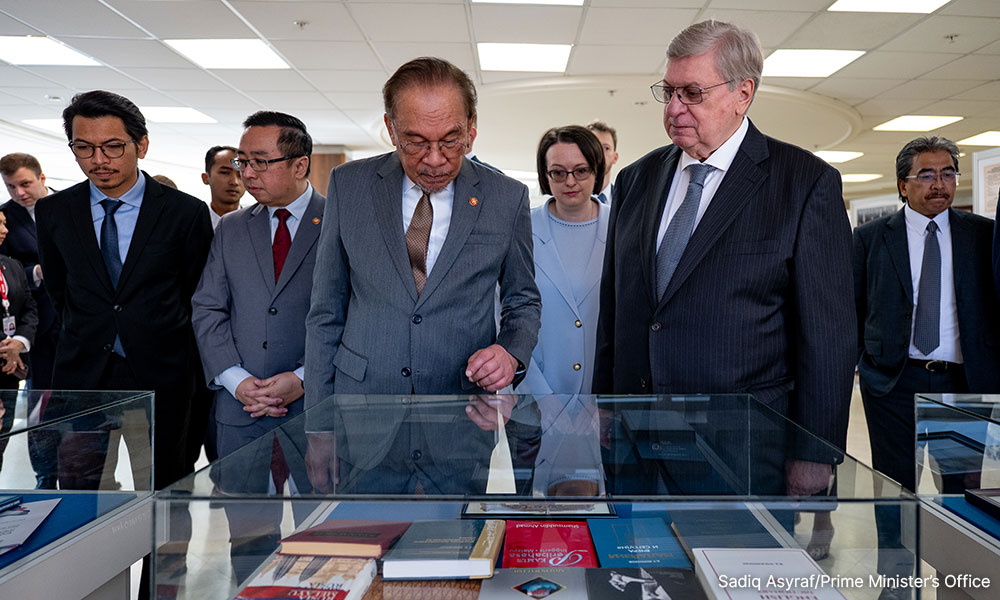
“These reform efforts are being translated into policy by the government.
"These are fundamental matters, so when we announced the eradication of hardcore poverty, government agencies recognised it as a key agenda brought forth by the prime minister and thus moved swiftly and efficiently to ensure its successful implementation," Kamil said.
He added that he had the opportunity, as Anwar's political secretary for the finance minister portfolio, to accompany the premier to state development meetings.
He said the meetings, which included opposition-led state governments, included discussions on efforts to end extreme poverty.
“Although in the beginning there were cynical remarks from opposition leaders mocking this initiative, when it was eventually implemented, the issue of eradicating poverty became one of the key agendas in state-level meetings.
"In the end, every leader realised that this is something that must be done,” he said.
Economic reforms
On economic reforms, he pointed to the Madani government's introduction of the Public Finance and Fiscal Responsibility Bill in 2023 to ensure government spending does not exceed the country’s capacity.
“We no longer want an economy where, whenever we are short on funds, we simply borrow without a sense of responsibility. At the very least, this will help us restore our economic position and spend within our means - something not done by previous administrations.
“When it comes to subsidies, although previous leaders shared similar intentions, there was no political will, no courage,” Kamil added.
Thus, he said, reform must begin with the attitude and resolve of the leadership itself, paired with a commitment to the reform agenda.
“We talk about governance, about proper management (which means) no leakages, no wastage, no more corruption or abuse of power. These are the reform ideals we have long fought for," he said.
He said the impacts of such initiatives can already be seen through the government saving billions of ringgit and redirecting them to assistance programmes such as Sumbangan Asas Rahmah (Sara) financial aid.
These programmes go on to build a localised economic ecosystem at the community level, he added.
“So that’s what’s happening now. People may not see us shouting about reform because the reforms are in motion, and sometimes, we overlook them. As I mentioned, there are no more issues about rice, chicken, sugar, or cooking oil shortages during festive seasons.
“But these things aren’t as sensational as racial or religious politics. People prefer sensational matters, which overwhelms their ability to assess objectively whether things are better now than before,” said Kamil, while also acknowledging that there is still much room for improvement in Putrajaya. - Mkini

No comments:
Post a Comment
Note: Only a member of this blog may post a comment.