


Faced with a reminder that PAS had been identified as one of the biggest amplifiers of ethno-religious hate, Machang MP Wan Ahmad Fayhsal Wan Ahmad Kamal launched a spirited defence of his Perikatan Nasional colleagues.
Speaking as a panellist on BBC World Questions, the former Bersatu Youth chief instead sought to shift blame to DAP - a move that drew jeers from a live audience in Petaling Jaya last night.
“Thank you for your research on my (component) party members when it comes to race and religious rhetoric,” he said, addressing an audience member who cited findings from a 2022 social media monitoring initiative by the Centre for Independent Journalism (CIJ).
The report, based on an analysis of 52,012 social media posts during the 15th general election campaign, had identified PAS president Abdul Hadi Awang as one of the key amplifiers of inflammatory language.
“But why single out PAS? When we all know very well that DAP has also been doing it, but has not been reported in the mainstream media because they talk in a vernacular language.
“So, it is unfair to single out PAS. I can give you evidence of how racist and chauvinistic the DAPs are,” said Wan Fayhsal (above), as louder jeers erupted from the floor.
The panel’s host, Jonny Dymond, promptly thanked Wan Fayhsal and moved on to the next question.
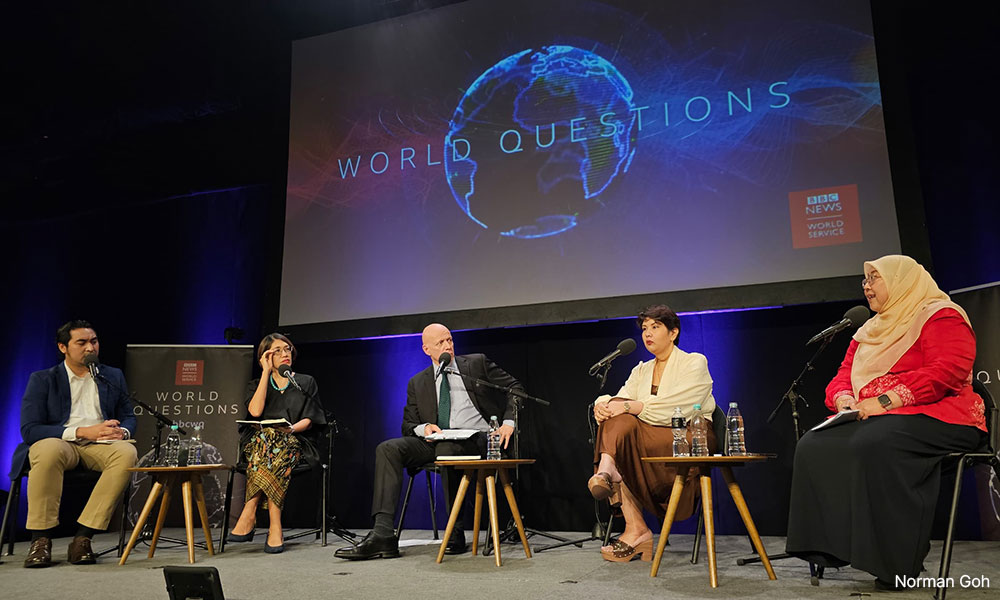
Wan Fayhsal’s remarks came in response to a question on how to reconcile Malaysia’s ideals as a diverse, democratic, secular country with the reality of the nation’s Malay-Muslim hegemony.
Secularism
Countering the perceived contradiction, he offered a historical narrative on Malaysia’s formation, highlighting the role of political parties and the Malay rulers who continue to be heads of Islam in their respective states.
“So, in the minds of the majority of Malays, we understand this very fact that secular element and religious element co-exist harmoniously.
“In Islam, secularism is, of course, objectionable. We don’t subscribe to what the French are doing to their country, but we do accept secular elements in religious affairs.
“For example, building roads and buildings, we do not need religious scholars to advise on what kinds of law to follow,” said the former deputy minister.
At this point, Dymond interjected and asked pointedly if Wan Fayhsal rejected the term “Malay-Muslim hegemony”.
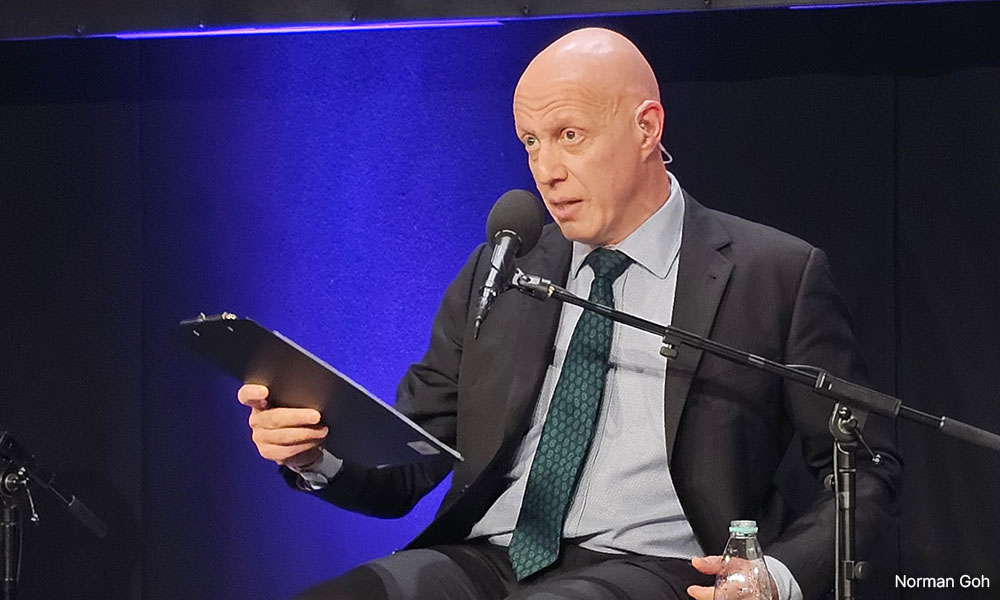
In response, Wan Fayhsal said: “I would reconfigure the word hegemony and I would rather use custodianship.”
As murmurs of objection rippled through the audience, he added: “Why? Because custodianship means you are the majority race and you become the prime minister for almost 60, 70 years, your role is to ensure peace and harmony of the nation.
“Meaning it is a burden, a responsibility, not a privilege. Why? Because a good Malay-Muslim leader will not go against the religious edict of being a good leader.
“Also, as a Muslim leader, we are taught to be tolerant,” said Wan Fayhsal, promoting PAS-led Kelantan as a model state for racial unity.
Other panellists’ views
The same question on Malaysia’s cultural hegemony was also posed to three other panellists - Deputy Domestic Trade and Cost of Living Minister Fuziah Salleh, University of Nottingham Malaysia academic Tricia Yeoh, and Universiti Malaya Gender Studies programme head Vilashini Somiah.
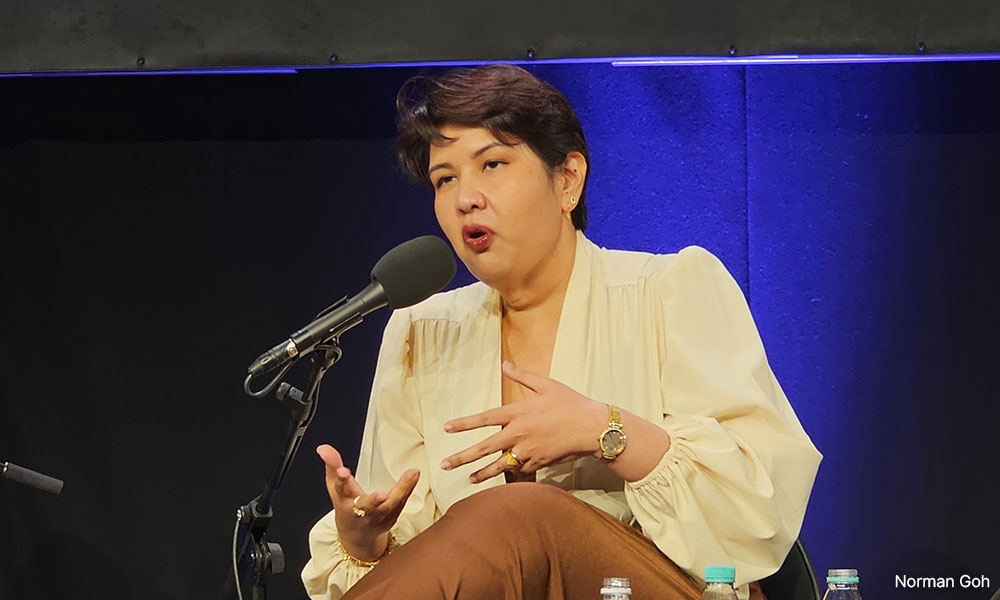
Vilashini, responding to the question, said she related to the experience of navigating difficult conversations as a minority with multiple cultural and gender identities.
“I have tried very hard to see the way in which we can solve it, and I think it really starts - unfortunately for me, in my opinion - we’ve got to get rid of the word tolerate.
“Can we not bring politics into it? Can we kind of be transparent and fair about it?
“Maybe that’s a step forward in the right direction,” she said.
Fuziah, who is also PKR secretary-general, said party president Anwar Ibrahim had advocated for a shift from race-based to needs-based policies a decade ago.
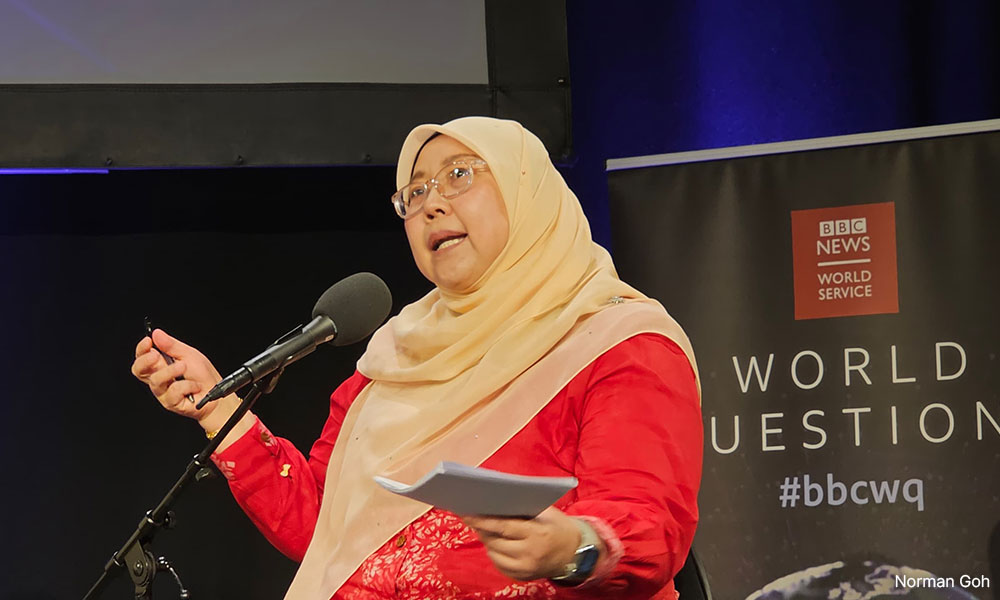
She pointed to an ongoing process of shaping public mindset towards building an equitable society - one that goes beyond tolerance to fostering genuine understanding.
“I also hate the word tolerance. It should be respect, it should be understanding, it should be embracing each other and understanding what each stands for.
“Tolerance means I don’t like it, but I just tolerate it. So, it shouldn’t even be a word we use when we talk about unity,” she said.
‘Dirty word’
Yeoh noted that the term secular had evolved into a “dirty word” in Malaysia, often misrepresented as being anti-religion.
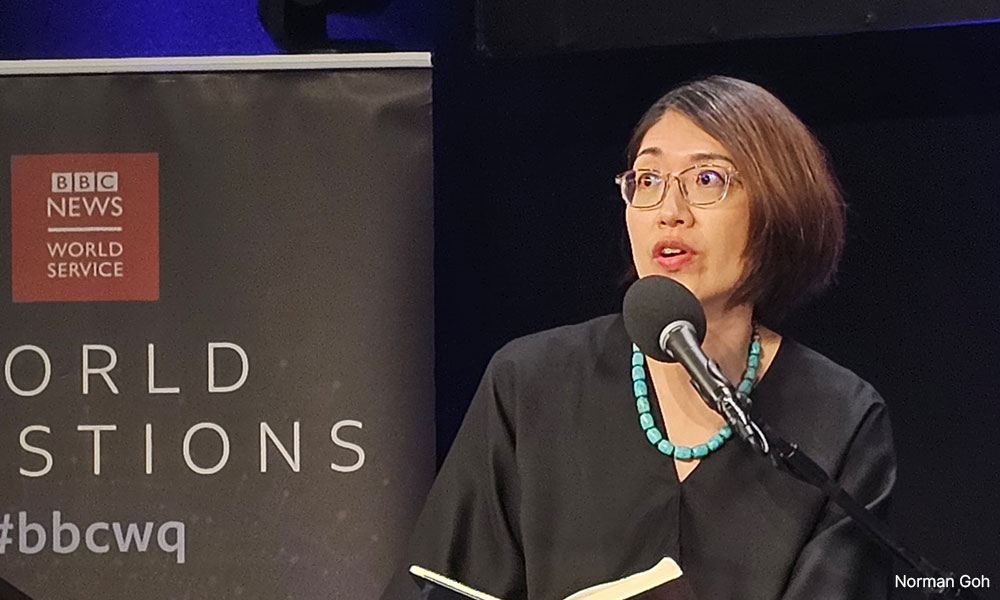
“The term secular does not have to be anti-religion, but unfortunately, that’s what it has become today.
“Secular is a ‘dirty word’ that I believe, you know, your partners in PAS have a lot of difficulty in even stating, right?” she said, addressing Wan Fayhsal.
“Secular just means that you’re making decisions without being coloured by a religious or through a religious lens,” added the former CEO of think-tank Ideas.
The BBC World Questions episode will be broadcast to over 80 million listeners worldwide on the BBC World Service later this week. - Mkini

No comments:
Post a Comment
Note: Only a member of this blog may post a comment.