


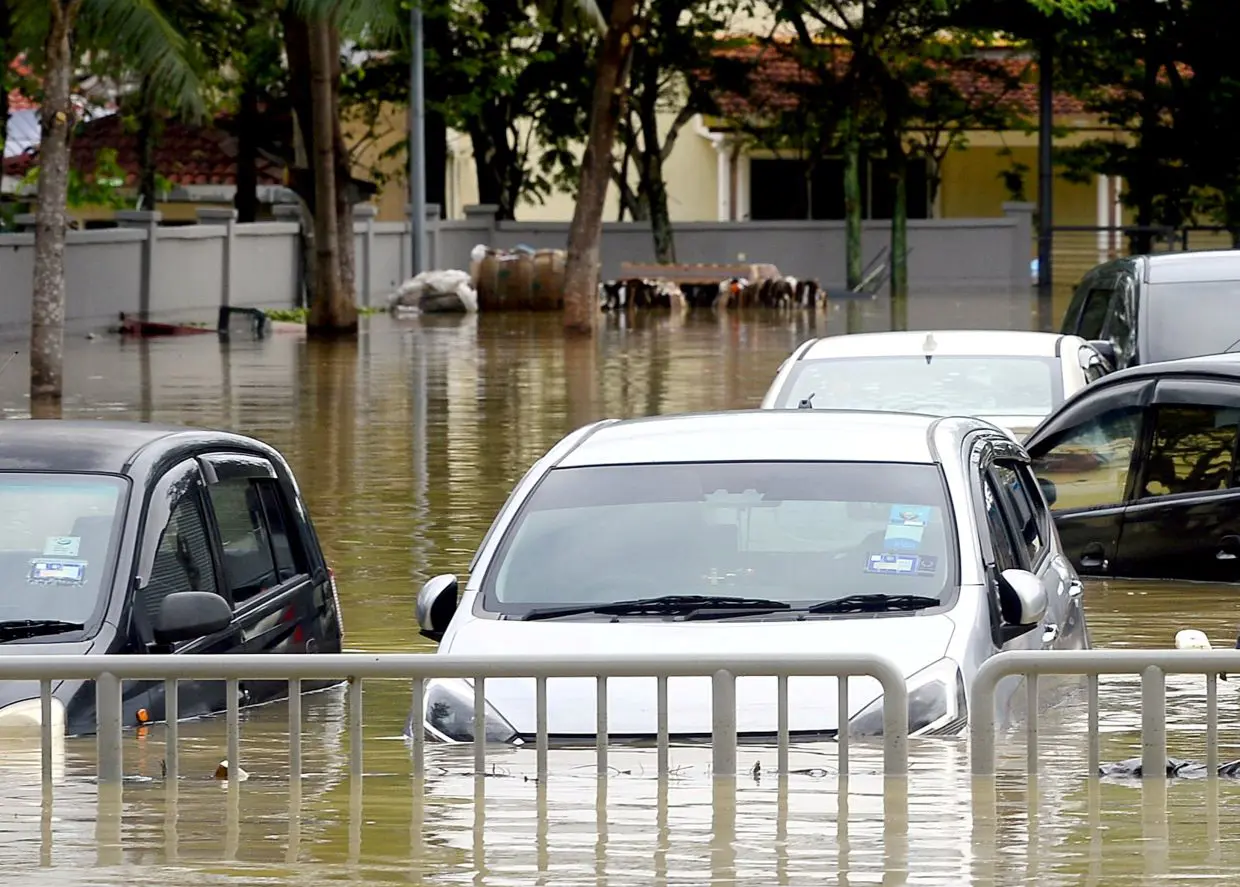
What to do if your car was stuck in flooding. — Photo: AZHAR MAHFOF/The Star/Filepic
During the height of floods that wreaked havoc across Western Washington in the United States, many vehicles were caught in the floodwaters.
Some left their cars and trucks behind during evacuation, and others had to abandon or be rescued from their vehicle after trying to drive through the rising waters. Now that the flooding has subsided, people are returning to their waterlogged vehicles.
If you’re recovering your vehicle, here’s what you need to do, according to AutoZone, Kelly Blue Book, and State Farm.
If water got into the cylinders, trying to turn on the engine could cause hydrolock and significantly damage the engine.
Pop the hood, disconnect the battery while wearing dry gloves, and call a mechanic.
If you have a hybrid or electric vehicle with a high voltage system, let a trained technician handle the battery.
Take detailed photos and videos of the vehicle with time stamps and show the waterline. Make a list of all items affected by the floodwaters. Then, if your insurance policy covers flood damage, file a claim and keep copies of all communications, records and documents
If your vehicle has them, remove the plastic plugs on the bottom of your doors and floorboards and flush the areas with fresh water. Then use a submersible pump or shop vac to get water out of the floorboards. Set up fans and dehumidifiers to dry out the interior to stay in front of mold.
You’ll want a professional to assess the damage, but here are a few things you can check on as well:
If the water rose above your key electrical systems, they may need to be replaced.
Turn on the electrical systems one by one. Check for flickering lights, see if the ignition functions and if the startup gauges all perform their startup sweeps, try the windows and check each power door lock.
Remove your radio, alternator and junction block, which are especially vulnerable to water, and blow out with compressed air and let dry before reinstalling them.
You can either hand-spin or crank the vehicle to check if water is coming out of the sparkplug holes.
If so, remove the piping from the intake tract and look for any mud or dirt, then rinse the entire tract clean.
If there are water droplets, water likely got into your engine. That means the cylinders may be broken because cylinders are supposed to compress air, not water.
Siphon out some gas and check to see if there is any water mixed in. Water weighs more than gas, so make sure the siphon reaches the bottom of the fuel tank.
If there’s water in the fuel, your tank will need to be dropped and cleaned.
Whether water got into your engine or not, drain and refill your engine oil, transmission oil and differential fluid because they may have water in them.
The brake, clutch, power steering and coolant reservoirs are sealed on most newer vehicles, but water could have seeped in. – By Kai Uyehara/The Seattle Times/dpa

No comments:
Post a Comment
Note: Only a member of this blog may post a comment.