


A car crash, an innocent life lost - another day in a country where an average of 18 lives or more than 6,000 souls are erased on our roads every year.
But wait, in a country where a section of the population sees race and religion at every turn, legalities are blurred by the might of religious and racial voices.
In Malaysia, where race and religion lurk at every corner, legalities bend under the weight of loud voices.
The driver was first accused of being “mabuk” (drunk), intoxicated by liquor. That was enough to ignite the frenzy. When he later admitted to self-administering benzodiazepine and tetrahydrocannabinol (THC), the narrative should have shifted. It didn’t.
The widow wept, calling for an eye for an eye. The public raged. From the woodwork crawled the "religious experts," consultants, rabble-rousers, and agent provocateurs - quick on the draw, selling hatred wrapped in race and religion.
Religious leaders and government officials stood in line to partake in the tragedy, introducing religious jurisprudence instead of the statute books.
Then came the law: the attorney-general himself, justifying the murder charge on the driver.
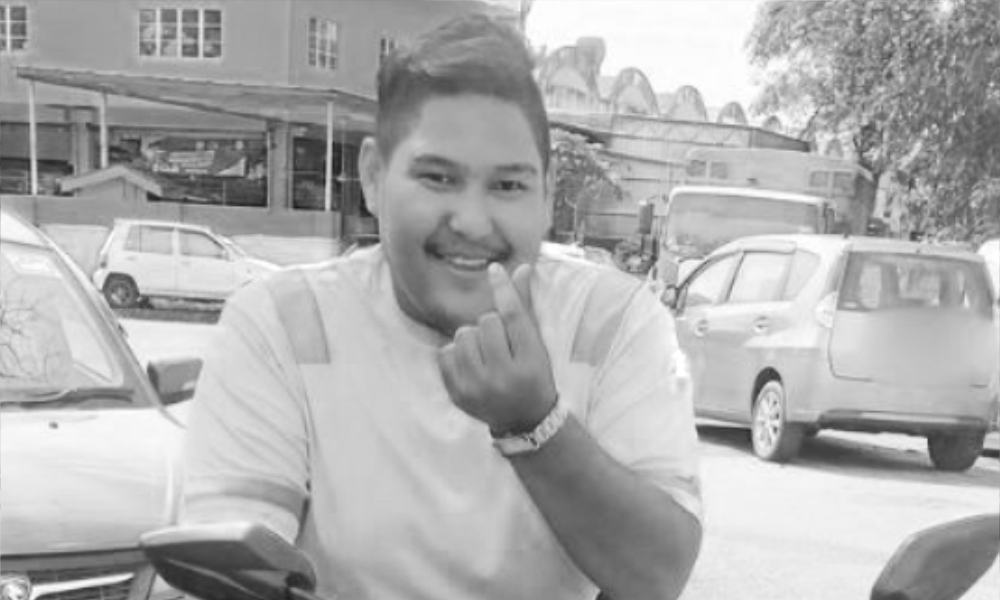
Speaking to Malaysiakini, Dusuki Mokhtar stressed that the Attorney-General’s Chambers (AGC) gave due consideration before deciding to charge 28-year-old R Saktygaanapathy under Section 302 of the Penal Code for causing the death of Amirul Hafiz Omar, a warehouse worker and delivery rider.
Dusuki explained that the accused’s action, purportedly deliberately entering the opposite lane at high speed, created a situation that was “so imminently dangerous” to the deceased, as provided for under Section 300(d) of the Penal Code.
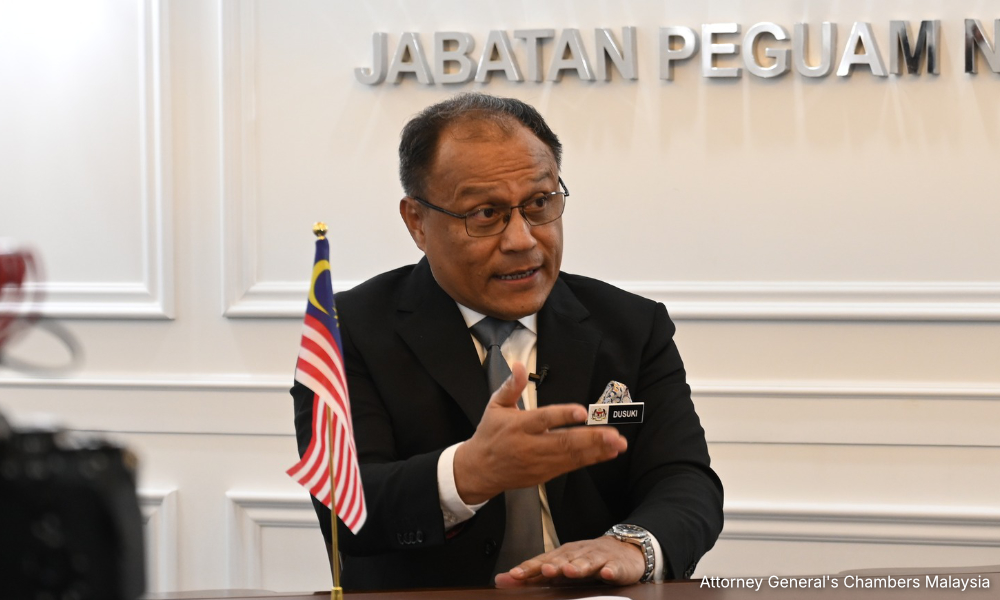
The said law applies where a person commits an act knowing it to be so imminently dangerous that it will, in all probability, cause death.
Thus began another round where race and religion took centre stage. What about other crashes where there were multiple losses of lives? Citizens went back to the archives.
Underage driver
Two months ago, a mother who allowed her underage son to drive her car, which later got into an accident claiming three lives, was fined RM1,500 by the Seremban Magistrate's Court.
“After considering the guilty plea by the accused, mitigating factors and submissions by parties and the aggravating factors, the court hereby fines the accused RM1,500 in default three months jail,” ruled magistrate Nurul Azuin Talhah, according to the South China Morning Post.
So, going by the same AGC logic, didn’t the mother anticipate that her son, who was not qualified or competent to drive, would cause the crash by driving on public roads?
Last Thursday, three individuals were killed while two others sustained minor injuries in a road accident involving three vehicles on the Johor Bahru-Seremban road.
Johor police chief Ab Rahaman Arsad said the incident, which occurred at around 3.45pm, is believed to have happened when a trailer driven by a man crashed into the rear of a van carrying the victims.
According to him, the trailer driver has been detained to assist in the investigation, and initial urine tests found that the man tested positive for methamphetamine.
So now, the public is waiting with bated breath to see if the lorry driver will be charged with murder.
Gerik bus crash
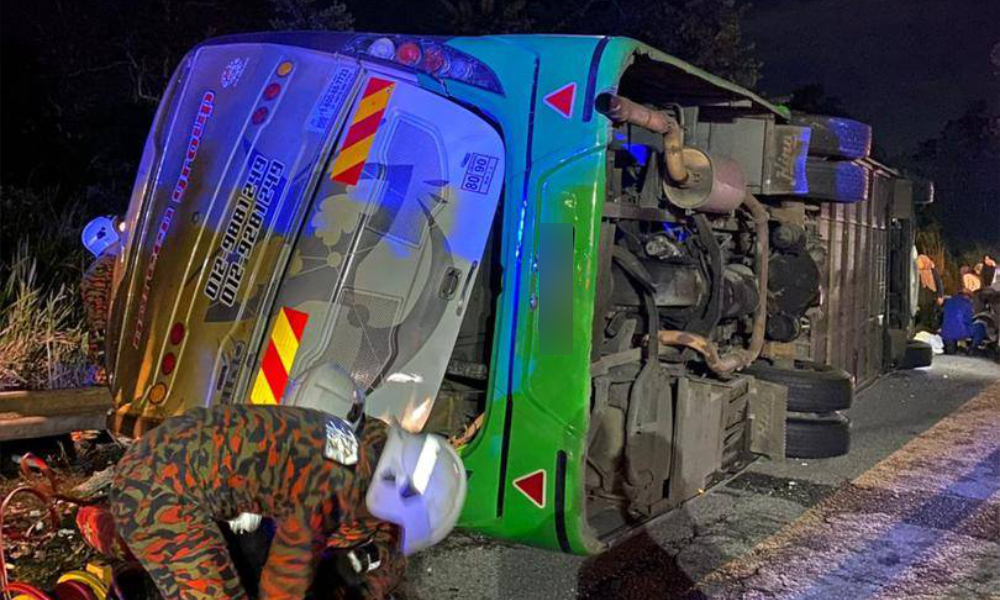
In another case, a special task force under the Transport Ministry found that the Gerik bus crash, which killed 15 Universiti Pendidikan Sultan Idris students in June last year, was caused by a combination of brake system failure and the driver’s actions while descending a slope.
The report, among others, concluded:
The bus’s braking system was compromised because of deformation and wear on the left rear brake drum, grease and oil contamination on the linings, and inconsistencies in the brake lining material. The combination of brake issues and excessive speed caused the bus to lose stability, skid, and overturn.
The vehicle struck a W-beam guardrail, which penetrated the cabin, resulting in multiple injuries and fatalities.
It said the pattern of applications indicated a high likelihood of abuse of the exemption mechanism, including licence leasing or system manipulation by unlicensed operators.
The report identified several interrelated contributing factors, including weaknesses in road design, vehicle specifications, poor operator governance, insufficient industry compliance, and gaps in regulatory oversight.
Now, here is the interesting part. It was not just the reckless driver. The report pointed to government agencies contributing partly to the deaths.
Highways have guardrails to prevent vehicles from plunging into ravines. But at the accident site, they acted not to save the bus, but became a giant spear, piercing through the left side of the vehicle.
How did this happen? The task force found several things wrong with the guardrail, including improper installation and assembly errors.
The spacing between guardrail posts was 3.8m, far over the 2m limit. The guardrail panels were installed against the flow of traffic, and multiple bolts were missing.
This resulted in it snapping upon impact, instead of cushioning the bus, noted the report. The end of the guardrail was not folded back, but became a sharp, piercing point.
Now, here’s the million-ringgit question: What about the contributory negligence?

After the crash, Works Minister Alexander Nanta Linggi said that since 2023, various initiatives have been undertaken to enhance the Gerik-Jeli route, particularly along the FT04 federal road.
He said all upgrading works on FT04 were completed in phases between July and August 2023, with a total cost of RM55.73 million, based on road damage assessments conducted through the pavement condition assessment.
Targeting alcoholic beverages
Going back to the recent case, the debate continued, a do-gooder, a newly minted doctor-turned-celebrity, doubled down. Not content with banning beer at convenience stores, she now wants coffee shops and restaurants to follow suit.
Because nothing says “road safety” like forcing Uncle Bala to empty his stout into the sink.
Never mind that the driver was on drugs. Beer has a brand and a villain we can see. Beer has a label. Beer can be banned. Drugs are unbranded, sold discreetly by unknown hands with a bigger profit margin.
Then came the second wave: a proposal to end all alcohol sales by 9pm because drunk drivers, as we all know, only crash after 9pm. Before that, they are model citizens. The logic is so flawless it hurts.

Then came another: Take the car, sell it, and give money to the widow, but it is not as easy as it sounds.
If the car had been purchased on hire purchase, as most Malaysians do, legally, the bank that offers the loan is the owner. The driver is the hirer. Period.
And oh, the penalties - bizarre, outlandish, and perhaps, loony.
The death penalty, life imprisonment, caning, fines up to RM1 million, and permanent driving bans. One politician even suggested mandatory compensation to the victim's family - which actually makes sense.
So, the chorus grows louder. The widow's grief – genuine and heartbreaking - is now a political prop. Her tears are livestreamed, shared, and weaponised. Every uncle on Facebook demands that the driver be hanged from a bridge.
Never mind that the same uncles would defend their own nephews, high on ketum juice, who knock down elderly people at pedestrian crossings. Or drive a passenger bus while high on drugs.
Hypocrisy galore
Hypocrisy is the national pastime; we just forgot the rules.
Somewhere, in a police lockup, the actual culprit sits quietly. Forgotten. Because the frenzy is not about him anymore. It's about us and our rage, righteousness and desperate need to feel something - anything - other than the quiet horror of 6,000 bodies a year.
So, go ahead, ban the beer, end alcohol sales at 9pm and hang the driver from a lamp post. Just don't expect it to bring back the motorcyclist, nor fix the carnage on our roads.
The killer is behind the wheel - not the beer. - Mkini
R NADESWARAN lost his teenage daughter in a car crash, and every death on the road brings back memories of what happened on that October night, 22 years ago, returning home after prayers. Comments: citizen.nades22@gmail.com
The views expressed here are those of the author/contributor and do not necessarily represent the views of MMKtT.

No comments:
Post a Comment
Note: Only a member of this blog may post a comment.