


INTERVIEW | When activist Fadiah Nadwa Fikri was recently barred from entering Singapore, it reignited familiar questions about dissent and the boundaries of acceptable speech.
But for Singaporean political exile Tan Wah Piow, 78, the episode is hardly surprising.
On March 22, Fadiah posted on X, claiming she had been deported and banned from re-entering the country. She was then described by Singapore’s Home Ministry as an “undesirable visitor”.
The ministry stated that the activist had promoted “unlawful, violent and disruptive methods of civil protest” and had encouraged youths in Singapore to adopt what it described as “her brand of radical advocacy”.
Fadiah is no stranger to the island republic. She had frequently travelled to Singapore, where she previously studied at the National University of Singapore (NUS) and received her doctorate in January.
She had also been awarded a teaching fellowship at the university’s College of Humanities and Sciences.
In response to the Singaporean government’s accusation against her, Fadiah described the action as “tantamount to a deliberate attack” on her scholarly work, particularly her research on the “intellectual history of decolonisation and anti-imperialism”.
‘S’pore has not changed’
Weighing in on the incident, Tan (above) noted how Singapore's approach to dissent has remained unchanged, even though it has been five decades since his own exile.
“(When I heard about the issue) I said, same old, same old,” he told Malaysiakini.
Tan was a former student leader from Singapore who was convicted of unlawful assembly and rioting in 1974, and jailed for eight months.
After his release, he fled to the United Kingdom and sought political asylum. He has been in exile since 1976.
However, more than a decade later, the Singaporean government, led by Lee Kuan Yew, launched Operation Spectrum in 1987, which was also known as the “Marxist Conspiracy”.
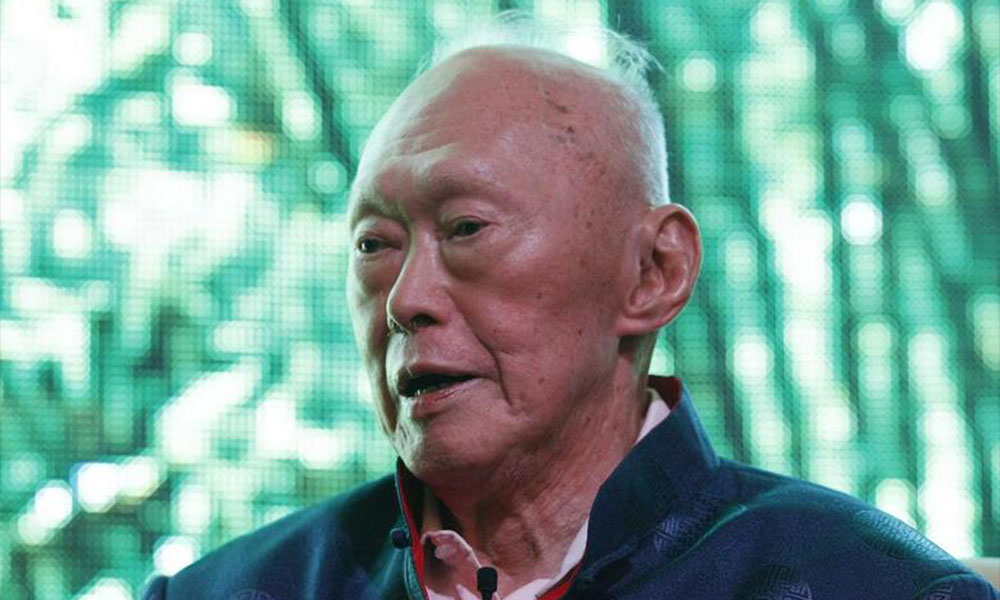
The government alleged that the plot was linked to Tan and accused him of being the “mastermind”, aimed at turning Singapore into a Marxist state.
The operation saw 22 activists detained without trial under the country’s Internal Security Act.
Reflecting on the parallels between recent and past developments, Tan draws a direct line from his own experience and contemporary developments.
He argued that while Singapore has advanced materially, its approach to dissent remains largely lacklustre.
“There is an improvement in the ‘hardware’ but the ‘software’ has not changed,” he said, referring to the tension between visible progress and the underlying political culture that continues to shape how ideas are managed.
To make sense of this tension, Tan turns to philosophy in his latest book titled “A Dialogue Across Civilisations.”
‘A poverty of philosophy’
The book, Tan said, was born out of what he sees as a broader “poverty of philosophy and theory”, particularly in political discussions post-2018, marked by transitions of power in Singapore.
While that period was driven by strong opposition to specific figures and issues, Tan argued that the momentum did not translate into deeper intellectual engagement.
“I had, from the very start, developed a reason why I took certain positions, understanding of politics, understanding of democracy, understanding my own framework of what society ought to be.
“But I find there is a lack of this, even among activists. There is no intellectual resilience.
“Because democracy can’t be motivated only by a specific hate, the people must have a deeper understanding as to why they were against something in the first place,” he added.
Imagined conversations
Departing from his earlier autobiographical works, Tan adopted a dialogue format, bringing together philosophers such as Confucius, Socrates, and Karl Marx in imagined conversations.
Rather than presenting their ideas in isolation, he “allows” them to interrogate and challenge one another, exposing the contrasts between different schools of thought; an approach he said is meant to revive genuine intellectual exchange.
“A reason (that I wrote the book this way) is that I want to introduce all these various philosophies. But people will always just buy philosophy for beginners, Marx for beginners, or Socrates for beginners.
“But as a reader, you can't relate to how these men interpret their thoughts in the real world and how one differs from the other.
“In this form, I can put them together in different places, interrogating each other's ideas,” he said.
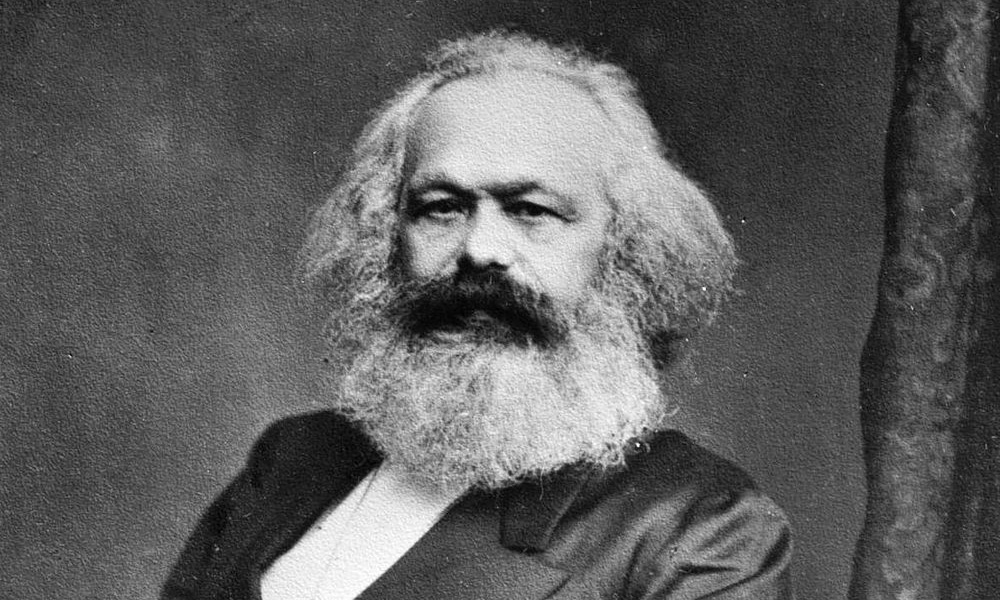
Tan added that throughout the book, no character is made to concede or compromise. Each remains rooted in their own worldview, even when confronted with opposing perspectives.
By letting thinkers debate directly, he said, it reflects the reality of intellectual inquiry, where disagreement is not only inevitable but necessary.
This approach also avoids Tan from imposing his own conclusions within the narrative, instead encouraging readers to engage with the arguments themselves.
Boundaries of dialogue
However, it is precisely this kind of open exchange that he believes is constrained in real-world settings.
Touching on present-day Singapore, Tan argued that such dialogue is largely absent in practice, with discourse tightly managed and certain ideas kept at the margins.
As a result, discourse exists within defined limits, rather than one that allows ideas to fully collide and evolve.
“Take, for example, what happened with Fadiah. Why should a state as strong as Singapore be worried about one person having ideas?
“If her ideas are wrong, the crowd will reject them. And she cannot be a threat to anything.”
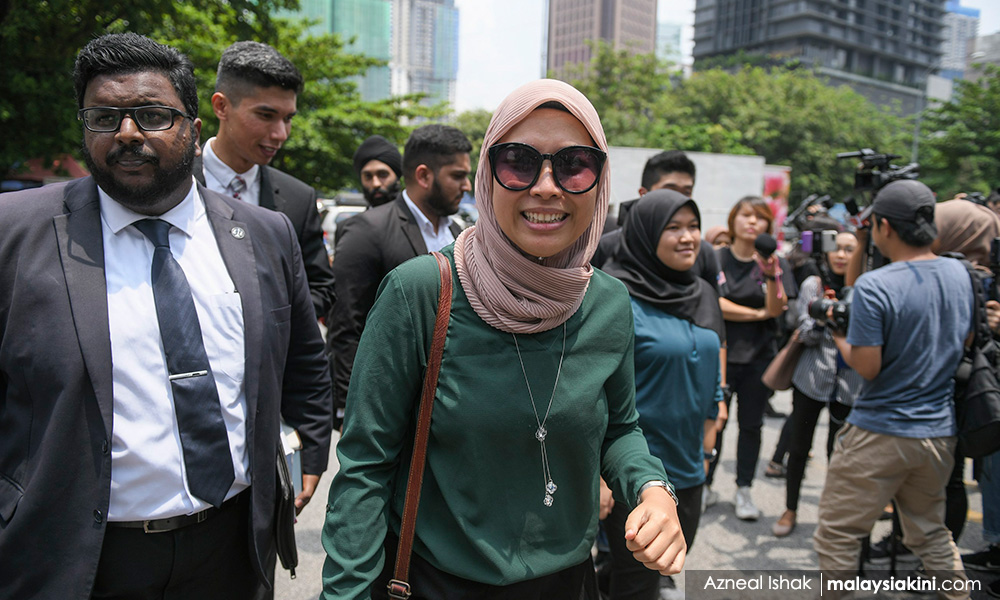
For him, the episode reinforces a pattern he has observed for decades, dating back to his own experience with the Singaporean authorities.
Tan also questioned the proportionality of the action taken against the activist, arguing that the issue goes beyond a single individual.
In that sense, Tan believed the deeper problem is not merely about political disagreements but about the space available for debate.
Nurturing culture of questioning
Despite this, Tan maintains that the long-term solution lies in nurturing a culture of questioning, particularly among younger generations.
“The only way is to appeal to the younger generation. We need to change this culture by going back to Socrates, by learning to ask the right question and to pursue truth through questioning,” he said.
For Tan, this principle of questioning authority and examining ideas critically has shaped both his political outlook and his latest book.
He hoped that his writing would encourage readers to reflect on the foundations of politics, democracy, and power.
Ultimately, Tan believes that meaningful dialogue, whether in philosophy or in society, depends on a willingness to confront difficult questions rather than avoid them. - Mkini

No comments:
Post a Comment
Note: Only a member of this blog may post a comment.