



INTERVIEW | With more and more people turning to public hospitals for treatment due to rising costs, Health Minister Dr Dzulkefly Ahmad has vowed to look into cutting down the time patients spend in hospital waiting rooms.
According to Dzulkefly, a number of public hospitals in the country have already managed to trim waiting times, and he is aiming for this being implemented nationwide.
"I, for one, would like to see that happening. That is part of my KPI (key performance index).
"In fact, the reduction of waiting times has already occurred in some hospitals, which is commendable, but in relation to senior citizens, it may require more attention," he said in an exclusive interview with Malaysiakini.
There are a few ways of doing this, Dzulkefly noted. One method, implemented in May 2016, was to introduce priority lanes in waiting rooms for senior citizens, the disabled and pregnant women.
"We are getting results. But this is just part of looking at how to improve the process overall to further to cut down waiting times.”
Dzulkefly also pointed to several success cases, such as the Sultan Ismail Hospital in Johor Bahru.
"Once diagnosed, the hospital managed to reduce waiting time for radiotherapy patients from 16 weeks to two weeks. For orthopaedic patients, they managed to reduce it from 112 minutes (for treatment) to 68 minutes.
"At the Tengku Ampuan Rahimah Hospital in Klang, there has been a reduction in waiting time to see doctors by 13.3 percent, from 56 minutes to 48 minutes, and it managed to reduce the waiting period for beds by 40 percent.”
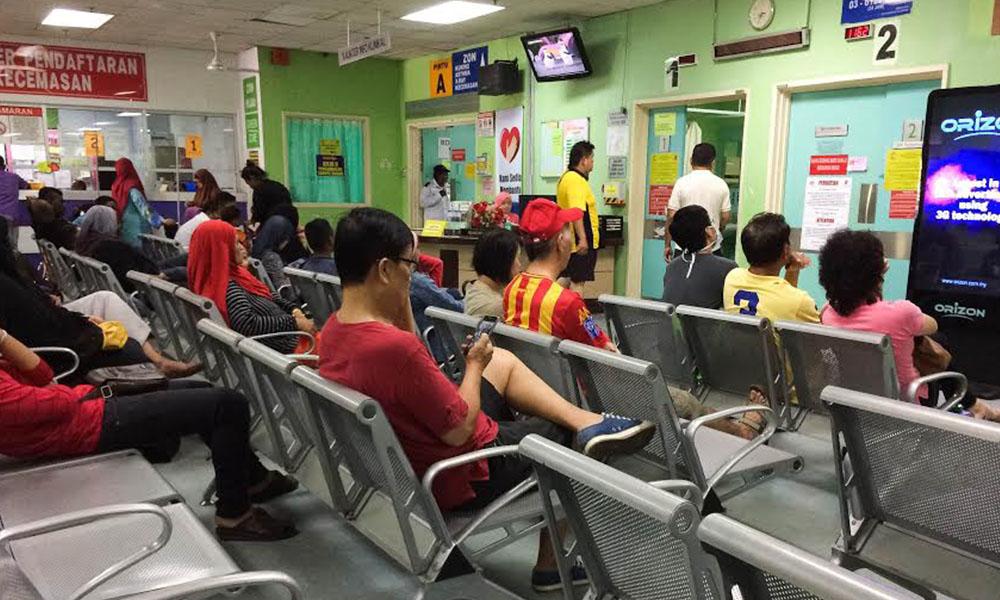
Dzulkefly is looking at not just replicating, but improving upon these successes in 52 hospitals around the country.
"We will improve on this further at the other hospitals,” he said, adding that he would be paying visits to a number of these facilities.
The health minister – who has spent just over two weeks on the job – also stressed that care for the elderly is a priority, noting that there is an immediate need for more geriatric medicine to be given the greying population in Malaysia.
"There is also a need for special wards for senior citizens. This will be looked into," he said.
Providing political leadership
Dzulkefly said being handed the reins to the health portfolio by Prime Minister Dr Mahathir Mohamad was a ‘homecoming’ of sorts, given that he is a trained toxicologist.
"But what I am required to do here is not to solve complex medical problems, as there are specialists in the required fields.
“I am here to provide leadership and advocacy – to look at how to solve political problems and strategise a quality framework for the Pakatan Harapan government in managing the country’s hospitals," said the Amanah strategy director.
The most immediate challenge facing hospitals in the country would seem to be the government’s austerity drive, undertaken due to the considerable debts left behind by the previous administration.

But as Dzulkefly states, his job is to ensure that these austerity measures do not extend to the healthcare sector, and that there is more efficiency in how budgetary allocations are spent.
"I recognise the financial and physical space we are restrained by. I will formulate it so that the ministry is not bogged down with budgetary issues.
"I must also say that, moving forward, it is about opportunity costs – putting money in a certain health delivery system and further enhancing staff management.
“I believe the cabinet will put in money for health and education," he said.
One of these moves towards efficient spending is the shift to generic drugs.
Although there is widespread worry about the quality and safety of generics, as opposed to pricier internationally patented drugs, Dzulkefly assures that there is no difference in terms of how effective these drugs are.
"Being a toxicologist, I know that the generic medicines used here have undergone bioequivalence studies according to World Health Organisation guidelines. Generics have the same efficacy,” he said.
Bioequivalence refers to the clinical interchangeability between the originator and generic drugs.
"What is claimed is not true, we (the ministry) would not be reckless in prescribing medicine if it is not suitable," Dzulkefly stressed, adding that other parts of the world are also moving towards generics to make healthcare more accessible. -Mkini

No comments:
Post a Comment
Note: Only a member of this blog may post a comment.