


PARLIAMENT | Malaysia's venture into space 16 years ago has been very fruitful, Science, Technology, and Innovation Minister Chang Lih Kang said today.
According to Chang, as a result of the mission, the country has managed to carry out research in various fields, including microgravity in medicine and pharmaceuticals, microbes in space, and biotechnology, among others.
"The researches have spawned scientific papers published in domestic and international journals which, in turn, have paved the way to knowledge generation.
"A total of eight patents from the ISS (International Space Station) research were filed in Malaysia, as well as one trademark," Chang told Dewan Rakyat.
The minister was answering a supplementary question from Syerleena Abdul Rashid (Harapan- Bukit Bendera), who had asked if the country's "RM105 million" involvement in the space programme in 2007 was worth the investment.
Commenting on the "RM105 million" claim, Chang (above) said the government did not spend that much to send Dr Sheikh Muszaphar Shukor to space in October 2007.
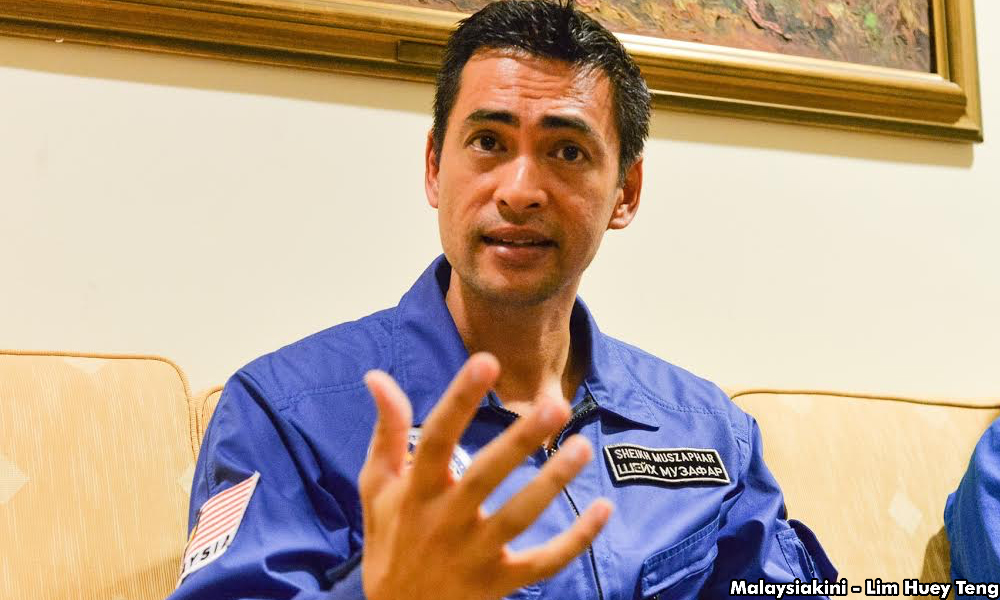
Instead, the programme only cost RM16 million, as it was part of an off-set agreement with Russia, which absorbed the cost to train and send a Malaysian astronaut to the ISS, he added.
"The Malaysian government spent RM16 million for vetting through the astronaut candidates, to carry out scientific missions, for educational programmes, for training at the National Aeronautics and Space Administration (Nasa) in the US, and insurance for the astronaut.
"The government has already regained the RM16 million in the form of ROV (return on value) through the generation of knowledge, talent development, and expert sharing, among others," said Chang.
Economically beneficial
Elaborating, he said the research also contributed to economic benefits through the development of new antibiotics for the pharmaceutical industry, spin-offs, and commercial products for industrial use, especially in the field of protein crystallisation.
"This programme has also opened opportunities for the country to establish scientific cooperation in international microgravity initiative programmes with Nasa and others.
"Since 2007, Malaysia has sent a total of 30 researchers to the space agencies of South Korea, Japan, Europe, and India for the purpose of capacity building in satellite technology, earth station operation, and also the global subsystem design of the satellite navigation system," he said.
Earlier, Syerleena also sent in a written question, asking about the steps taken by the government to ensure the involvement of more graduates in aeronautical engineering, and to ensure the development of space exploration mechanisms on par with the likes of Nasa.
Chang explained that research and development of space exploration costs a lot of money.
Thus, the government welcomed collaboration with the private sector, he said. - Mkini

No comments:
Post a Comment
Note: Only a member of this blog may post a comment.