

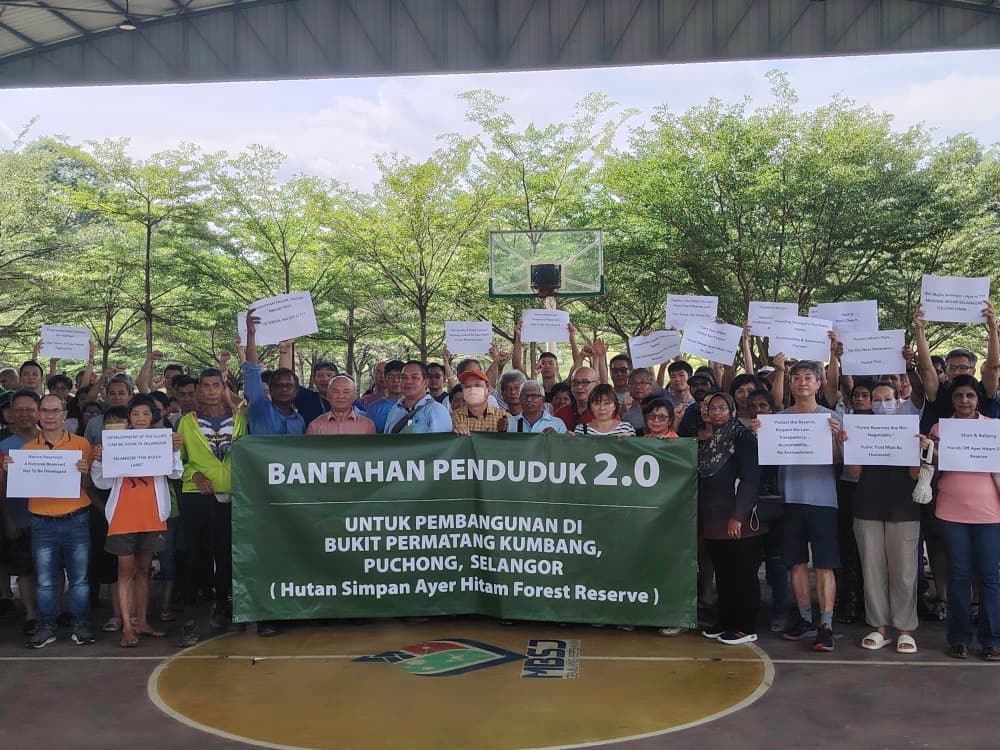
I WRITE as a resident of Bandar Kinrara, not from a platform or political office, but from a home where the proposed redevelopment bordering the Ayer Hitam Forest Reserve threatens the life I’ve built, the value of my investment, and the confidence I place in public institutions.
The greenery I moved here to enjoy is now under threat, and with it, the trust that our leaders would protect the spaces and communities we care about.
The dispute over Ayer Hitam is often framed as a technical matter of land classification or historical de-gazettement. Yet, at its core, this is a test of governance, accountability, and public trust.
Reliance on legal technicalities while disregarding the lived realities and expectations of residents erodes confidence in those entrusted with protecting the public interest.
Authorities point out that the 68.4 hectares in question is “not technically part of the forest reserve” and was degazetted nearly a century ago. While historically accurate, such reasoning is inadequate today.
Urban planning decisions cannot be governed solely by century-old classifications in a rapidly urbanising Klang Valley. If anything, the continued loss of green space should compel stricter protection, not justify its erosion.

Equally troubling is how information about this development has been shared. Residents first heard of potential redevelopment through Social Impact Assessment briefings led by consultants, rather than proactive engagement from local authorities.
No formal application had even been submitted to the Subang Jaya City Council. Consultation that comes after plans are already formed is not meaningful participation—it is a superficial exercise that undermines public trust.
Calls by residents and representatives like Subang MP Wong Chen for full disclosure of the land’s ownership history, transaction prices, and transfer chronology are fully justified. Selangor’s Freedom of Information framework exists precisely to ensure transparency in matters of public interest.
When information is withheld or delayed, suspicion grows, and trust diminishes. Residents are left questioning who owns the land, how it changed hands, and whether public funds might be needed to rectify past opaque decisions.
The environmental stakes are immediate and tangible. The Ayer Hitam Forest Reserve is not simply a backdrop; it serves as an ecological buffer, a natural cooling system for surrounding neighbourhoods, and protection against flooding and environmental degradation.
Development along its edge risks traffic congestion, overstretched infrastructure, rising temperatures, and long-term ecological damage—challenges already felt throughout Selangor’s urban areas.
This controversy is compounded by a pattern across the state. In Gombak, Indian settlements near Batu Caves face redevelopment amid unclear relocation plans. In Klang, Kampung Jalan Papan residents have experienced forced evictions despite repeated promises of replacement housing.
Communities that trusted the current government to uphold their rights now feel sidelined and ignored.
Pakatan Harapan has long governed Selangor on the promise of good governance, transparency, and people-first decision-making.
Those principles raised expectations, and repeated failures to meet them particularly around land, housing, and environmental protection have fostered genuine grievance. Homeowners who invested based on assurances now feel exposed.

Communities that expected careful stewardship of green spaces now feel dismissed. These are not minor frustrations but they are politically and socially significant.
For many residents, this is not about ideology. It is about predictability, fairness, and respect. When planning frameworks appear flexible only to suit development pressures, the social contract between government and governed begins to fray.
Decisive action is needed from three quarters: the Subang Jaya City Council, the Selangor State Government, and elected representatives at state and federal levels. Procedural compliance alone is insufficient.
Leadership demands clarity, transparency, and the courage to prioritise long-term public interest over short-term expediency.
Reaffirming protection of Ayer Hitam through re-gazettement or clear policy guarantees would demonstrate that Selangor’s leadership still values stewardship, listens to residents, and acts with foresight.
Failure to do so will not only damage a precious forest; it will deepen public frustration, erode confidence in governance, and amplify voter disillusionment in areas that have long supported the state government.
Ayer Hitam is no longer simply a planning issue. It has become a measure of whether public trust, once shaken, can still be restored.
How authorities respond will signal whether the state prioritises the voices of its residents or the short-term ambitions of development.
R. Paneir Selvam
Bandar Kinrara, Puchong
The views expressed are solely of the author and do not necessarily reflect those of MMKtT.
- Focus Malaysia.

No comments:
Post a Comment
Note: Only a member of this blog may post a comment.