


Malaysia’s 5G debate has now crossed a threshold where consequences are no longer abstract or deferrable.
The recent twin developments in Malaysia’s 5G saga - the stark revelation of plummeting network speeds and the Finance Ministry’s financial exit - are not mere coincidences.
They are structurally linked, direct, predictable, and costly outcomes of a policy experiment that Emir Research has been persistently warning against since its inception.
The data now speaks with unequivocal clarity: the Single Wholesale Network (SWN) model, as executed by Digital Nasional Berhad (DNB), has failed on its own terms, validating years of evidence-based policy advocacy and urging by Emir Research to align Malaysia’s 5G strategy with global evidence, economic rationality, and public interest.
The weaknesses were identified early, debated extensively, but, unfortunately, ultimately ignored.
Two recent developments crystallise what Emir Research warned, repeatedly, across nearly two dozen op-eds:
DNB’s structural fragility has culminated in the full transfer of public liabilities to private telcos - RM983.6 million, to be exact, as Ministry of Finance Incorporated exercises its put option to offload its entire stake and outstanding loans onto CelcomDigi, Maxis, and Yes.

DNB’s network performance has collapsed by nearly 50 percent in under two years, with median 5G download speeds plunging from 451.79 Mbps in late 2023 to 242.92 Mbps in Q3 2025 - a textbook case of “speed-to-spend, no outcome” finally catching up.
Notably, this is a predictable consequence, not a misfortune, and Emir Research laid out exactly how and why, years before the data caught up.
‘Spectrum-as-rent’
In “Spectrum Economics & Deadweight Loss” (Mar 15, 2023), Emir Research predicted: “Under DNB’s very ‘innovative’ model, spectrum fees will now directly impact Mobile Network Operators’ (MNOs’) marginal costs. This will have a pure deadweight loss tax effect on our digital economy, leading to its significant shrinkage.”
Emir Research consistently emphasised that DNB never built but leased, never operated but sub-contracted nearly everything, never invested but monetised spectrum upfront, locking in RM30,000/Gbps/month in wholesale fees while ignoring the core truth: 5G profitability is usage-driven, not coverage-driven.
Now, with 5G adoption surging (as Ookla confirms: “nearly 80 percent of speed tests are now on 5G-capable devices”), utilisation has spiked and wholesale economics have imploded.
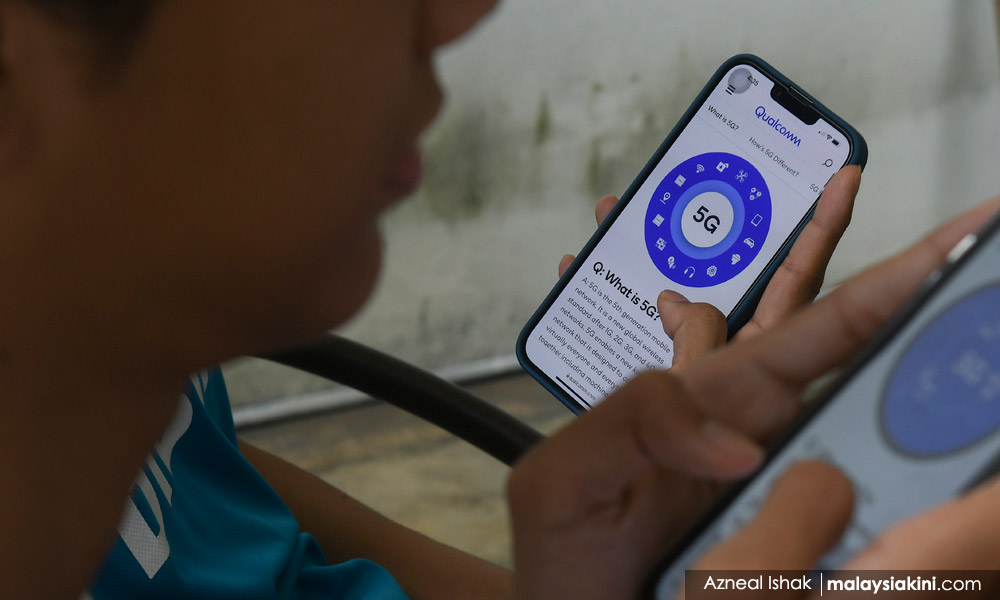
Recall Emir Research’s early back-of-envelope: “With 10 percent network utilisation, DNB’s cost balloons to ~RM0.93/GB - seven times its advertised RM0.13/GB.”
Unfortunately for our nation, that is no longer hypothetical but an operational reality - hence the collapse in speeds as congestion overwhelms an under-densified, over-optimised network.
‘A middleperson with no assets’
In “Deconstructing 5G Rollout — Part 1” (Jan 22, 2022), Emir Research warned: “RM4 billion as estimated corporate costs over 10 years for an entity that nearly owns nothing, does nothing, except playing a role of a middleperson… simply suggests itself for more scrutiny.”
The scrutiny has arrived - in the form of a RM983.6 million bill to the three telcos.
But let us be precise here: MoF Inc is not selling an asset. It is putting an option to dump liabilities - shareholder loans, accrued interest, and additional advances - onto its shareholders. This is a forced equity bail-in, not a market transaction.
This is the exact mechanism Emir Research flagged in “Elbowing Monopoly and Delivering Promises” (May 16, 2023): “If DNB is having cash flow problems… they have to raise sukuk backed by government guarantees… exposing the government (the people) to yet another monetary burden… unless MNOs take over DNB 100 percent.”
Well, here we are. The government has exited. The people are “off the hook”. However, private shareholders, including GLICs like EPF, KWAP, and PNB, are now on the line for nearly RM1 billion in legacy obligations. This is not privatisation. It is risk-shifting by design.
‘Coverage ≠ adoption ≠ performance’
In “Malaysia’s 5G in Limbo” (Nov 7, 2024), Emir Research alerted: “Malaysia’s slightly higher than 80 percent Coverage of Populated Area (Copa) is essentially meaningless… severe insufficiency of 5G towers points to potentially overstated Copa… customers risk receiving 4G-level service at a higher 5G price.”
Ookla’s recent report is the autopsy of that prediction: 242.92 Mbps median download - respectable, yes, but median upload of 29.52 Mbps is barely better than mid-tier 4G, while 67 percent of connected time is still spent on 4G, not due to device limitation, but coverage gaps, especially indoors and in rural zones.
DNB’s architecture was outdoor-only, macro-cell dominant, and low-density. As Emir Research noted in “Camouflaged Costing Acrobatics” (Feb 10, 2023): “An estimated 80 percent of cellular data traffic originates indoors… yet DNB’s reported coverage focuses on outdoors.”
The result? A national network that looks advanced on coverage maps but feels broken in daily use. And when demand rises, as it inevitably does, the system buckles. That’s not “growing pains”. It’s an architectural failure that could have been avoided five years ago.
These developments are therefore manifestations of the same design choice. By suppressing infrastructure-based competition in the name of speed and coordination, the SWN model removed the strongest driver of continuous network improvement: competition on quality at the active Radio Access Network level.
Delinking network ownership from service delivery weakened operators’ ability to differentiate, optimise, and respond dynamically to demand. The result is a system that struggles precisely when it is most heavily used (refer to “The Impeding Failure of Good Intentions” by Emir Research).
‘Dual’ networks, same flaws
The government’s subsequent approval of a second 5G network reflects recognition of this structural strain. Yet the shift to a dual wholesale arrangement should not be mistaken for resolution.
Replacing one monopoly with two wholesale entities may improve resilience at the margin, but it does not automatically restore the competitive dynamics that underpin sustainable performance.
Wholesale price convergence, regulatory micromanagement, and unresolved gaps in passive infrastructure continue to pose risks, particularly if legacy financial burdens constrain future investment.
Look closely: U Mobile, with ~9,000 sites (versus DNB’s ~7,000), is now deploying its “second” network, but must divest its DNB stake, cannot cooperate freely with MNOs, and remains locked in non-MNO spectrum ownership (3.5GHz/700MHz still sit in DNB’s hands, not reassigned).
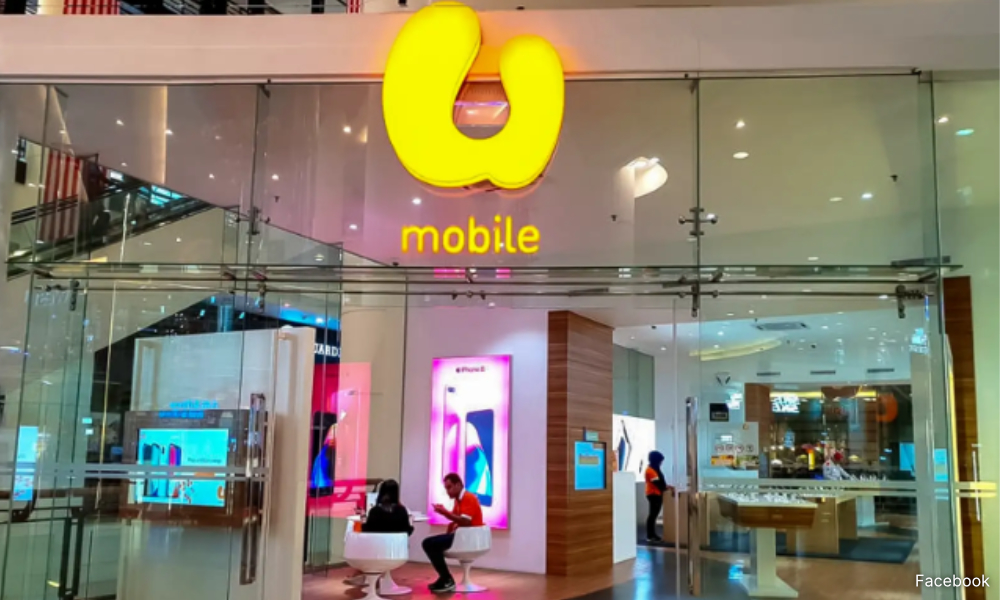
Meanwhile, the “dual network” is still not infrastructure-competitive: DNB’s spectrum is rented, not owned by operators - so neither side can optimise RAN, innovate on slicing, or invest in densification without commercial penalty.
As Emir Research warned in “Topsy Turvy Innovation” (Mar 24, 2023), referencing Rwanda and Mexico: “Dual Wholesale Networks only marginally solve the lack of infrastructure-based competition… and in Mexico, the SWN filed for bankruptcy within two years.”
We are not yet at bankruptcy, but we are at balance-sheet bail-in and performance collapse. Two sides of the same coin.
None of this constitutes an argument against state involvement in strategic infrastructure, nor against 5G itself. It is an argument for institutional humility and policy design grounded in evidence.
Telecommunications networks are complex, adaptive systems. Treating them as static utilities, insulated from competition, may simplify governance in the short term but invites brittleness over time. When the scale arrives, the system responds accordingly.
Therefore, if we are truthful, the prescription Emir Research offered in “Credible Way Forward” (Apr 17, 2023) remains the only path out:
Full spectrum reassignment - 700MHz & 3.5GHz to MNOs, not DNB.
Immediate reinstatement of spectrum technology neutrality - let MNOs upgrade 4G to 5G in software, on existing towers.
Restructure DNB into a passive-only wholesale entity - dark fibre, poles, backhaul - not active RAN.
Enforce strict KPIs, not just Copa - real outcome and impact metrics: indoor coverage, upload speed, latency, 5G time-on-network.
UMobile’s rollout, backed by Huawei, ZTE, and RM4.3bn in private financing, could be the catalyst. But only if it’s allowed to compete on infrastructure, not just on retail plans.
Otherwise, we are witnessing not evolution but erosion, not dual networks but dual fragilities, and not real digital sovereignty but digital hangover.
And if, after all of this, policymakers still choose to let the credible solution remain unheeded, the public is left with just one question: the government has exited DNB, but the RM16.5 billion has been spent. Has every sen been recovered?
Without full transparency, before and after the deal, the rakyat are not just footing the bill; they are being denied even the right to audit it.
While on the strategic plane, the choice remains clear: double down on the rent-seeking mirage or pivot decisively to infrastructure competition, spectrum efficiency, and outcome-driven rollout?
Malaysia’s 5G future - and with it, its 4IR ambitions - hangs on that answer. - FMT
RAIS HUSSIN is the president/CEO of Emir Research, a think tank focused on strategic policy recommendations based on rigorous research.
The views expressed here are those of the author/contributor and do not necessarily represent the views of MMKtT.

No comments:
Post a Comment
Note: Only a member of this blog may post a comment.