


Few annals in development keep on returning to haunt the living more than the legacy and legend of the Battersea Power Station project, an iconic London landmark on the banks of the Thames that sucked in some of Malaysia’s premier funds and land companies.
The latest in that tragic tale is that the CEO of developer Battersea Power Station Development Company (BPSDC), who has been fired, alleged that it was done because the company had effectively overstated the value of its assets by a “few hundred million pounds”.
It should be noted that, in 2013, when the project was announced, it was supposed to have been finished by last year. Looks like it's still alive and kicking - hard.
That should set sirens screaming louder than Prime Minister Anwar Ibrahim’s motorcade in Malaysia because not only is Battersea a major problem child, delivered by Malaysia’s property icon and SP Setia founder Liew Kee Sin no less, it involves big names in fund management and property.
The entire development was worth a whopping RM53 billion over a decade ago and probably costs a lot more now.
It is owned by three icons - that word again - from Malaysia, prominent developers SP Setia and Sime Darby Property (SDP) with a 40 percent stake each and the venerable Employees Provident Fund (EPF), which controls over a trillion ringgit in funds, with the remaining 20 percent.
Big names
To top it up, major stakes in SP Setia and SDP are owned by another venerable fund, national unit trust operator Permodalan Nasional Berhad (PNB), with nearly RM350 billion in assets, which owns some 49 percent of SP Setia and some 45 to 47 percent of SDP according to recent reports.
Other significant shareholders in SP Setia were EPF with 11 percent and the pension fund Retirement Fund Incorporated (Kwap) with nine percent.
EPF owned over 15 percent in SDP while Kwap owned nearly eight percent.
The Battersea project dates back to 2013 when it was launched with much fanfare in London, the opening graced by no less than the then-British prime minister David Cameron, and then-London mayor Boris Johnson - who later became the British PM.
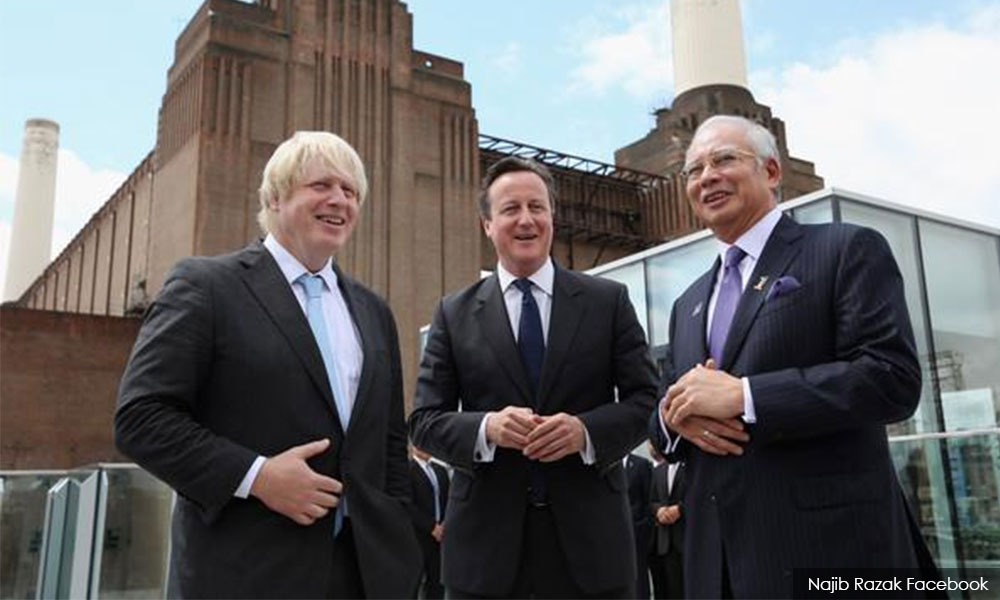
They were feted by Liew, who soon after became embroiled in a massive conflict of interest.
This conflict and the potential loss to Battersea shareholders were explained in this column titled “Sime Darby, SP Setia, EPF lose billions from Liew’s Battersea ‘legacy’” - which was written in August 2024.
Essentially, I explained that the EPF, SDP, and SP Setia are likely to shoulder losses of some RM250 million a quarter, or RM1 billion a year, from a five-year rental guarantee at Battersea.

The guarantees, reportedly for a period of five years, were given by the Battersea Power Station redevelopment project in London to buyers to encourage sales.
However, the company was saddled with a huge payment for income not met by purchasers.
It turns out the guarantee may have been given to a holding company owned 65 percent by EPF and 35 percent by PNB, which bought the commercial development of Battersea for £1.58 billion, a whopping RM8.8 billion at the time of the deal in 2018.
The rest, mainly residential, remained with the development company.
All in the family
Now, reflect on that. The Battersea development company, BPSDC, owned 20 percent by EPF and 40 percent each by two companies substantially owned by PNB, with significant stakes held by EPF and Kwap gave rental guarantees to a company owned by EPF and PNB.
How much more than “all in the family” can you get? The potential losses are being hidden through a maze of interlocking shareholders.
Malaysians do not know the full extent of the losses for entering this risky, expensive project, developing a white elephant landmark in faraway London.
But to say that all this could not have been seen earlier is not right. Kinibiz highlighted major problems way back in 2015, over a decade ago, through a series of articles titled “Is Battersea losing power?”
The synopsis said then: “The market slows while its charismatic chairperson Liew leaves to become a direct competitor in earnest. Can the project sustain its momentum to the projected end in 2025?”
Well, 2025 has come and gone and Battersea is still struggling. Battersea’s penchant for big names was not humbled by these things, but continued unabated.
A new chief executive, Donagh O’Sullivan, was appointed in June 2024.
King Charles’ visit
In December 2024, he showed King Charles around the development, along with an anchor tenant for the commercial part, Apple CEO Tim Cook, CEO. But in May 2025, barely six months later, O’ Sullivan was dismissed.
The Financial Times reported earlier this month that O’ Sullivan alleged he was dismissed because he flagged that properties owned by the Battersea development company were overvalued by a few hundred million pounds. The case is now before a London tribunal for wrongful dismissal.
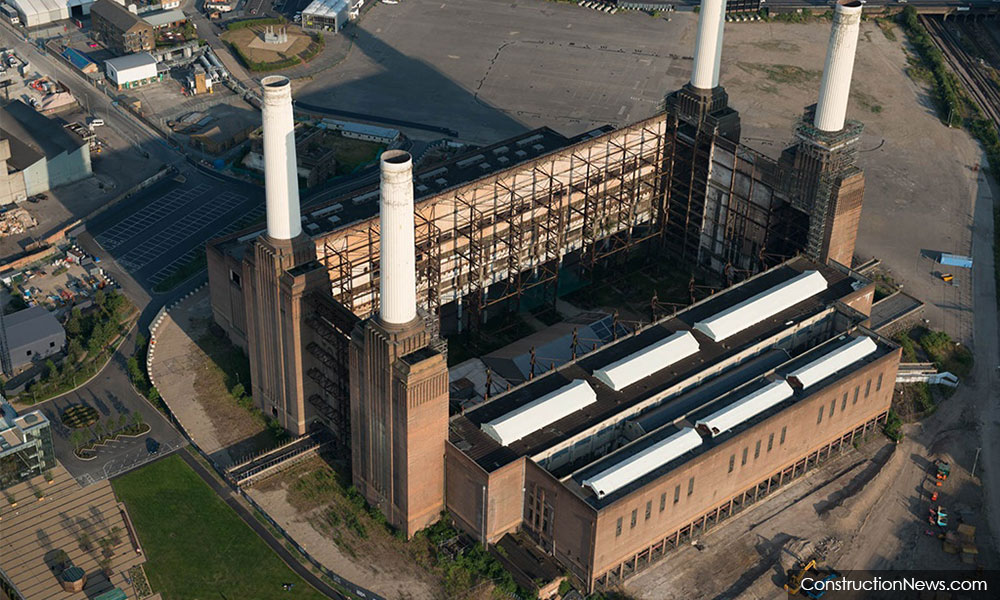
The development company denied the allegations, saying in a statement: “Battersea Project Holding Company appointed highly regarded forensic accountants to independently investigate historic claims.
“Whilst the two forensic accountants’ reports deal with confidential matters, the conclusion reached was that Mr O’Sullivan’s concerns were not borne out, no further investigation was warranted and accounting practices employed by Battersea Project Holding Company Limited adhere to international accounting standards.
“Its accounts have always been audited and signed off by PwC, one of the big four accounting firms.”
The company declined further comment: “Adhering to the confidential nature of Employment Tribunal procedures, we cannot comment on this matter further at this time.”
The FT reported that in its statement of defence to the tribunal, the company denied any accounting irregularities and said it had dismissed O’Sullivan over poor performance, a lack of strategic leadership, and allegations of misconduct.
Quality of assets is a rather subjective matter and different people have different things to say about it.
But one must ask why a career professional who has a long and distinguished career in other places will make such serious allegations against Battersea if it is not warranted.
Forensic audit needed
Considering Battersea’s checkered past and the incestuous holdings referred to earlier, this can only be unravelled by a simultaneous total forensic audit of all of these government-linked investment companies: EPF, PNB and Kwap and GLCs, SP Setia and SDP, and their roles.
One of the key parts of that investigation should be to find out how a person who was not even a representative of any of the controlling shareholders managed to originate this in the first place, putting at stake eventually the monies of three of our largest funds and two of our biggest property companies.
If such an audit is not done and released to the public, expect the ghost of Battersea to revisit periodically as other skeletons in the cupboard tumble out from time to time. - Mkini
P GUNASEGARAM says when an albatross remains on the neck for too long, questions need to be asked and answers given. Otherwise, agony is needlessly prolonged.
The views expressed here are those of the author/contributor and do not necessarily represent the views of MMKtT.

No comments:
Post a Comment
Note: Only a member of this blog may post a comment.