


Kapayan assemblyperson Chin Tek Ming has urged Bersih to consider seeking a judicial review over the decision to bar several of its leaders and officers from entering Sabah.
Chin, who is also a lawyer, said a court challenge could establish who made the decisions, the source of the power exercised, and whether the discretion was used for a lawful purpose.
“In these circumstances, I believe Bersih should seek legal advice and consider filing a judicial review against the decision or action to bar them from entering Sabah,” he said in a statement yesterday.
“This is not merely a question of whether an activist ‘likes’ or ‘dislikes’ the government.
“The issue is much bigger: Was executive power exercised in accordance with the law?” he questioned.
Chin’s (above) call came after Sabah Bersih said advocacy officer Anas Nor’azim was barred from entering Sabah when he arrived at Tawau Airport on Aug 29.

Bersih chairperson Faisal Aziz and steering committee member Alyaah Hani were also informed that they had been barred from entering the state since June 30.
That was the same day Bersih executive director Asraf Sharafi was denied entry upon arriving at Kota Kinabalu International Airport and sent back to Kuala Lumpur.
Asraf was reportedly informed that his name had been placed under a Sabah Warning Notice (NAS).
Sabah Immigration Department director Sh Sitti Saleha Habib Yusoff subsequently confirmed that Asraf had been denied entry under Sabah’s immigration powers but did not disclose the reason.
Aide denies Hajiji involvement
The Sabah government had previously pushed back against claims that Chief Minister Hajiji Noor personally ordered Asraf’s exclusion.
Hajiji’s political secretary Azrul Ibrahim also reportedly described allegations linking the chief minister to the decision as unfounded, saying Hajiji was performing the umrah pilgrimage in Saudi Arabia at the time.
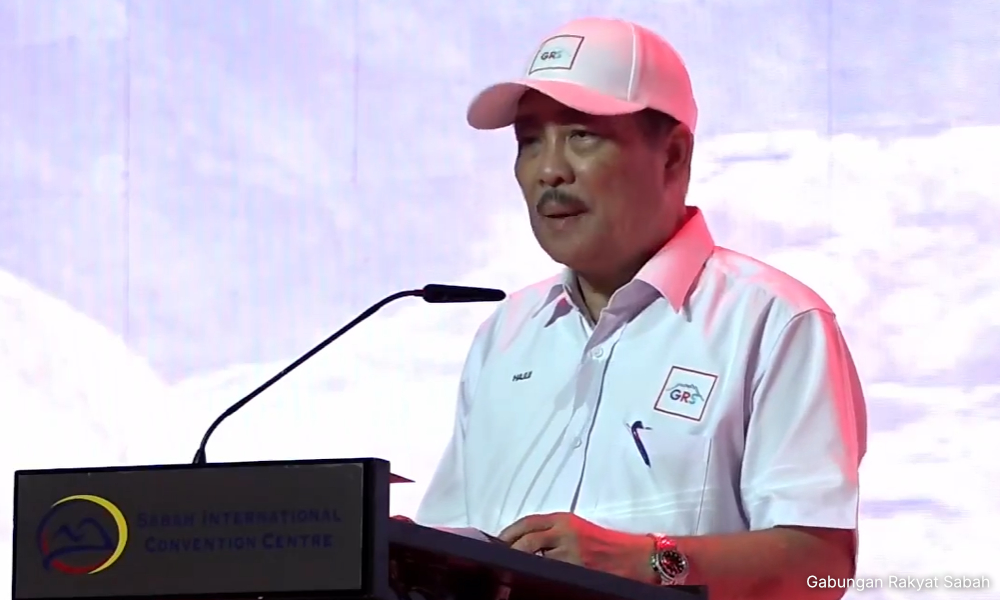
Azrul said the relevant authorities decided to issue an NAS after considering risk assessments, legal provisions, and Sabah’s security interests.
Chin, however, said the latest cases meant the restrictions could no longer be regarded as isolated.
“This is no longer an isolated case. It has become a pattern that demands an explanation,” he said.
‘Powers not absolute’
While stressing his support for Sabah’s immigration autonomy, Chin said such powers were not absolute and could not be used to avoid accountability or silence civil society.
“Autonomy is not absolute power. Autonomy is not a licence to act as one pleases.
“Autonomy is not an excuse to evade accountability.
“And most importantly, autonomy cannot be used as a tool to silence civil society voices,” he stressed.
As such, Chin urged the Sabah government and Immigration Department to state whether the state government had ordered restrictions, who made the decisions, the legal provisions relied upon and the specific reasons for each individual being barred.

Former Bersih chairperson Ambiga Sreenevasan previously challenged a 2014 decision barring her from entering Sabah, but ultimately failed.
In 2017, the Federal Court refused her leave to appeal, leaving intact an earlier ruling that Section 59A of the Immigration Act generally bars substantive judicial review of Sabah immigration decisions, except on procedural grounds.
That means any fresh challenge by Bersih may have to focus on whether the authorities followed the proper legal process.
Sabah insists on immigration autonomy
The latest dispute also comes as the Sabah government continues to assert its control over immigration matters.
In July, Assistant Minister to the Chief Minister Joniston Bangkuai told the state assembly that Sabah had informed Prime Minister Anwar Ibrahim that implementation of the Malaysian Border Control and Protection Agency Act 2024 must not erode the state’s immigration autonomy.
The state government insisted that the Sabah Immigration Department should remain in charge of the state’s entry points and that the issuance of Not-To-Land notices remain under its purview.

Chin said he was not disputing those rights, stressing, “I defend MA63 (Malaysia Agreement 1963). I defend Sabah’s immigration autonomy.”
“But I also defend the rule of law, administrative accountability and the people’s right to obtain explanations from the government,” he said, warning that unexplained restrictions against civil society figures could set a wider precedent.
“Today, electoral reform activists. Tomorrow, environmental activists.
“The day after, native customary land rights advocates. Then perhaps journalists, academics, lawyers or any citizen who dares to speak out,” he said.
Chin stressed that he was not accusing the Sabah immigration director of abusing her powers, but said serious questions over how those powers were exercised required an explanation.
“The powers given to Sabah are a public trust, not the personal entitlement of the government,” he said.
Don’t fear differing views
Warisan information chief Azis Jamman said Sabah need not fear differing views, and that the state’s immigration powers are not in dispute.
The former deputy home minister said that while the state government has a responsibility to act against a security threat, any action should not be based solely on differing views or criticism.

“We do not have to agree with Bersih on everything. The government also has the right to respond and defend its position.
“But in a democracy, differing views should be answered with facts, arguments and debate,” he stressed.
He also argued that a democracy does not mean everyone must agree with the government.
“Democracy means we are mature enough to accept criticism and differing views, as long as they are expressed peacefully and within the bounds of the law.
“As we celebrate the 69th Independence Day, our maturity is measured not only by how much power we possess, but by how fairly, responsibly and respectfully that power is exercised in relation to the rights of the people,” he added. - Mkini

No comments:
Post a Comment
Note: Only a member of this blog may post a comment.