



As a student of Malaysia’s electoral system, I am completely puzzled by the statement that the addition of 13 seats to the Sabah State Assembly requires the approval of the Parliament, as made by Parti Bersatu Sabah deputy president Maximus Ongkili.
Another Sabah politician, Parti Warisan vice-president Junz Wong, has made an even more peculiar statement that the “failure by Parliament to approve the additional 13 Sabah state seats could render the upcoming Sabah state election null and void”.
Ongkili, who headed the Parliament’s Select Committee on electoral reform in 2011-2012 and is expected to be well-versed in electoral matters, reportedly said, "Legal experts say that if Parliament does not approve the new seats, Sabah will have to withdraw the changes to the constitution".
However, he did not elaborate the constitutional or legal grounds.
I stand corrected, but I suspect the statements by the two learned politicians reflect their confusion over an increase in legislative seats and delineation of constituencies.
To be fair, such confusion is not exclusive to them but commonplace among politicians and journalists. This is because, conventionally, delineation exercises and seat increases take place hand-in-hand.
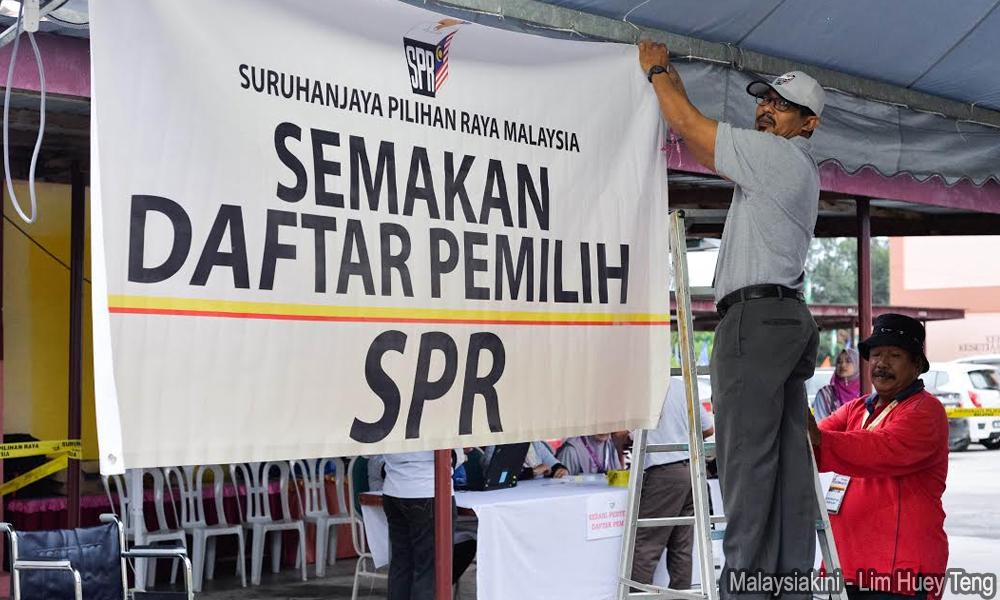
Even the Election Commission (EC) claimed on the first page of its delineation notice that it had recommended whether to add seats, as if it was the Parliament or State Legislature.
Legislature size a legislative matter
How many seats Parliament and state legislatures should have is simply a legislature matter, to be decided by these legislative bodies themselves.
The size of Parliament is stated in Article 46 of the Federal Constitution. Since 1973, Parliament also spells out how many seats should go to each state and federal territory, through Article 46. Before 1962, this power rested completely with the EC, where seats were to be allocated to the states based on their demographic strength.
The size of a state legislature is determined by some provisions in the State Constitution, state enactment or both. While state constitutions are subject to Article 71 and the Eighth Schedule, which impose some uniformity, no cap is made on the absolute number of legislative members.
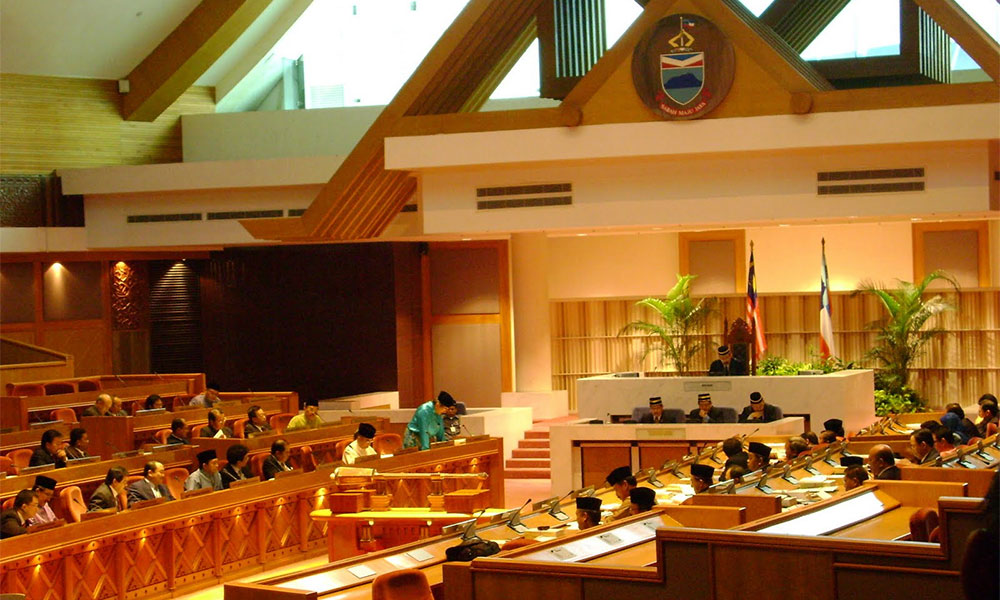
For Sabah, the legislature size is determined by Article 14 of the State Constitution and the Legislative Assembly (Elected Members) Enactment 1965.
The addition of 13 seats to make a new total of 73 has been in force from Aug 18, 2016, onwards by way of En. No. 5/2016. The new Article 14 reads:
(1) The Legislative Assembly shall consist of:
(a) the Speaker;
(b) such number of elected members as the Legislature may by law prescribe, elected in such manner as may be provided by Federal or State law;
(c) such number of other members (hereinafter referred to as “nominated members”), not being more than six, as the Yang di-Pertua Negeri may appoint each of whom shall, subject to the provisions of Article 18, hold his seat for such period as may be specified in the instrument by which he is appointed.
(2) Until the Legislature otherwise prescribes the number of elected members shall be seventy-three.
Constituency delineation an electoral matter
Constituency delineation is an electoral matter that falls absolutely within the Federal List of the Ninth Schedule as its item 6(a). The power to do so rests with the EC under Articles 113, 115, 116 and 117 and the 13th Schedule.
Article 113(3A) (i) states very clearly how constituency delineation shall follow seat increase:
Where the number of elected members of the House of Representatives is altered in consequence of any amendment to Article 46, or the number of elected members of the Legislative Assembly of a State is altered in consequence of a law enacted by the Legislature of a State, the Election Commission shall, subject to Clause (3B), undertake a review of the division into federal or state constituencies, as the case may be, of the area which is affected by the alteration, and such review shall be completed within a period of not more than two years from the date of the coming into force of the law making the alteration.
Going by this clause, the review that delineates Sabah into 73 state constituencies must be completed by Aug 18, 2018. As stipulated by Article 113(10), completion does not mean the new boundaries coming in force, but “submission of the report to the Prime Minister under Section 8 of the Thirteenth Schedule”, and “a notice of such date shall be published by the Election Commission in the Gazette.”
What happens if the PM sits on the report after its submission? The Constitution is silent on this. Not even the validity of such a report is affected. So, as long as the EC submits its final proposal for Sabah by Aug 17, 2018, there is no whatsoever constitutional poser.
But the EC’s deadline is even later than that because of Article 113(3B), which reads:
Where an amendment to Article 46 or a law enacted by the Legislative Assembly of a State referred to in paragraph (i) of Clause (3A) comes into force after the lapse of eight years from the date of completion of the last review under Clause (2) and the Election Commission are of the opinion that it is necessary to undertake a review under Clause (2), the Election Commission shall not undertake a review under paragraph (i) of Clause (3A) but shall instead undertake a review under Clause (2) and in conducting such review shall take into account any area which is affected in consequence of the amendment or the law referred to in paragraph (i) of Clause (3A).
Since the last review for Sabah was completed on March 21, 2003, more than 13 years ago from the commencement of this delineation exercise, the current exercise is conducted under Article 113(2), which reads:
(i) Subject to paragraph (ii), the Election Commission shall, from time to time, as they deem necessary, review the division of the Federation and the States into constituencies and recommend such changes therein as they may think necessary in order to comply with the provisions contained in the Thirteenth Schedule; and the reviews of constituencies for the purpose of elections to the Legislative Assemblies shall be undertaken at the same time as the reviews of constituencies for the purpose of elections to the House of Representatives.
(ii) There shall be an interval of not less than eight years between the date of completion of one review, and the date of commencement of the next review, under this Clause.
(iii) A review under paragraph (i) shall be completed within a period of not more than two years from the date of its commencement.
This means the EC only needs to submit its proposal for Sabah, as in the case of Malaya, by Sept 14, 2018.
Who blocks the Sabah delineation proposal?
Obviously, there are gaps in the Federal Constitution, that there is no deadline for a delineation proposal to be implemented after its submission to the prime minister, or even being passed by the Parliament.
As electoral rolls must be updated based on the new constituency boundaries for the new boundaries to be used in elections, if updated rolls are not ready when the EC issues the writ after the dissolution of the Parliament or State Legislature, then obviously old boundaries must be used.
While in today’s context, it may sound incredible that the PM or the EC he controls would delay their delineation proposal, it may happen more often in the future as politics become more fluid.
In fact, this might already be the case of Sabah now. As the second display was completed on Dec 21, 2016, and the second inquiry was held in early 2017, the EC should have submitted its final proposal to Prime Minister Najib Abdul Razak, who should have tabled it in Parliament a long time ago.
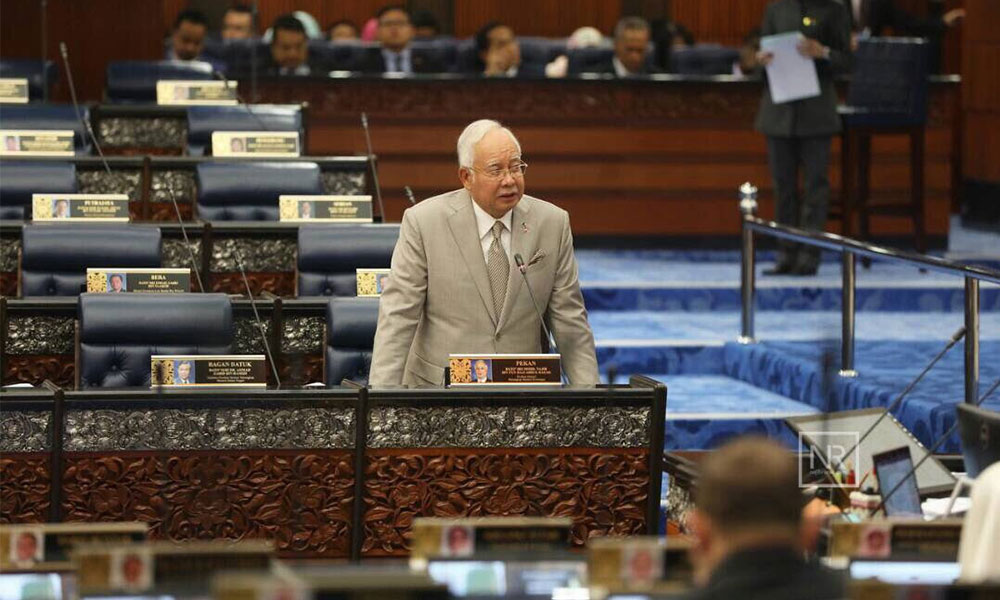
Why is this not happening? One plausible explanation is that Najib might want to prevent Chief Minister Musa Aman from calling a snap election with the new map.
The constitutional gaps related to delineation must be closed, and before this happens, we must not be led into political fantasies that a state assembly is but a subordinate agency of the Federal Constitution and that it cannot even decide its own numbers, or that the legislature size should be arbitrarily decided by the EC.
Hence, while I disagree with constant expansion of legislatures and the EC’s badly malapportioned and gerrymandered new maps, I feel compelled to defend this very right of the Sabah State Legislature from misperception. For goodness’s sake, Malaysia is a federation!
WONG CHIN HUAT studies electoral, party and identity politics in Malaysia. He is head of the political studies programme at Penang Institute.- Mkini

No comments:
Post a Comment
Note: Only a member of this blog may post a comment.