


EXCLUSIVE | The Health Ministry has expressed its eagerness to permanently resolve the long-standing issue concerning contract doctors by the second quarter of next year.
Its minister Dr Zaliha Mustafa said the high-level committee, formed in March this year had held engagement sessions with relevant agencies, quarters, and ministries to discuss the pressing matter.
Zaliha also revealed that the Malaysian Medical Council (MMC) is also on board the inter-agency committee as it is the regulatory body for medical doctors.
“We are also engaging with the Malaysian Medical Association (MMA), fraternities, and contract doctors. They have given us ideas.
“After (meeting at) these working levels, we will come up with some solutions and proposals. We will then dwell on these proposals before tabling it to the cabinet,” Zaliha told Malaysiakini in an exclusive interview at her ministry last Saturday (Nov 18).
“We hope to settle it by at least before mid of next year. The sooner the better,” she added.
Zaliha reiterated that the contract doctors issue was inherited from the previous administration when the scheme was introduced in 2016 following a deluge of medical graduates in the job market.
“As we know, the Health Ministry has lots of ‘legacy’ issues and this (contract doctors matter) is one of them,” she said, adding that a significant number of contract doctors have now been absorbed into the service.
Ramping up healthcare delivery
However, the Sekijang MP asserted that the long-running issue plaguing contract medical workers in the country is among numerous urgent matters to be solved by the ministry.
Elaborating on the matter, she said it comes under one of the pillars of the Health White Paper, which is to transform healthcare service delivery.
“So what is there in the delivery system? When we talk about manpower, this includes fraternities, especially young doctors. People want to see what I’m going to do about these contract workers,” she said.
In July 2021, government contract doctors carried out mass walkouts in a nationwide strike to demand job security and better career opportunities.
The protest, led by Hartal Doktor Kontrak, was joined by hundreds of healthcare workers from around 15 to 20 hospitals in the country.
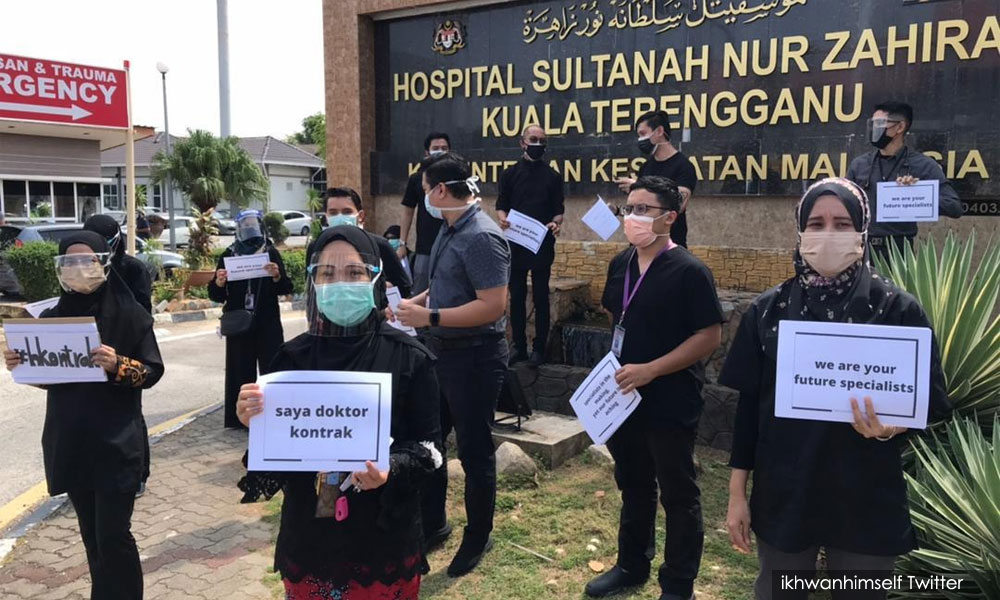
The walkouts occurred after the government at the time, led by former prime minister Muhyiddin Yassin, offered the doctors an extension of their contracts, but stopped short of offering permanent positions.
They were also promised perks that were similar to that of permanent doctors.
In April, Prime Minister Anwar Ibrahim gave his assurance that 4,300 doctors would get permanent jobs this year.
Anwar then added that the government expected 12,800 out of the 20,330 existing contract doctors would be absorbed within the next three years.
By October, Zaliha was reported as saying that 2,083 more contract medical officers would be absorbed into permanent positions by the end of the year, while part of the placement of contract workers was completed at the end of July.
System congestion
She acknowledged that long waiting hours at government hospitals have been a constant complaint.
“One key way to reduce congestion at emergency departments of government hospitals is by extending operating hours at selected public health clinics,” she added, saying that there are 149 hospitals in the country compared to over 3,000 public clinics, including those that provide dental services.

She alluded to the success of pilot projects that were first implemented in March and added that the government was also looking at using its budget to upgrade facilities in public health clinics, particularly those in remote areas and those that were established a long time ago.
“We have identified more than 1,200 clinics that are over 50 years old. These clinics might have problems with piping in flood-prone areas or have outdated equipment.
“The plan is to upgrade the clinics and encourage patients to seek treatment there. This will reduce congestion at tertiary hospitals, which is a high priority,” said Zaliha.
She added that virtual consultation, whereby patients could consult with doctors via Zoom or Google, was another way to reduce waiting hours. - Mkini

No comments:
Post a Comment
Note: Only a member of this blog may post a comment.