


With another veteran Sabah politician implicated in the mining licence scandal, C4 Center urged Putrajaya to prioritise the enactment of the Political Financing Act to eradicate money politics.
“To ensure the law and its framework are developed in a comprehensive manner, C4 Center urges the government to incorporate meaningful public participation in the development process,” it said in a statement today.
Two days ago, businessperson Albert Tei released a video recording of his conversation with Sabah Deputy Chief Minister I Jeffrey Kitingan, whom he alleged had received the largest payout of all in the Sabah mining scandal.
Tei also said that the sum purportedly given to the Keningau MP was RM1.78 million - higher than the RM1.6 million figure mentioned in the clip.
Kitingan (above) denied the accusation, adding he could not “really recall” having a conversation with Tei over a sum of money as depicted in the video.
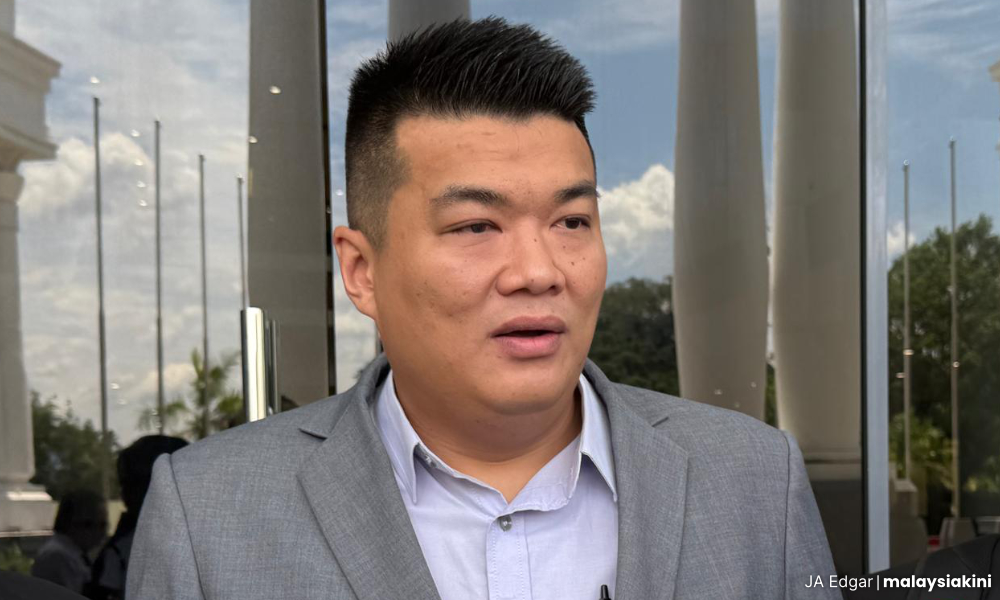
Kitingan said the conversation appeared to be about political donations “years ago before the election” and claimed they had nothing to do with the mining scandal that implicated a slew of Sabah assemblypersons.
Unimpressed, Tei released a series of documents implicating the Parti Solidariti Tanah Airku (Star) president – one a support letter for a sand mining licence application on Balambangan Island linked to his company and the other, an application for a 30-year “occupation permit” to obtain a quarry licence covering 80ha within the Pulau Banggi forest reserve.
When contacted, Kitingan said: “I will respond to all this in a day or two after PMX’s (Prime Minister Anwar Ibrahim’s) political visit.”
Perils of money politics
C4 Center further said the negative influence of money politics on Malaysia has resulted in a history of governance that puts private gains above public interest.
The NGO added that Malaysians are also getting exhausted by corruption scandals involving elected leaders and called for concerted action to address the problem.
The enactment of the Political Financing Act, C4 Center stated, would be the first step in developing a more transparent and accountable political culture.
“The act must impose stringent and binding financial reporting requirements on political parties and figures, with appropriate penalties for non-compliance.
“Whichever body is tasked with monitoring political financing activities must be sufficiently insulated from executive interference, so it can carry out its mandate properly,” it mentioned.
C4 Center also urged for corporate funding for political parties and personalities to be banned to stem the undue influence of corporate lobbyists.
“Most importantly, public funding of political parties and activities should be a fundamental element of the new framework - a proposal that has been recommended by CSOs and academics, and which has seen success in other countries," it said. - Mkini

No comments:
Post a Comment
Note: Only a member of this blog may post a comment.