


I remember vividly speaking to Pannir Selvam Pranthaman’s sister, Angelia, about how he managed to pen poems while on death row in Singapore.
She simply said, “It’s not easy”, because objects like pens are seen as potential weapons and death row inmates are not allowed to have them for fear of injuring others or even themselves.
Thus, Pannir was only given a pen refill to write with and, nevertheless, continued to put pen refill to paper, resulting in a collection aptly titled “Death Row Literature”.
Each piece of poem was lovingly handed to Angelia, and as time went by, the collection increased in size, becoming a larger compendium detailing his time and existence within the dreary walls of the Changi Prison.
Pannir has spent close to 10 years incarcerated in the Singapore prison system after his arrest for drug trafficking in 2014.

In “Death Row Literature”, Pannir gives us a glimpse into the world of death row prisoners.
Locked in their cells for 23 hours a day with only an hour for “recreation”, human interaction is limited to family and lawyer visits or encounters with their uniformed minders within.
Aside from this, prisoners are made to do time within the confines of bare cells.
Angelia has observed the effects incarceration has had on her older brother.
“When I met him in one of our visits, he wasn’t his usual self. He looked past me and into the distance.”
Soul-crushing deprivation
In the writings of scholars, prolonged periods of solitary confinement induce inmate psychosis. But punishment and confinement also take away a fundamental aspect of our humanity.
As human beings or, rather, temporal beings, we are part of webs where we expect to live the rhythm of life through time. This is something we share with others, most significantly with friends and family.
Prison disrupts this, and for the prisoner, eating, waking, sleeping or even exercising is no longer within the ambit of their control. It now belongs to the “authority”.
This is what it means within the context of a punitive society. By taking control of your time, by regulating it, you become a mere decimal in a larger carceral system.
But the ultimate power for punitive societies such as Singapore, Malaysia or countries which retain capital punishment, is their very sovereignty over life and death.
We as humans often can “expect” our end of days, but when you are denied your own time in life and death, especially in the case of death row prisoners, they are merely dead men walking.
Living this ambiguous existence, not knowing when the authorities will end your life, is often seen as torture within international human rights law.
Before 78-year-old Iwao Hakamada was released after spending almost more than half a century on death row, he would have to face every day not knowing if he would survive the next.
After being acquitted of murder when the Japanese courts ruled that the police had tampered with evidence, Hakamada was awarded US$1.6 million (RM6.7 million) as compensation.
But how does any amount measure against the loss, mental torture, as well as the psychological trauma suffered from all that time living in that grey/ambiguous state of being?
If a country such as Japan, with its highly developed laws, can make mistakes, what does this say about such power being placed in the hands of those tasked with protecting society in other jurisdictions?
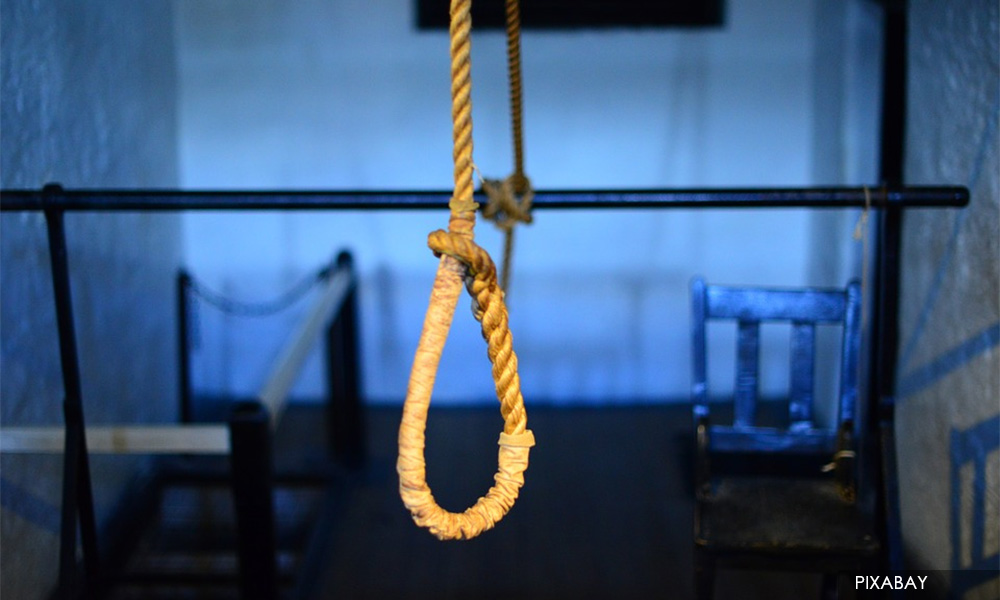
The reality of criminal legal systems is not one of equality before the law but rather of interests, negotiations and compromises involving the life and death of those caught within the system.
For those of us on the outside, the nuances and the complexities of the lives of those on death row, as well as their families, are lost even as we wax lyrical about how those on the inside “deserve their just deserts”.
One major reason why capital punishment continues in these jurisdictions is that it is “invisible” to us.
We are often blind to its violent force, and often rely on it to deal with any kind of social problem without first pondering other alternatives.
Cruel blow
In essence, Pannir’s poems force us to witness the tragedies and the brutality of the death penalty.
In his titular poem “Death Row Literature”, he writes:
“Concrete Walls of Hades; built by blood
Were decorated with crawled handprints,
Like a symbol of desperate pleads
From an extended hand of a disabled mind”
This poem was dedicated to the memory of his friend and fellow death row inmate Nagaenthran Dharmalingam, who was executed in 2022 for drug trafficking.
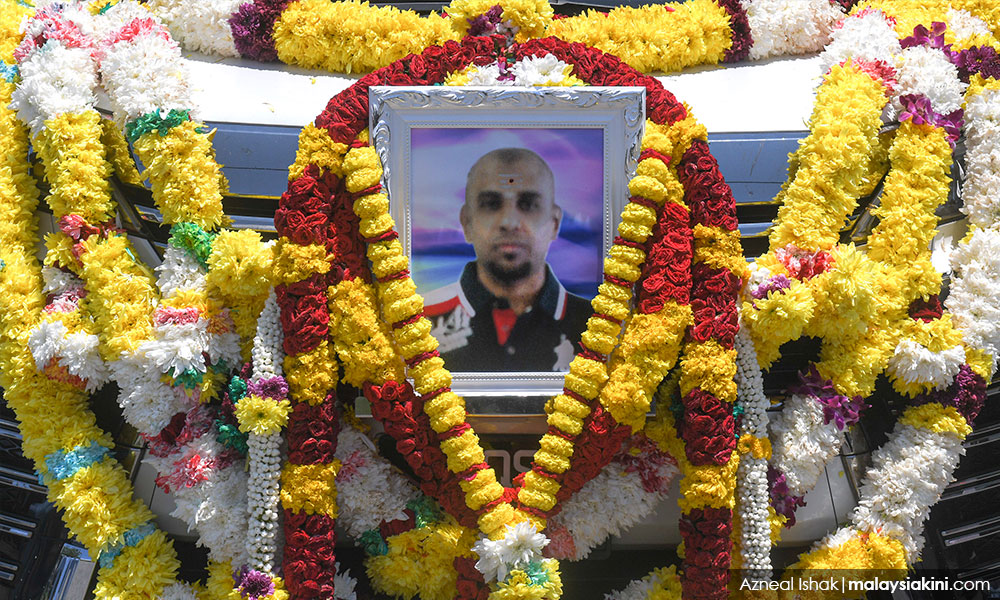
This was the very same Nagaenthran who, despite his intellectual disability, was hanged.
Pannir’s poem continues:
“Every life is sacred. Let’s not make it a secret.
The death penalty is no silver bullet
Advocate of death, greedy for more dead bodies
Adamant to the core, for more blood to pour
Telling that killing is the cure
To keep the state pure”
The poem was written at 3.30am, April 27, 2022, just hours before Nagaenthran’s execution.
The condemned occupy a specific wing of Changi Prison and in the words of another former prisoner, are privy to the small moments when they laugh, pray and finally cry.
One former prisoner said that he could even hear when the hearse arrived to cart away the body of the executed.
So within the small community of prisoners on death row, their very living space is a constant reminder of the state’s relentless use of capital punishment.
Their cell, as Pannir writes, is like a coffin:
“How does it feel like to live in the cemetery?
A life as a skeleton, buried in a dark concrete coffin”
Thus, his only “escape” or defence is through pen and paper. From his confinement he shouts:
“This is the voice from D Row.
Read my verses and see how the words flow.
Pick up your pen. It’s your weapon of defense.”
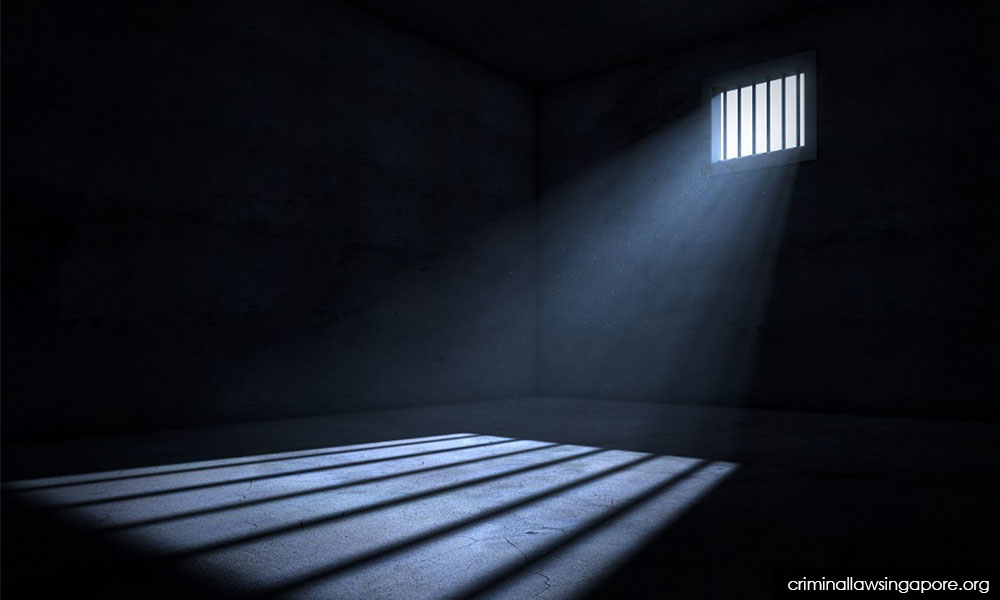
The ink flowing from his pen refill becomes the needed lifeline in the most desperate of times. Deprived of physical contact with his family, the poems are perhaps the only other opportunity of being close to his loved ones. In this, there is hope.
“Ink is like a light,
It shades a gaze upon people’s plights.
It is like a voice for the voiceless.
The truth it reveals shall prevail, regardless.”
Towards the end of the collection Pannir makes a final challenge, defying the very conditions of his imprisonment.
“Those who live by holding people in the dark
Are most afraid of the light that emerges from the dark”
At a moment’s notice
Now that Singapore’s Court of Appeal has dismissed both a constitutional challenge against the presumptive clauses in the Misuse of Drugs Act as well as Pannir’s application for a stay of execution, multiple death row prisoners are at imminent risk of execution.
Datchinamurthy Kataiah, a 39-year-old Malaysian, is scheduled to be hanged tomorrow.

Pannir, the second longest-serving death row prisoner in Singapore after Datchchinamurthy, could receive an execution notice - his third, after attempts to carry out his death sentence in 2019 and February this year - soon.
Whatever the outcome, these poems should serve as a stark reminder of the inhumanity of the death penalty.
Perhaps this is the ultimate message that Pannir and all those who have walked along those grey halls have for us: that we, too, should emerge from the dark and call for an end to state violence, for an end to capital punishment. - Mkini
LEONG KAR YEN is an academic based in Taiwan researching the power of words amongst those facing state violence.
The views expressed here are those of the author/contributor and do not necessarily represent the views of MMKtT.

No comments:
Post a Comment
Note: Only a member of this blog may post a comment.