The year 2026 is, by and large, the fourth year of the 15th Parliament, which started on Dec 19, 2022, and of the Madani government, which started on Nov 24, 2022.
This leaves Malaysia less than 24 months to achieve whatever institutional reforms in the 15th Parliament and the Madani government, even if they serve their full term till Dec 18, 2027.
Unfortunately, reforms have often become the subject of intensive fearmongering, smearing, and even ethno-religious demonisation, resulting in many reforms being either abandoned or watered down, when reasonable win-win solutions could have been sought.
Abandoning reforms not only causes the public to distrust parties and political leaders in power. It would likely also hurt the opposition party and political leaders when they come into power next and encounter stronger public demands for reforms.
In this age of social media, separate closed-door consultations between the government and different stakeholders in solo – the current practice - cannot effectively shield the government and the intended reform from populist and cynical attacks, some of which may even originate from overseas.
Any backtrack under attack by the government would not only weaken its authority, but it might bury the reform for decades and further fuel public frustration.
In 2026, we urge the Madani government to adopt a bold strategy of public engagement, getting proponents of a reform to talk to its opponents and bystanders, for every concerned individual and group to take ownership of the reform, instead of blaming the government for doing too little or too much.
For each reform for which a broad national consensus has yet to be built, the government can facilitate public and cross-partisan deliberation with some of these instruments:
In 2026, we look forward to the completion or commencement of these 10 reforms with the meaningful instrument of public and cross-partisan deliberation:
Special select committee (before tabling of bill)
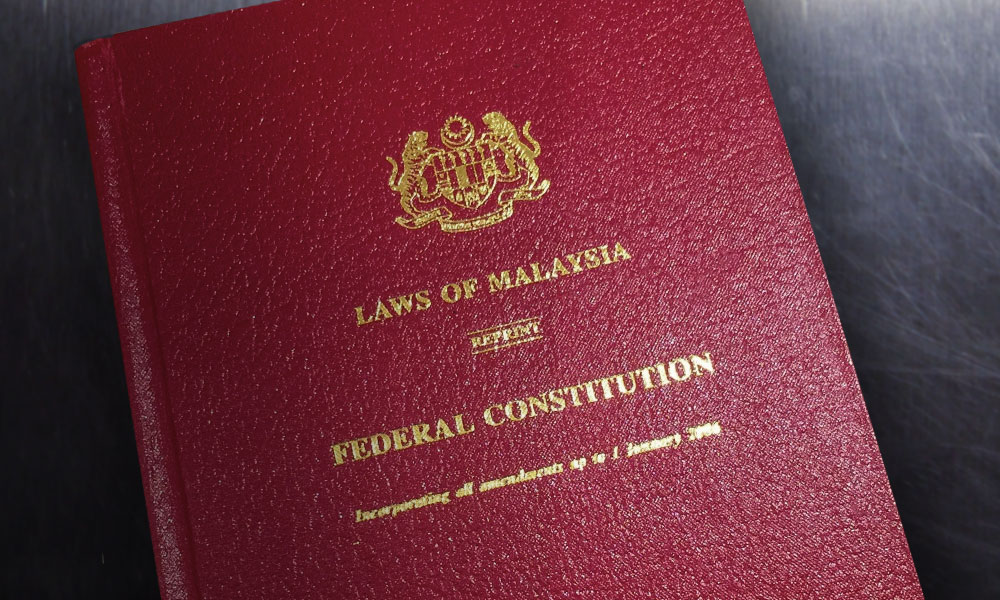
Reform of the Election Commission (EC), necessitating an amendment to Articles 113-114 of the Federal Constitution, to enable parliamentary oversight in the nomination of the seven election commissioners and via an annual report by the EC for parliamentary debate.
These may be assigned to a new purpose-built special (ad-hoc) select committee or the Parliamentary Standing Select Committee on Human Rights, Elections and Institutional Reforms.
White paper (before tabling of bill)
The separation of the attorney-general and public prosecutor roles, necessitating an amendment to Article 145 of the Federal Constitution, after extensive research and consultations undertaken by the prime minister’s Legal Affairs Bureau;
The Political Financing Act, with a component of public funding, after much research and consultations led by the bureau and the preparation of a draft bill by the All Parties Parliamentary Group Malaysia (APPGM) on Political Financing since 2024;
While stakeholder and expert consultations have been carried out on the above matters, the public and all parliamentarians deserve to know the government’s proposal before any bill is bulldozed through Parliament.
Green paper (before formulation of any policy or legal changes)
The need and viability of absentee voting facility – which can be postal voting, distant early voting or in other forms – for voters in Sarawak, Sabah and Labuan, and the peninsula who have to be away from their region on polling day;
The demand for, desirability of and proposal for the expansion of Dewan Rakyat and Dewan Negara seats and their allocation to Sarawak, Sabah, 11 peninsular states and the three federal territories;
Green papers mean that the government does not commit itself to any proposal or position but facilitates public deliberation by structuring the debate to a few viable options for benefit and cost considerations.
This is useful to advance reforms without imposing any solution before a broad-based consensus emerges.
Looking back, we register our appreciation for the Madani government and the support of all parliamentarians from various parties on the attainment of the following institutional and legal reforms since November 2022:
The abolition of the Mandatory Death Penalty Act 2023, in force since July 4, 2023;
The Public Finance and Fiscal Responsibility Act 2023, in force since Jan 1, 2024;
The amendment of Articles 15, 15A and 26 and the Second Schedule of the Federal Constitution, primarily to expand citizenship to overseas-born children of Malaysian mothers, passed by Dewan Rakyat on Oct 17, 2024, yet to come into force;
The Malaysian Media Council Act 2025, in force since June 14, 2025;
The Parliamentary Service Act 2025 and the amendment of Articles 56-57 of the Federal Constitution – granted royal assent on July 9, 2025, yet to be implemented; and
The strengthening of parliamentary select committees by making these ministry-focused committees permanent and expanding the maximum membership of each committee from nine to 12, with the amendment of the Dewan Rakyat Standing Order on Aug 12, 2025.
Endorsed by:
1. Project Stability and Accountability for Malaysia (Projek Sama)
2. Agora Society Malaysia
3. All Women's Action Society (Awam)
4. Angkatan Belia Islam Malaysia (Abim)
5. Bait Al Amanah
6. Borneo Komrad
7. Buku Jalanan Chow Kit
8. Centre for Independent Journalism (CIJ)
9. Citizens Against Enforced Disappearances (Caged)
10. Community Action Nexus Berhad
11. Dewan Perhimpunan China Melaka
12. Dewan Perhimpunan Cina Negeri Sembilan
13. Durora Zone B1
14. Engage
15. Family Frontiers
16. Federasi Pemuda Kebangsaan
17. Friends of Bukit Kiara
18. Gabungan Darurat Iklim Malaysia
19. Gerakan Belia Sepunjabi Malaysia (GBSM)
20. Global Bersih
21. Ikatan Anak Muda Tawau
22. Iman Research
23. Institute for Research & Development of Policy
24. Kemban Kolektif
25. Lawyer Kamek
26. Liga Rakyat Demokratik
27. LLG Cultural Development Centre
28. Mandiri
29. Martabat Untuk Semua Petaling Jaya
30. Movement for Change, Sarawak (MoCS)
31. Muslim Professionals Forum (MPF)
32. National Human Rights Society of Malaysia (Hakam)
33. Pacos Trust
34. Penang Women Development Corporation (PWDC)
35. Pergerakan Orang Wanita. Empowerment and Revolution
36. Persatuan Aliran Kesedaran Negara (Aliran)
37. Persatuan Bertindak Pilihan Raya Bebas Dan Saksama (Tindak)
38. Persatuan Kebajikan Kelestarian Komuniti Kuala Lumpur/Kuala Lumpur Residents Action for Sustainable Development Association (KLRA+SD)
39. Persatuan Pemangkin Daya Masyarakat (Rose) Sarawak
40. Persatuan Rimba Komuniti Shah Alam
41. Pertubuhan Solidaritas
42. PurpleLily
43. Pusat Komuniti Masyarakat (Komas)
44. Rasuah Buster
45. Sabah Action Body Advocating Rights (Sabar)
46. Sabah Entitlement & Equity Now (Seen Org)
47. Sabah Youth Movement
48. Saya Anak Bangsa Malaysia (SABM)
49. Selamatkan Kuala Lumpur
50. SIS Forum (Malaysia)
51. Society of Entrepreneurial Educational Development
52. Suara Mahasiswa UMS
53. Suara Rakyat Malaysia (Suaram)
54. Sustainable Petaling Jaya Association
55. Tenaganita
56. Bersih
57. The Federation of Chinese Associations, Johor
58. The Institute For Democracy and Economic Affairs (Ideas)
59. The Kuala Lumpur and Selangor Chinese Assembly Hall (KLSCAH)
60. The Sarawak Initiatives
61. Undi18
62. United Chinese School Committees’ Association of Malaysia (Dong Zong)
63. Vokal Sejiwa
64. Women's Centre for Change, Penang (WCC)
- Mkini
The views expressed here are those of the author/contributor and do not necessarily represent the views of MMKtT.



No comments:
Post a Comment
Note: Only a member of this blog may post a comment.