KUALA LUMPUR, Oct 26 — Keeping windows and doors shut during haze can help limit polluted air entering homes, but it may not be enough to protect occupants from fine particles that seep indoors, two indoor air quality specialists said.
Syida Nasri, Airscan’s head of indoor air quality and a Department of Occupational Safety and Health-accredited indoor air quality assessor, said fine particulate matter measuring 2.5 micrometres or less (PM2.5) could enter homes through gaps around windows, doors and other openings, even when they were kept closed.
“Merely staying indoors isn’t enough to protect against the haze,” she said.
PM2.5 is of particular concern because the particles are small enough to penetrate deep into the lungs and, unlike larger particles, can stay suspended in the air for long periods.
Syida said PM2.5 levels in closed homes averaged about half those outdoors, but these fine particles can cause inflammation, while ultrafine particles may enter the bloodstream and raise health risks.
“You won’t feel any of it, and you wouldn’t even know you’re being exposed without an indoor air quality sensor,” she said.
However, Applied Air Quality Specialists Sdn Bhd chief executive Tan Zhi Shen said most households could manage without an air purifier, particularly if occupants had no existing respiratory conditions or unusual sensitivities.
Tan said the bigger concern was larger particles such as PM10 and PM5, which he linked to coughing, adding that the need for a purifier depended on factors such as a home’s size and layout.
The two specialists differed on how much protection ordinary homes could provide, but agreed that residents should monitor indoor air quality and cut avoidable sources of pollution.
Keep the haze out, but know when to ventilate
Ventilation is normally important because cooking, cleaning and bathing introduce pollutants and moisture into a home, but during heavy haze the priority is to keep outdoor pollution out, Syida said.
“But we need to flip this during a heavy haze. Stop the bleeding first,” she said.
She said closing windows and doors reduces exposure but does not create an airtight barrier, so residents should not assume that staying inside eliminates the risk.
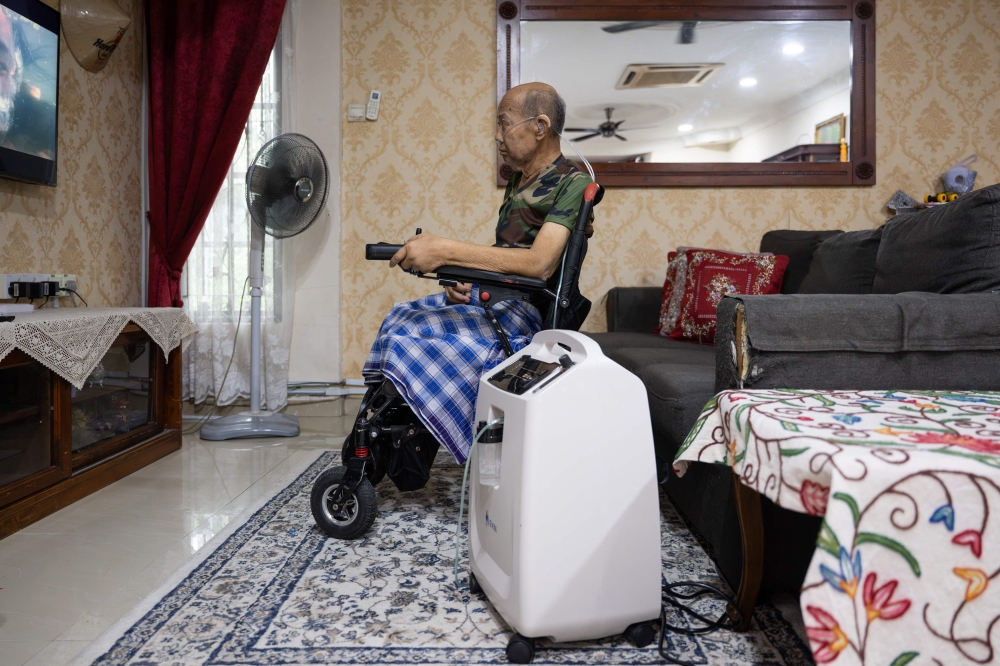
Md Noor Bujang watches TV at his home in Rawang, Selangor, on October 16, while using an oxygen concentrator. Specialists say staying indoors with the aircon running does not guarantee clean air during haze. — AFP pic
Keeping a home shut for long periods, however, lets indoor pollutants build up.
“Your house is constantly emitting things: chemicals from your cleaning products, smoke and grease from cooking, moisture from everyday living,” she said.
In Malaysia’s hot and humid climate, trapped moisture can also encourage mould growth.
Syida advised opening windows when outdoor air improves, such as after rain or when wind clears the haze, and cutting back on frying, smoky cooking and strong cleaning detergents while windows are shut.
Both specialists said burning incense, candles or cigarettes indoors would worsen matters, with Syida noting that incense could be a significant source of particulate pollution.
Kitchen hoods and bathroom exhaust fans that vent outdoors also call for caution, as the air they expel must be replaced, potentially drawing polluted air in through gaps.
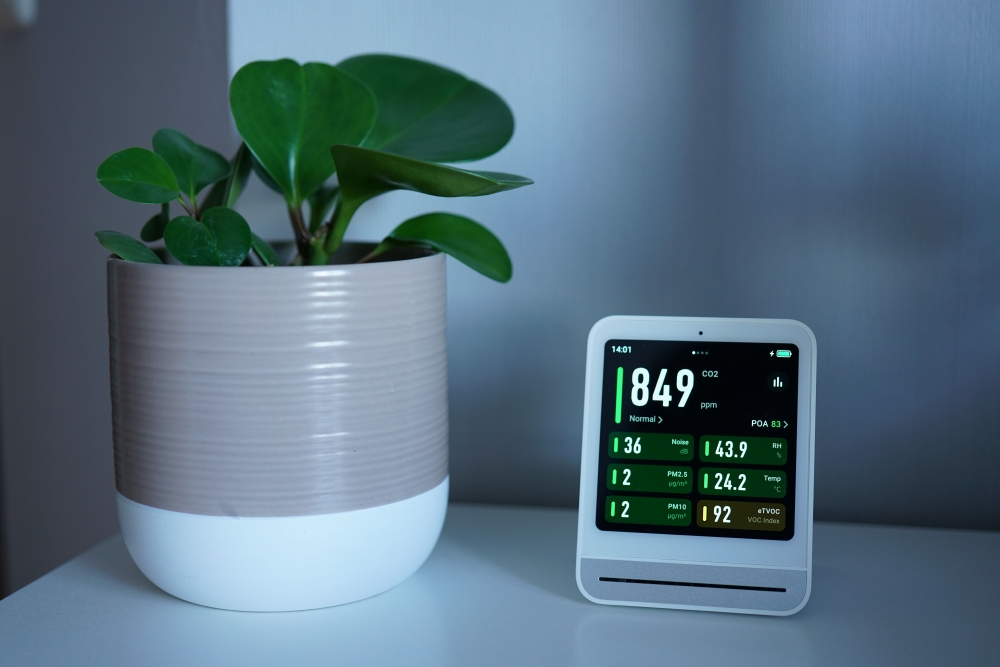
Both specialists also urged residents to monitor indoor air quality rather than judge by whether haze is visible outside.
“You measure it,” Syida said, adding, “I always tell people air quality measurement is like illuminating a dark room.”
She said even an inexpensive monitor could show trends, although its readings might not be accurate in absolute terms.
Does air-conditioning help, and do you need a purifier?
Switching on the air-conditioner with windows shut is the most convenient way to stay indoors during haze, but cooling a room is not the same as filtering its air.
Tan said conventional home air-conditioners filter larger particles reasonably well, but residents wanting to remove PM2.5 would need a separate purifier.
Syida was more sceptical, calling this one of the biggest misconceptions she hears from clients, friends and family.
“Nearly all home air-conditioning – whether split units or central or ducted units – pulls air from inside the house, cools it, and sends it back into the same room. It isn’t drawing in fresh air from outside and cleaning it on the way,” she said.
Most Malaysian homes use wall-mounted split units, whose mesh filters mainly catch dust, hair and larger debris to protect the equipment rather than clean the air.
“It’s not catching those particles to make your air more breathable. Different job, different solution,” she said.
For those considering a purifier, Syida recommended a genuine high-efficiency particulate air (HEPA) filter, preferably H13, and warned against terms such as “HEPA-type”, “HEPA-like” or “99 per cent HEPA”, which do not necessarily meet a recognised standard.
Tan said buyers should also check the clean air delivery rate (CADR), which indicates how quickly a purifier delivers filtered air, with living areas needing a higher rate than bedrooms.
Syida said a mid-range purifier costing about RM400, with a CADR of 400, had worked effectively in her own 800-square-foot living room, though she described this as personal experience rather than a controlled test.
She said that in a home experiment, indoor PM2.5 readings stayed high despite closed windows and doors, but fell by at least half near the unit within about 10 minutes of switching her purifier to full speed.
Indoor plants are not a substitute for air filtration, and an air quality monitor is the better way to see what is in your home’s air, specialists say. — Pexels pic
Tan said most people would not need to buy a purifier unless they had respiratory problems or other health concerns, though he said households with indoor pets might benefit, as purifiers help clear fur from the air, while animal waste must still be removed quickly before bacteria form.
Syida said there was no need to spend thousands of ringgit on a premium model.
“If you can only afford one, put it in the bedroom. You’re in there seven to eight hours a night breathing the same air while you sleep,” she said.
She advised running the purifier all day on automatic mode if it has a particulate sensor, with windows and doors closed, rather than waiting until the haze visibly worsens.
“By the time you react, the room’s already full of particles and the machine spends the next hour playing catch up,” she said.
What if you can’t afford a purifier?
“If haze has entered your home and you have no filtration and no budget, there’s very little you can do to clean the air,” Syida said.
Wet mopping helps with settled dust but not airborne particles, she said, while ordinary fans do not filter air and may stir up particles that have settled.
Nor should residents count on bowls of water or indoor plants.
“Bowls of water is a weird one — haven’t heard this one before. They do nothing,” Syida said.
On indoor plants, she said: “Effectively no. This is a famous myth that makes the rounds in our industry.”
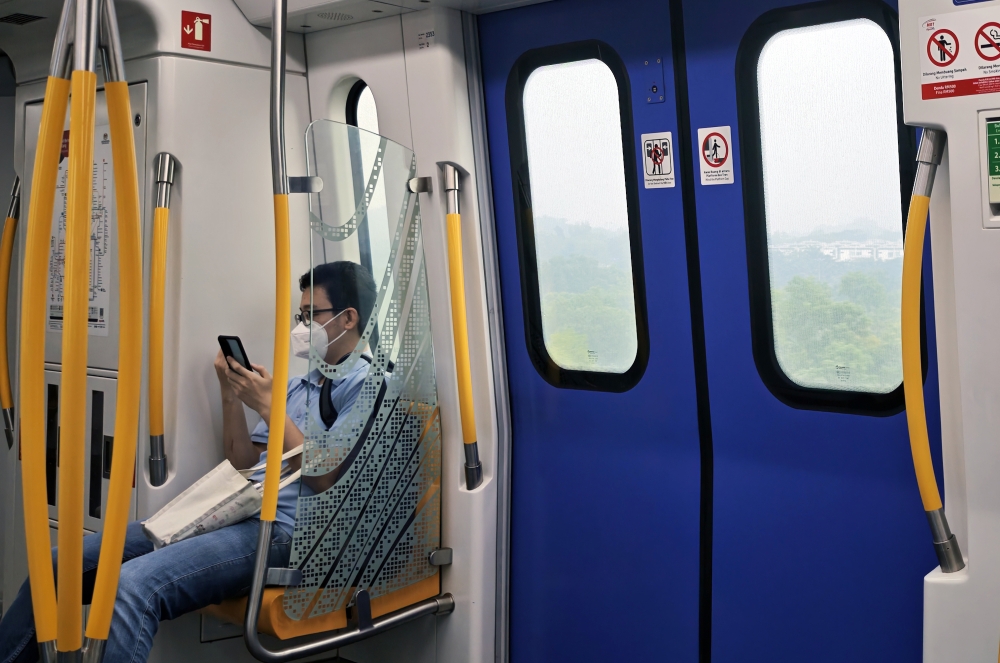
She said a well-fitted mask could reduce exposure while awake, but fit matters because air leaking around the edges undermines the protection.
For those who cannot afford a purifier, a well-fitted mask can help reduce exposure to haze particles while awake, but fit matters, an indoor air quality specialist said. — Bernama pic
Syida said ordinary mesh filters are unlikely to clog faster during haze but should still be cleaned as the manufacturer advises, while units with genuine fine-particle filters may need replacing more often.
Tan’s advice suggests many households can manage by limiting outdoor pollution and maintaining good hygiene, while Syida argues that a suitable purifier adds another layer of protection.
For households weighing one, the decision comes down to the occupants’ health needs, the home’s size and layout, outdoor pollution levels and the device’s filtration capacity. - malaymail