


Many Malaysians were shocked to learn that a former communications officer, 45-year-old Nur Fazreen Kamal, who was attached to a federal ministry, was discharged after paying a compound fine in a corruption case involving RM5,268.
The amount itself is not the point. The real question is this: what message does this send to the nation?
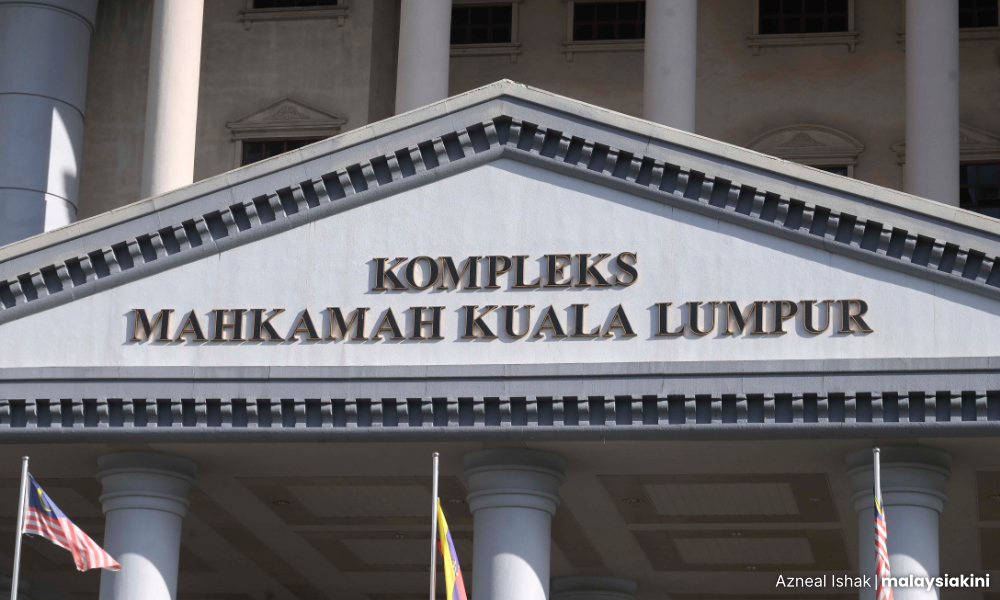
The public servant, a mother of four, was charged in court with accepting a bribe. However, after accepting a compound settlement offered by the MACC, the prosecution withdrew the charges, resulting in her being discharged and acquitted by the court.
There is no criminal record of a conviction, no prison sentence, or judicial fine. Although she paid the financial penalty (compound), the amount was not made public.
Legally, the matter may be closed, but for many ordinary Malaysians, it does not feel closed at all. Instead, it raises uncomfortable questions.
If someone accused of corruption can settle a case through a financial payment, what about other acts of corruption that have not yet been discovered? What about those that were never reported? What about those that slipped through the cracks?
High-profile cases going nowhere
Corruption is not just about money. It is about trust. It is about people placed in positions of responsibility who are expected to serve the public honestly.
Naturally, this case touched a nerve.
Unfortunately, this is not the only case that has left Malaysians confused and frustrated. Over the years, the public has watched a series of major corruption cases end in very different ways.
Former Sabah chief minister Musa Aman was fully acquitted after years of legal proceedings.
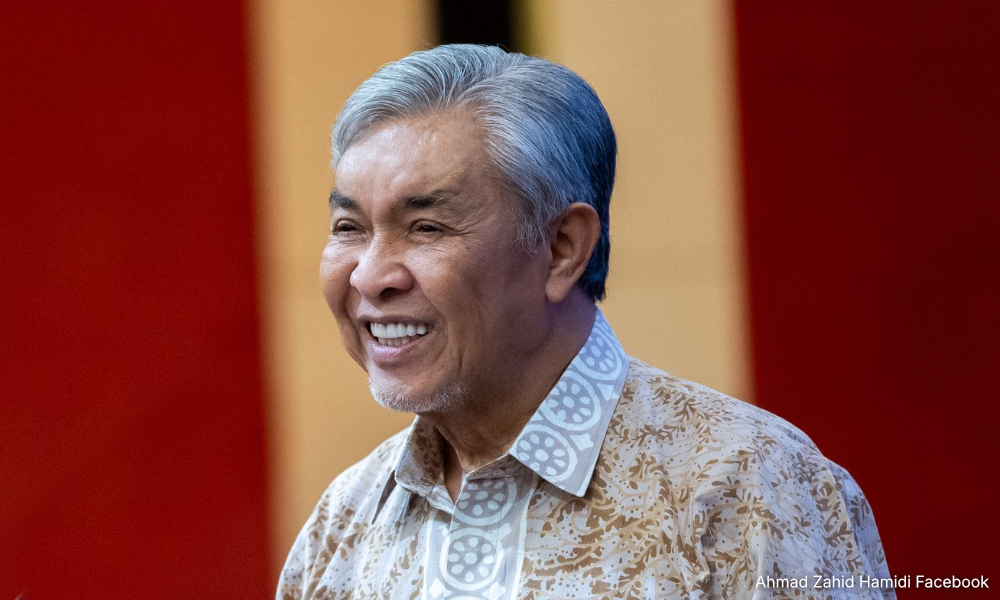
Deputy Prime Minister Ahmad Zahid Hamidi received a discharge not amounting to an acquittal (DNAA) in a case that went through extensive court proceedings and witness testimony. The Attorney-General’s Chambers then closed the case.
Former prime minister Najib Abdul Razak was convicted and imprisoned, only for the nation to become embroiled in continuing debates over sentence reductions, pardons, and royal addenda.
Each case is different, with its own legal circumstances and legal explanations.
But ordinary Malaysians do not see these cases separately. They see the overall picture, which is becoming harder to understand.
They read about struggling Malaysians who steal food to feed hungry children and find themselves facing the full force of the law.
At the same time, they watch corruption cases involving millions of ringgit end in compounds, acquittals, DNAA decisions, sentence reductions, or pardon applications.
The impression left on many ordinary citizens is that survival crimes are punished with greater certainty than corruption committed from positions of power.
Trust cannot be returned
Prime Minister Anwar Ibrahim said in June 2025 that his focus is not on jailing people but on recovering stolen money so it can be returned to the rakyat.

There is some logic in that view. Public money belongs to the people. Every ringgit stolen should be recovered if possible, but many Malaysians will disagree that recovery alone is enough.
Money can be returned. Trust cannot.
Corruption is not merely a financial crime. It is a betrayal of public trust.
When someone abuses public office for personal gain, the damage goes beyond the amount involved. It damages confidence in the government, faith in institutions, and the belief that honesty and integrity still matter.
If the lesson becomes “return the money and move on”, then we are teaching the wrong lesson. The lesson should be that corruption is wrong because it betrays the public trust.
Many Malaysians are also struggling to understand the contrast between the treatment of corruption and the treatment of the ordinary rakyat.
The law can be swift and unforgiving when dealing with the poor, but in high-profile cases of corruption, the public often sees compounds, acquittals, DNAA decisions, and pardon discussions.

Can anyone blame ordinary Malaysians for feeling confused? Can anyone blame them for wondering whether there are different rules for different people?
Everyone is watching
This growing frustration should concern the government, because the issue is no longer about one politician, one official, or one court case. It is about public confidence in the entire system.
The authorities must understand that every corruption case sends a message far beyond the courtroom.
Young Malaysians are watching. They are learning what happens when people abuse positions of trust. They are probably asking, “Does honesty still matter?”
Law-abiding civil servants are watching. They want to know whether integrity is truly valued or merely preached.
Taxpayers are watching. They want assurance that the money they work hard to earn and contribute is being safeguarded.

Beyond our shores, the international community, foreign investors, and global institutions are also watching. Their confidence in Malaysia is shaped not only by our laws, but by how consistently, fairly and transparently those laws are applied.
How we deal with corruption reflects who we are as a nation. It tells the world what we tolerate, what we condemn, and whether integrity remains a principle we genuinely uphold rather than merely proclaim.
Every corruption case is more than just a legal proceeding, because we want to know if corruption truly carries serious consequences or whether it can eventually be negotiated away through settlements, legal processes or political decisions.
This uncertainty is dangerous. A nation cannot build a culture of integrity if its people are unsure where accountability begins and ends, because what is at stake is not merely public money.
It is the soul of the nation. - Mkini
MARIAM MOKHTAR is a defender of the truth, the admiral-general of the Green Bean Army, and the president of the Perak Liberation Organisation (PLO). Find her on X.
The views expressed here are those of the author/contributor and do not necessarily represent the views of MMKtT.

No comments:
Post a Comment
Note: Only a member of this blog may post a comment.