


On a gloomy afternoon in Senai, supporters descended to witness the unveiling of DAP candidates for the Johor state election.
It will be DAP’s first electoral contest after its drubbing in the Sabah polls last year, where it suffered a complete wipeout.
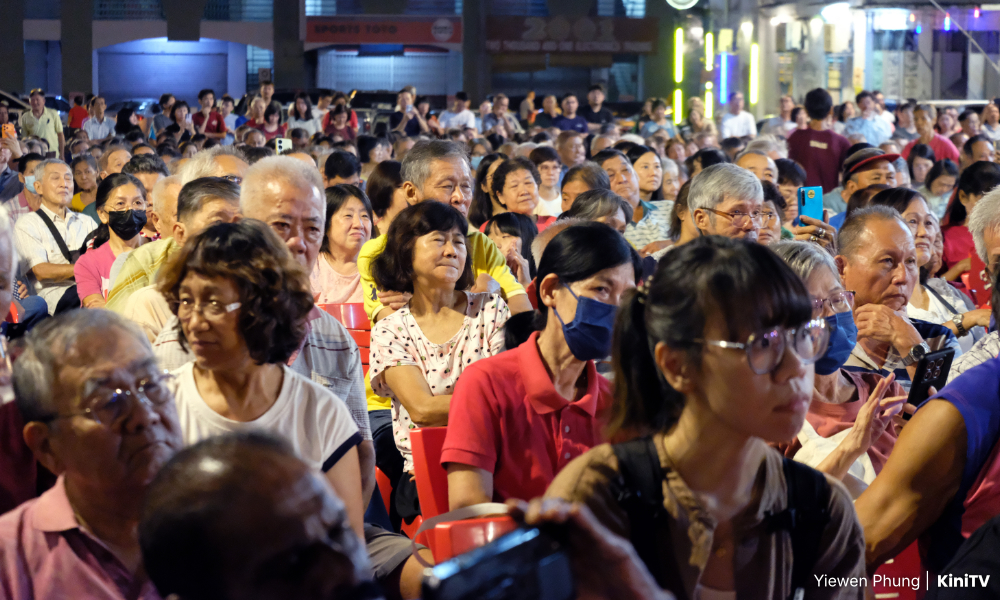
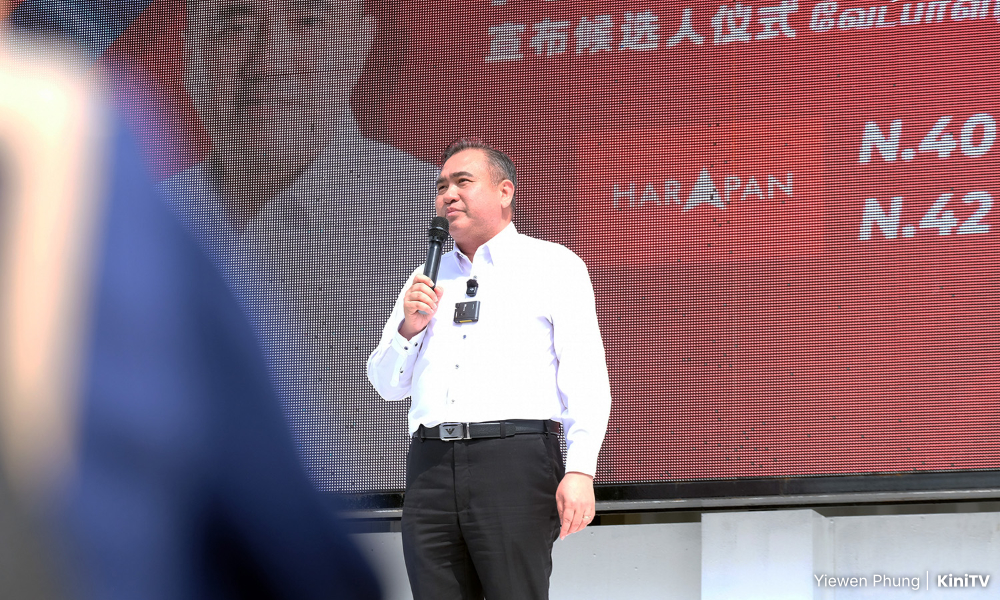
Party faithfuls gathered in a nearly full tent by the roadside. DAP secretary-general Anthony Loke was about to announce the party’s candidates for the Senai and Bukit Permai state seats at the June 20 event.

It had been drizzling sporadically. As Loke announced Syafwan Ani for the seats of Bukit Permai and Wong Bor Yang for Senai, a murmur rippled through the audience. A few excited supporters stuck their heads out of the tent.

A hornbill had landed on the lamppost across the street. Some in the audience suggested that the Oriental Pied Hornbill, perched atop the pole, might be a good omen.
Johor DAP chairperson Teo Nie Ching even shared a video of the hornbill on social media.

DAP’s mascot, “Ubah” (Change), was, after all, inspired by the Rhinoceros Hornbill. Its message of change had carried Pakatan Harapan and DAP to Putrajaya, after the mascot debuted in the 2011 Sarawak election and was reused in both the 2016 state polls and the 2018 general election.
Of course, rational political workers know well that a single hornbill doesn’t decide an election, but it mirrors what DAP and Harapan need to restore: the confidence of supporters who still believe they can win.
Outstation voters
At a traditional kopitiam not far from the event, a Chinese Malaysian woman working as a cook said her faith in the “rocket” has not wavered. She still intends to vote for Harapan.
While DAP has counted on supporters like her, voters like her children are more important.
The woman shared that her children are working in Kuala Lumpur and Singapore, and she intends to ask them to return home to vote on July 11.
Such families are not uncommon in Johor. A large number of younger voters work outstation, and for a border state like Johor, a substantial number also work in Singapore.
The government estimates more than a million Malaysians are in Singapore for various reasons, including work, education and business.
For a state like Johor, outstation voters can make or break an election. This is a common line parroted by party strategists, but there is strong data to back it.

In March 2022, when BN called for snap polls in Johor amid the Covid-19 pandemic, voter turnout was an abysmal 54.9 percent.
The Malaysia-Singapore border remained restricted due to the pandemic, preventing a large number of Johor outstation voters in Singapore from returning. Consequently, BN secured a landslide victory, winning 40 out of 56 state seats.
But just eight months later, when the 15th general election was called, the turnout in Johor was estimated at around 75.5 percent, slightly higher than the national turnout.
A Harapan-led Johor govt?
If the Johor state election had been held concurrently with GE15 and the electorate had voted the same way at both the parliamentary and state levels, Harapan would have won 30 out of 56 seats, with BN getting 19 and Perikatan Nasional winning seven.
That meant Harapan would have formed the Johor government on its own.
The outcome is derived from the votes at all polling stations at the parliamentary level in GE15 and transferred to the state level.
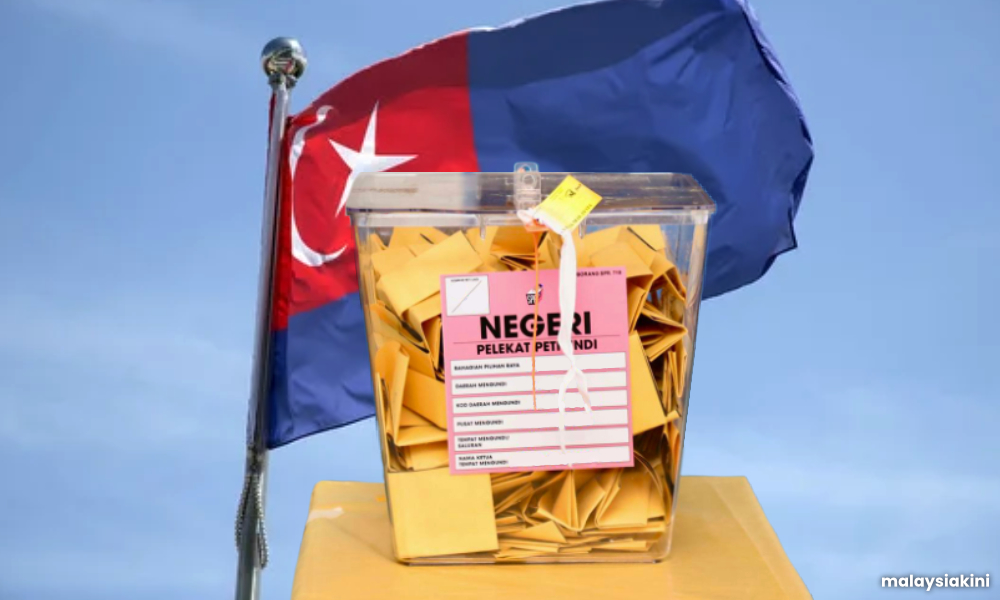
The state seat of Bekok, which DAP lost to MCA in the last state election, is a good example of how wildly turnout can affect the outcome of the Johor polls.
In 2022, Bekok’s largest polling station, Kampong Jawa Chaah, saw 2,734 voters turning up to vote, with BN getting 1,371 votes while Harapan received 627 votes.
Eight months later, in the general election, BN received roughly the same number of votes - 1,410 for Kampong Jawa Chaah.
However, this time, Harapan received 2,043 votes, comfortably winning the polling station. A total of 3,924 voters in Kampong Jawa Chaah turned up to vote in the general election.
This electoral arithmetic is an open secret among political operatives, and BN is once again banking on the same strategy by calling for early elections in Johor.
While a separate state election tends to see lower turnout than a general election, it is not expected to be as depressed as it was during early 2022, when there were still pandemic-related movement restrictions.
That means BN will have to expect more competitive conditions in the upcoming Johor polls compared to the previous one.
One factor that could help BN keep the turnout low is voter apathy among Harapan supporters, some of whom are disappointed at the sluggish pace of substantive reforms in Putrajaya and may choose to stay home on polling day.
A Tangkak voter currently residing in Kuala Lumpur told Malaysiakini that he would not be returning to vote, explaining, "I can't bring myself to vote for BN, but I can't bring myself to vote for Harapan either."
PN’s peculiar move
But another factor is PN’s peculiar decision to contest fewer seats in this Johor election. In 2022, PN contested all 56 seats, but this time, it will only be contesting 33 seats.
The move will allow for a more direct contest between BN and Harapan in the remaining 23 seats without PN splitting the votes. PN has traditionally courted conservative voters, mostly at the expense of BN rather than Harapan.
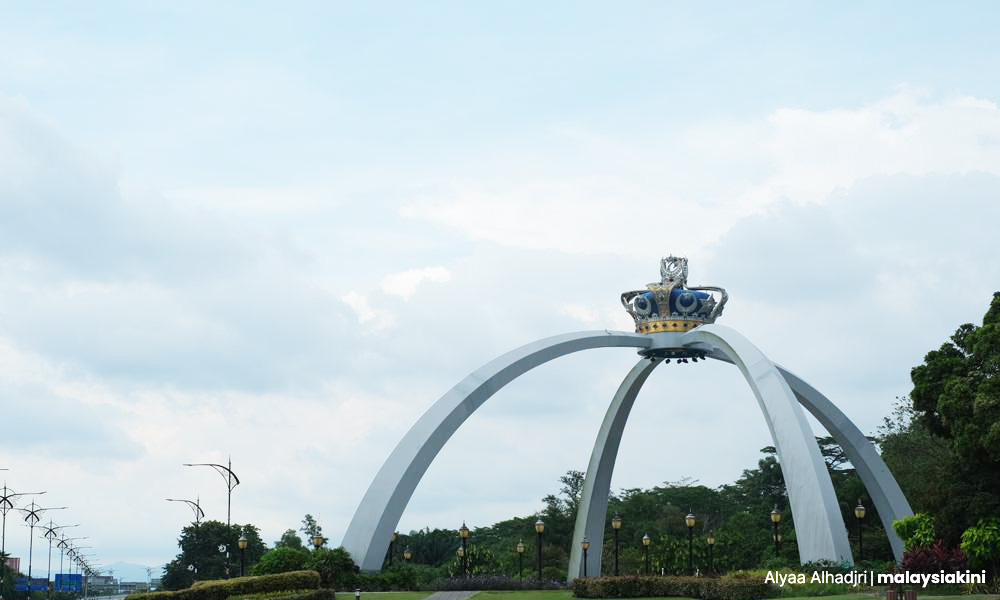
One of the seats PN has decided not to contest is in Bukit Batu, which PKR won by a mere 137-vote majority in the last Johor state election.
Harapan won 9,292 votes compared to BN’s 9,107 votes, while PN received 3,901 votes and Warisan got 1,334 votes.
The lead widened in the general election, with Harapan winning 20,383 votes, leaving BN and PN in the dust. BN received 9,319 votes while PN received 5,591 votes.
If the state election had been held with the general election, Harapan would have won with an 11,064-vote majority.
With a lower turnout and PN not playing spoiler, the contest between BN and Harapan in the seat is now expected to be more competitive.
PN has also mostly abandoned the Chinese electorate, with its Chinese-based party Gerakan announcing it won’t contest. According to PN’s candidate list, it plans to field only one Chinese candidate from Bersatu.
For DAP in particular, whose largest base is Chinese voters, the key opponent is now BN.
A more familiar playbook
Following the dissolution of the Johor assembly on June 1, Harapan, which previously had been more restrained due to its coalition with BN at the federal level, launched a public criticism of BN.
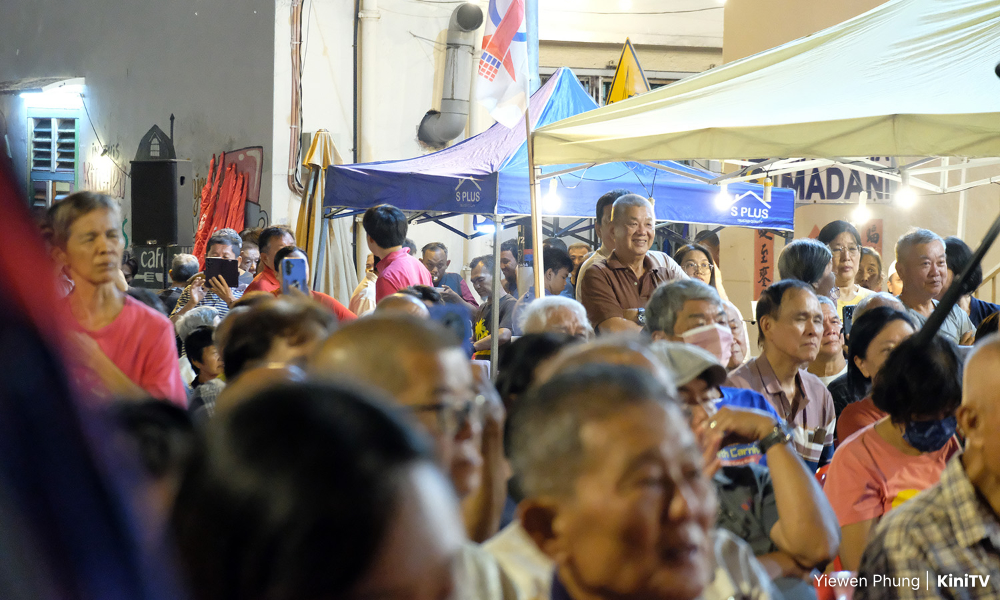
The joust with a traditional opponent reinvigorated Harapan’s base, which is accustomed to fighting BN rather than cooperating with them, recreating similar political enthusiasm seen during the 2018 and 2022 general elections.
An observation of DAP’s candidate announcement events in Mengkibol, Johor Jaya, and Senai saw them drawing substantial crowds, a rebound from the lethargic response last year.
But whether the political enthusiasm will go beyond party faithfuls and carry over into the crucial campaign weeks remains to be seen.
Speaking to Malaysiakini, DAP’s Loke acknowledged that BN holds the upper hand.
Loke noted that while Harapan could technically win more than half the state seats if the coalition replicates the 2022 general election, he conceded that a state election is very different.
Harapan is hoping to improve its performance, noting that while the current circumstances are challenging, they were not worse than during the Covid-19 pandemic restrictions in early 2022, when voter turnout was at its lowest point.
Harapan leaders have indicated that they believe pushing for stronger voter turnout and leveraging cannibalisation between BN and PN might create a viable path to securing the Johor government.
BN blunts the Green Wave?
BN operatives told Malaysiakini they expect Malay voters to return to their fold. This was even before PN announced that it was only contesting in 33 out of 56 seats.
The BN insiders also argue that a high turnout does not necessarily favour Harapan, as returning outstation voters are not only non-Malays but also young Malay voters.
A BN grassroots leader told Malaysiakini that with robust grassroots machinery, functioning local service centres and Johor caretaker menteri besar Onn Hafiz Ghazi’s hands-on approach to managing local issues, BN aims to capture 70 percent of the Malay vote.
The belief is partly grounded in the observation that PN’s “Green Wave”, which drowned BN in the northern states during GE15, has limited momentum in Johor.
PN only won three seats in the previous state polls and two out of 26 parliamentary seats in Johor during the last general election.
More importantly, BN contends that the performance of the BN-led Johor government over the past three years can convince Malay voters, who previously leaned towards PN, to come back to BN’s fold.
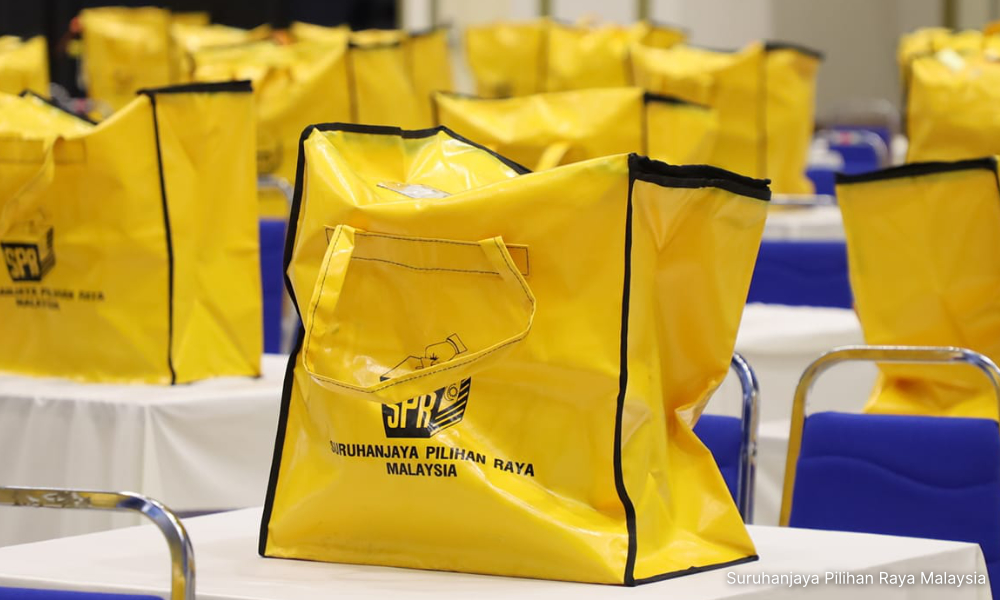
Whether BN’s confidence is well-grounded or it is underestimating the Green Wave again will be put to the test on July 11.
New factors at play
Johor’s demography differs from other states in that it has a high concentration of mixed seats. Even in seats that are deemed to be Malay-majority or non-Malay-majority, they often have a high proportion of the other ethnicities.
That means for many of the seats, the coalitions have to appeal to a wide range of demographics.
The diversity is not limited to voters, but also to the political parties that will be contesting in the Johor polls.
Newcomer Parti Bersama Malaysia is expected to make its debut in Johor, while Muda is no longer a Harapan ally. Both could appeal to Harapan’s traditional supporters.

The dynamic is not too different to the relationship between BN and PN supporters.
While BN and Harapan pull on their familiar levers, PN’s 33-seat strategy and the political newcomers are set to test new electoral scenarios in Johor.
This analysis includes official Election Commission data digitised by the civic open-source initiative https://electiondata.my. - Mkini

No comments:
Post a Comment
Note: Only a member of this blog may post a comment.