


It begins with a name - Puad Zarkashi - and it will almost certainly end with him too.
However, what sits between those two points is larger than one politician or one allegation.
It is a question Malaysia has never fully resolved in practice, even if it exists in constitutional principle: where is the real boundary between constitutional monarchy and political decision-making?
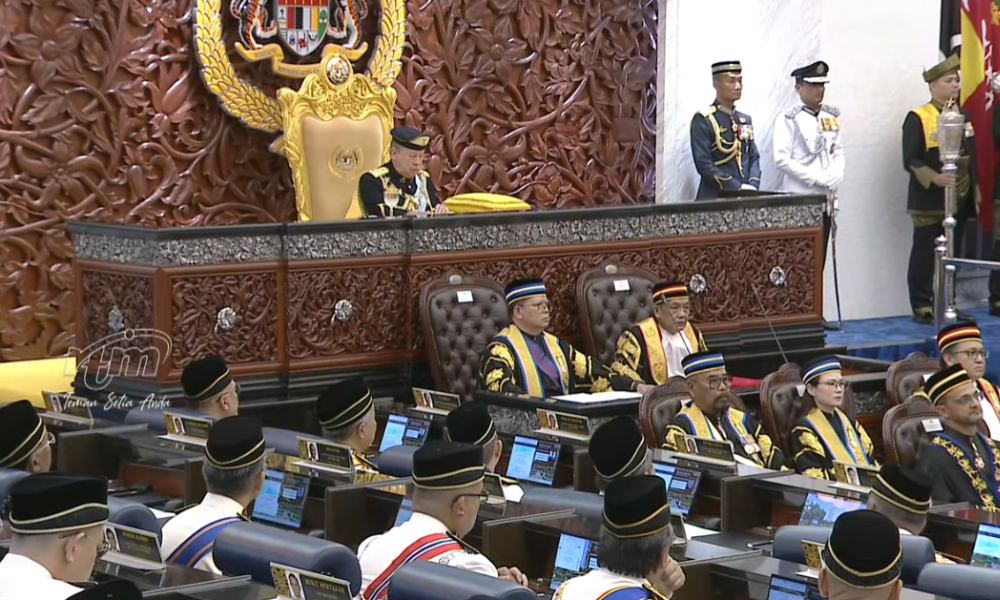
In theory, the structure is clear. A constitutional monarchy does not govern; it reigns. Executive power rests with elected leaders who command legislative confidence. The monarch acts within constitutional limits and established conventions.
As we are well aware, politics does not always live neatly inside theory, for it is in that gap, between principle and perception, that this controversy sits.
Within hours of Puad’s allegations regarding royal influence in Johor political affairs, the discussion shifted with familiar speed. Police reports were made. Investigations began. Public debate hardened.
Almost immediately, the focus moved away from the constitutional question, which is the central issue he raised, and shifted instead to his motives.
Motive besides the point
Was he bitter? Was he denied political reward? Was this internal party frustration repackaged as a principle?
Perhaps. Perhaps not. But none of that answers the constitutional question itself.
This was never about whether Puad was right or wrong. It was about whether the constitutional question he raised could be openly discussed at all.
What is striking is not disagreement, but how disagreement is handled.
Instead of confronting the constitutional issue, the instinct is to dissect the man himself: ambition, resentment, opportunism, disloyalty.
The individual becomes the story. The institution vanishes.
This may be politically effective, but it is constitutionally corrosive because it teaches repeatedly that sensitive questions are not answered. They are neutralised.
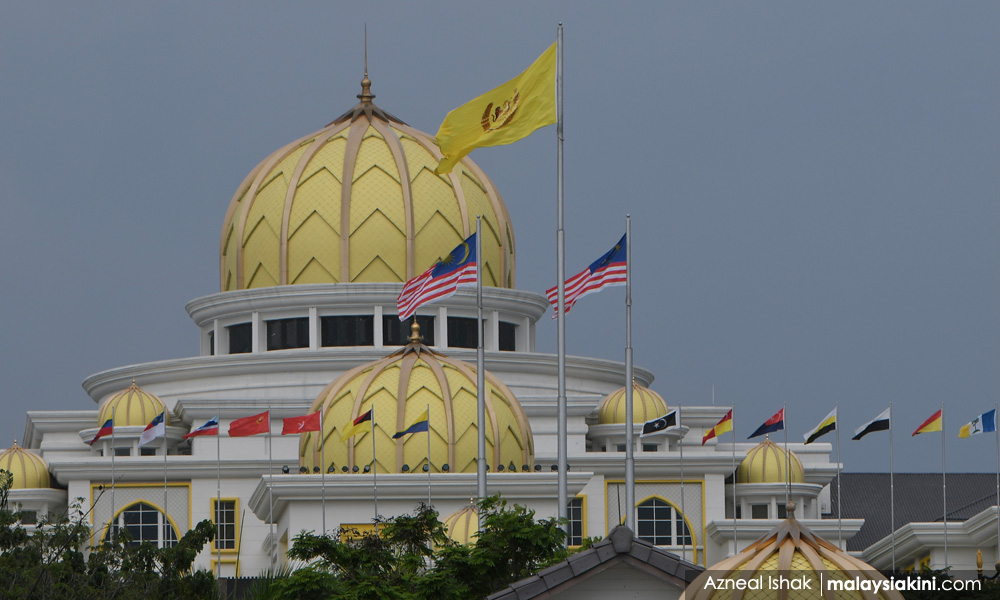
Johor is widely discussed in public reporting as a state where the boundary between constitutional form and political reality is not always easy to separate.
Past changes in menteri besar leadership and public statements from both political and royal figures have reinforced a perception that political outcomes cannot always be understood through electoral arithmetic alone.
Whether one sees this as constitutional discretion or political influence depends on interpretation. But what matters is this: the lack of shared clarity has become part of the political environment itself.
Thus, where clarity is absent, perception fills the space.
Silence doesn’t resolve anything
It is essential to separate two things.
First, the truth or falsity of any individual allegation, including those made in current political disputes, is a matter for evidence, institutions, and due process.
Second, and more important here, is the structural issue: how constitutional questions are handled in public life once they are raised.
Our discussion is about the second.

History shows that when direct criticism becomes difficult, it does not vanish, but it changes form.
Jonathan Swift’s “Gulliver’s Travels” is a classic example. Beneath its fictional worlds and absurd rulers lay a sharp critique of political systems and human authority, expressed in metaphor because direct language carried risk in its time.
Allegory became the language of survival.
Then, as now, people turned to satire and allegory not out of comfort, but out of caution and self-protection.
In recent years, individuals who raised sensitive political or constitutional questions faced investigations or legal consequences.

The case of activist Ali Abdul Jalil, who later left Malaysia and sought asylum in Sweden, is frequently cited in this context.
Walking on eggshells
Whether one agrees with his views is secondary.
The constitutional issue is the perception such cases create: that certain topics carry consequences beyond normal political disagreement.
When that perception spreads, speech does not disappear. It narrows.
Ordinary citizens who raise complaints involving powerful individuals or sensitive institutions often find themselves unsure of the consequences of speaking out, not only about their complaint, but about themselves.
Some cases proceed. Some stall. Some disappear.
What matters is not consistency, but perception: that some lines feel riskier to cross than others.
And where that perception takes hold, participation shrinks.
In pre-revolutionary France, criticism of royal authority could lead to imprisonment or accusations of treason.
The problem was not only suppression itself, but the absence of safe, legitimate channels for grievance.
Over time, unresolved pressure did not disappear. It accumulated.
Systems that cannot absorb criticism do not become stronger. They become brittle.
Tensions will continue unless resolved
This is why the Puad episode matters, not because of Puad himself, but because of the pattern it reflects.
A constitutional question is raised. It becomes personal. Then moral. Then political. Then it disappears.
The immediate issue is contained. The underlying ambiguity remains, but it will return, disguised in another case and another controversy.
Puad may be right. He may be wrong. He may be acting from conviction or calculation, but none of that resolves the issue, because the problem is not the individual.
It is the absence of a shared, explicit understanding of how constitutional monarchy and political authority interact in practice.
So, until that question is addressed openly, this will repeat with different names and different triggers, albeit with the same structure.
Constitutional ambiguity does not disappear when avoided, but it returns when tested.
The moment the debate became centred on Puad the man, the constitutional question had already been lost.
Unsurprisingly, we end where we began. With Puad. - Mkini
MARIAM MOKHTAR is a defender of the truth, the admiral-general of the Green Bean Army, and the president of the Perak Liberation Organisation (PLO). Find her on her website and on X.
The views expressed here are those of the author/contributor and do not necessarily represent the views of MMKtT.

No comments:
Post a Comment
Note: Only a member of this blog may post a comment.