


For years, disputes between Kedah and Penang have largely centred on water. The Kedah state government repeatedly argued that Penang benefited from raw water originating from Sungai Muda while paying little in return.
The issue would periodically generate headlines, political exchanges, and calls for compensation before fading from public attention.
But when the issue resurfaced online in late 2025, Facebook discussions were no longer centred on water. Instead, users found themselves revisiting centuries-old questions.
Did Penang historically belong to Kedah? Did Francis Light legally acquire the island in 1786? Or was Penang taken from Kedah through colonial manipulation?
Analysis by Malaysiakini and data journalism platform Newsgraphy found that historical ownership, sovereignty, and identity became some of the dominant themes shaping online discussion.
At the centre of that shift was an unlikely piece of content: an old royal video.
The video that changed meaning
The video was already months old by the time it began attracting widespread attention online.
It showed Kedah ruler Sultan Sallehuddin Sultan Badlishah arriving at Istana Kedah in George Town during a royal visit to Penang on Dec 30, 2024. It was uploaded days later, on Jan 3, 2025, by the Kedah royal family's official TikTok account as routine documentation of the visit.
At the time, the video attracted relatively little attention.
Months later, it began circulating widely on Facebook as renewed political debate over Penang's historical relationship with Kedah gained momentum.
The video's reach expanded further after being reposted by several influential Facebook accounts, including the page of Kedah Menteri Besar Sanusi Nor.
Yet the video's significance had changed. By the time it began circulating widely on Facebook, it was no longer being shared simply as a record of a royal visit.
Instead, users attached new captions that reframed its meaning entirely:
"Kerajaan Kedah dan jajahan takluknya.” (The Kingdom of Kedah and its territories.)
"Sekali tuan tanah turun." (The landowner has come to visit.)
"Sireh pulang ke gagang." (Returning to where one belongs.)
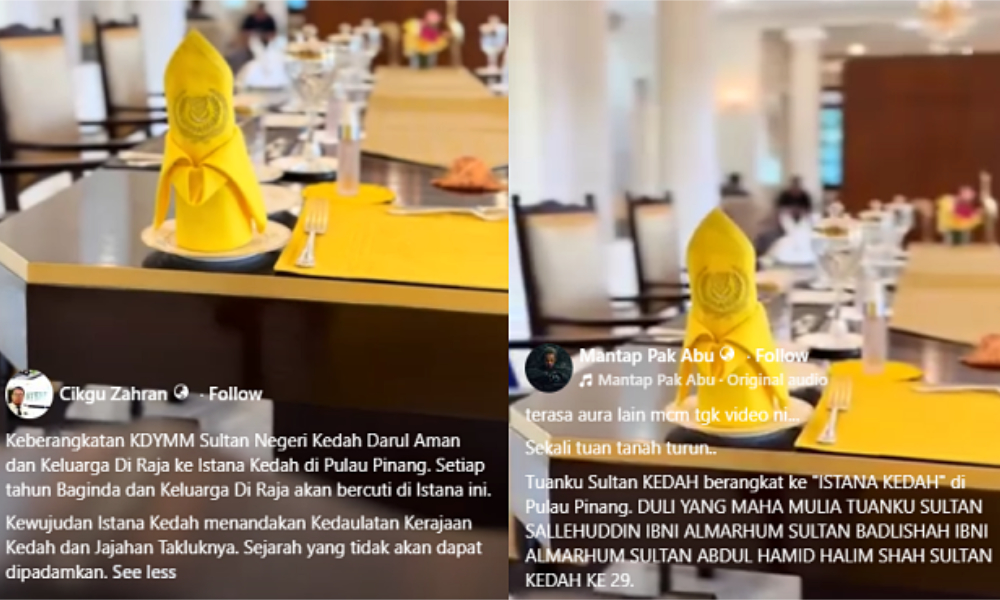
The historical debate was also frequently linked to contemporary politics.
In several posts analysed by Malaysiakini and Newsgraphy, support for Kedah's claim over Penang was accompanied by criticism of DAP politicians, who were portrayed as opposing or dismissing the narrative.
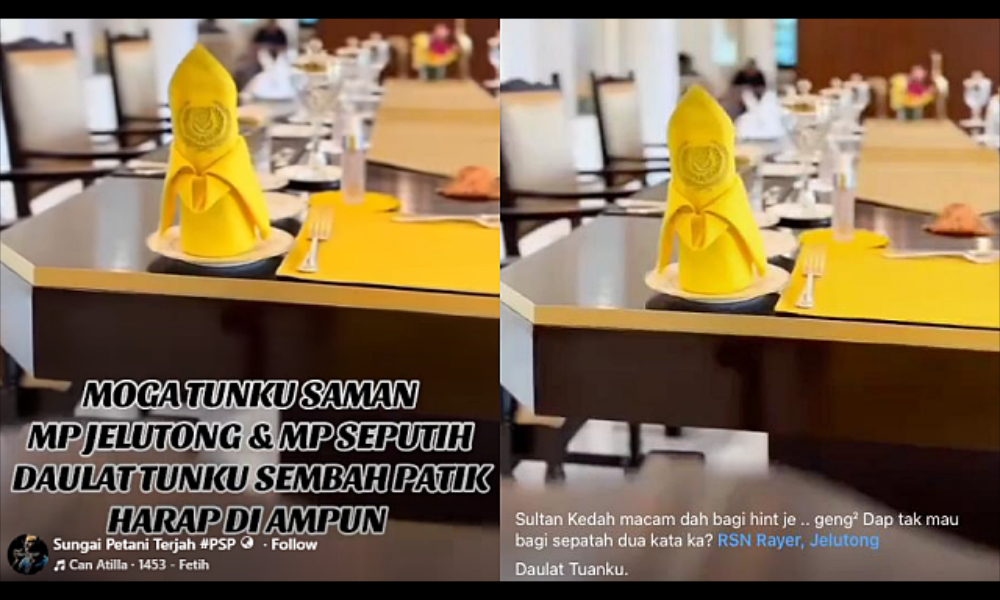
To understand how the narrative spread, Malaysiakini and Newsgraphy traced 452 Facebook reshares linked to the video between November and December 2025 as it circulated across the platform.
In many of the posts examined, the existence of Istana Kedah in George Town was presented as evidence supporting claims of Kedah's historical ownership of Penang.
Prior to publication, Malaysiakini contacted Sanusi regarding findings identified in this investigation, including his page's decision to repost the Kedah sultan’s video months after it was originally published.
Among other questions, he was asked whether he viewed the video as relevant to his state government’s claim over Penang, what message he intended to convey through the repost, and how he viewed his role in promoting discussion about the issue online.
However, no response was received.
The episode illustrates how online political narratives often evolve. Rather than relying on newly created material, existing content can be repurposed, reframed, and assigned entirely new meanings as political circumstances change.
Sovereignty narrative takes shape
The video's resurgence did not occur in isolation. It coincided with a period of renewed political attention on the Kedah state government's longstanding claim over Penang.
Throughout 2025, Sanusi repeatedly questioned Penang's historical relationship with Kedah and publicly raised the possibility of pursuing the matter through legal channels.
The issue gained fresh attention during the tabling of the Kedah 2026 budget on Nov 10, when Sanusi again touched on Kedah's historical claim over Penang. It subsequently resurfaced in Parliament, where competing interpretations of Penang's history were debated.
As political attention intensified, so too did activity on Facebook.
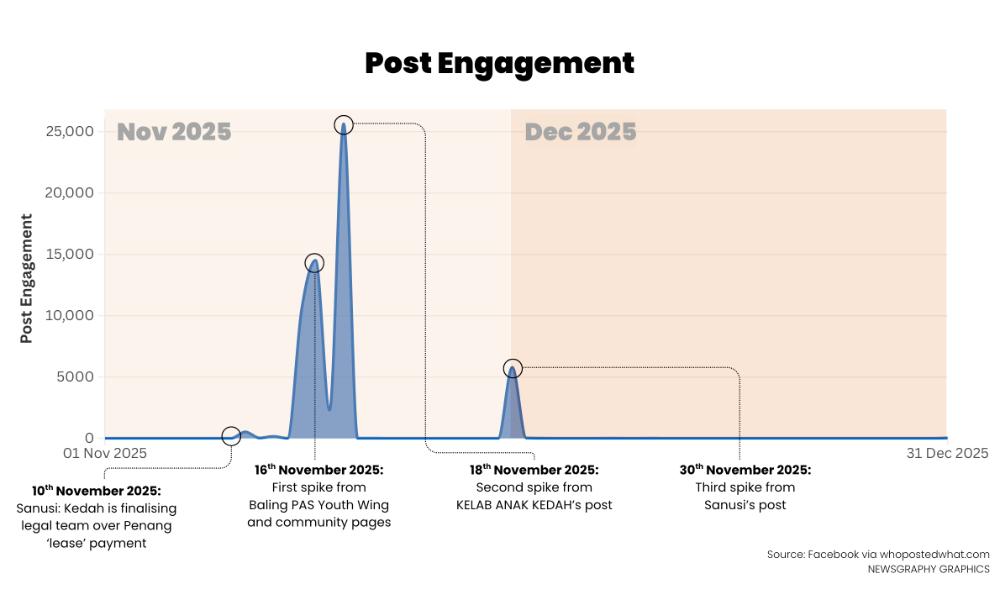
The monitoring dataset recorded a sharp increase in activity between mid-November and early December 2025 as the issue gained political visibility.
Historical arguments that had largely remained within academic, heritage, and political circles began reaching wider audiences online.
Across the posts analysed, several recurring themes emerged:
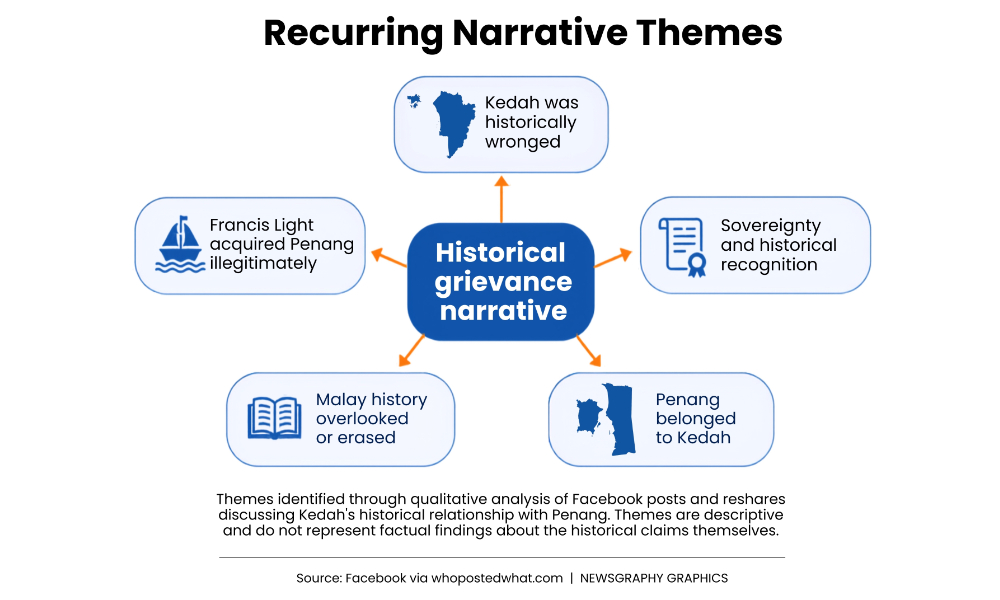
The prominence of these themes also helps explain why certain academic arguments gained renewed visibility during the debate.
As Facebook users searched for historical explanations to support contemporary political claims, the writings of Ahmad Murad Merican were among the most frequently cited academic references identified in the posts analysed.
Several of the recurring themes identified in the dataset echoed arguments the professor had advanced over the years, including the idea that Penang's history is inseparable from Kedah's historical experience and that colonial-era narratives have shaped contemporary understandings of the island's past.
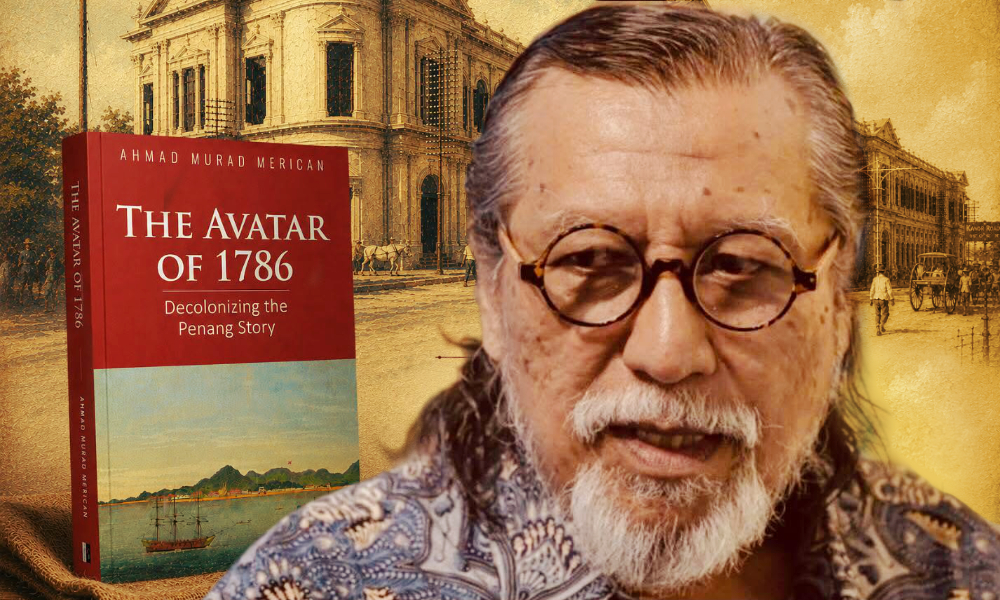
However, Murad, director of the Centre for Malay Civilisation Studies at the International Institute of Islamic Thought and Civilisation, International Islamic University Malaysia, said online discussions do not always reflect the full nuance of his work.
"What is displayed online does not necessarily reflect the narrative I have developed over the past two decades," he told Malaysiakini.
He also rejects what he describes as Eurocentric and colonial interpretations of Penang's past. In his view, 1786 was not a legitimate transfer of territory.
"1786 was the year of robbery and seizure of the island from Kedah," he said.
At the same time, he acknowledged that social media has transformed the way historical debates are conducted.
"It both simplifies and broadens the discourse. It creates a critical space with multiple perspectives," he said.
Why did the narrative resonate?
Yet history alone does not explain why the narrative resonated so widely online.
If Murad helps explain the historical foundations of the claim, Aziff Azuddin believes its appeal lies in something deeper: identity, grievance, and the promise of correcting a perceived historical wrong.
Aziff, research director at Iman Research, studies identity politics, social cohesion, and the role of narratives in shaping political attitudes in Malaysia.
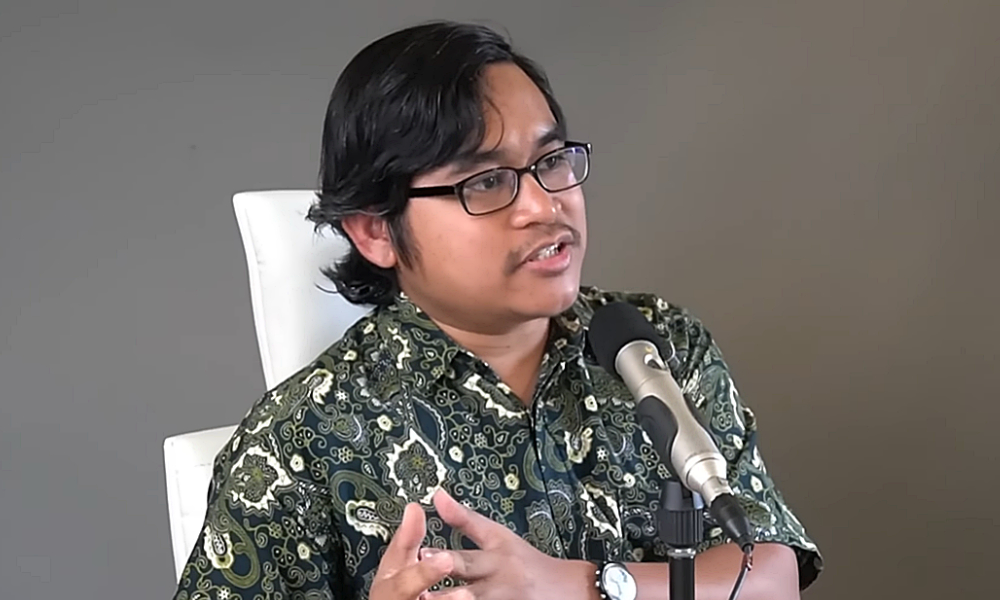
He said narratives centred on sovereignty, ownership, and historical grievance resonate strongly because they offer a story about historical loss and the possibility of correction.
"These are powerful elements to mobilise because they are rooted in historical grievance," he added.
For supporters of the narrative, the story is not simply about what happened in 1786. It is about the belief that a historical wrong was committed and that it can still be rectified.
"There is something politically empowering in believing that you have the ability to course-correct and rectify what was once a decision that benefited a colonial power rather than the Malay people and their sultanate.
"If you have a political actor who is willing to fight to rectify that historical wrong, it becomes a powerful lightning rod," he said.
Aziff argued that Sanusi did not originate the narrative. Rather, he amplified a set of historical claims and grievances that had already been circulating for years in academic circles and online communities.
"Sanusi engaged with an existing discourse and gave it a broader political platform."
Aziff said such narratives are particularly potent at a time when questions of decolonisation and the legacy of colonial rule are receiving renewed attention globally.
The researcher also believes the resurgence of interest in Kedah's historical relationship with Penang reflects a broader revival of interest in historical Malay polities and identities.
He pointed to the increasing popularity of historical kingdoms and polities such as Patani and Kataha - the ancient Sanskrit name for Kedah - in contemporary entertainment media.
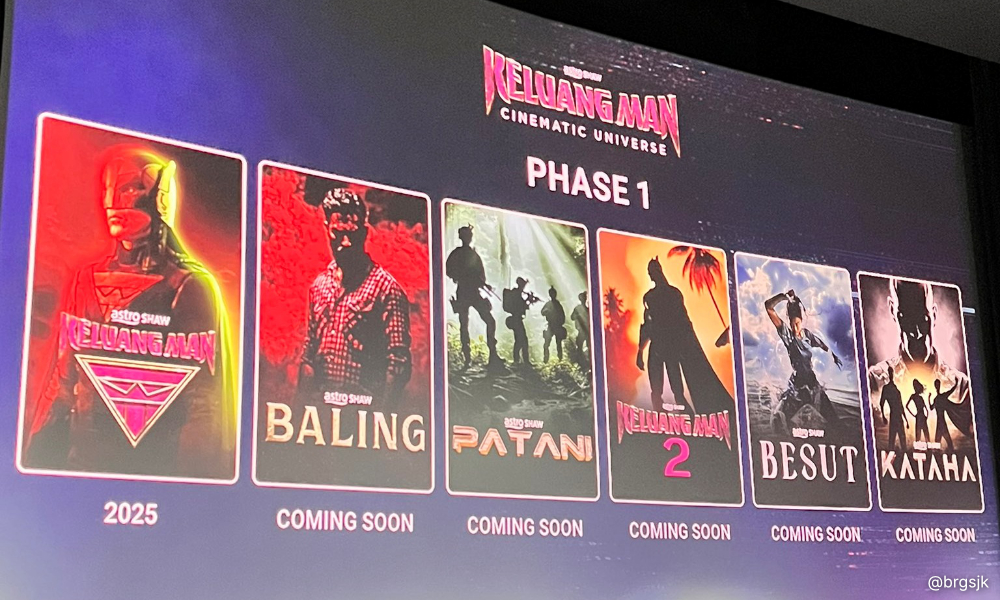
"Entertainment media has played a fascinating role in reviving interest in these historical narratives," he said.
But narratives do not spread on their own. If history, sovereignty and identity provided the message, a network of Facebook pages, groups and amplifier accounts helped carry it to wider audiences.
In Part 2, Malaysiakini examines how that network operated, who amplified the narrative, and why some forms of content proved far more effective than others at attracting engagement. - Mkini

No comments:
Post a Comment
Note: Only a member of this blog may post a comment.