


Coalition for Clean and Fair Elections (Bersih) and the Institute for Democracy and Economic Affairs (Ideas) wish to state our position regarding several recent developments that touch on governance, accountability, and democratic practice in Malaysia.
We are of the view that the withholding of allocations from certain MPs, together with the continued lack of consistent access to development allocations for opposition MPs, demonstrates that efforts to create a fairer and more level political playing field have not yet been fully realised.
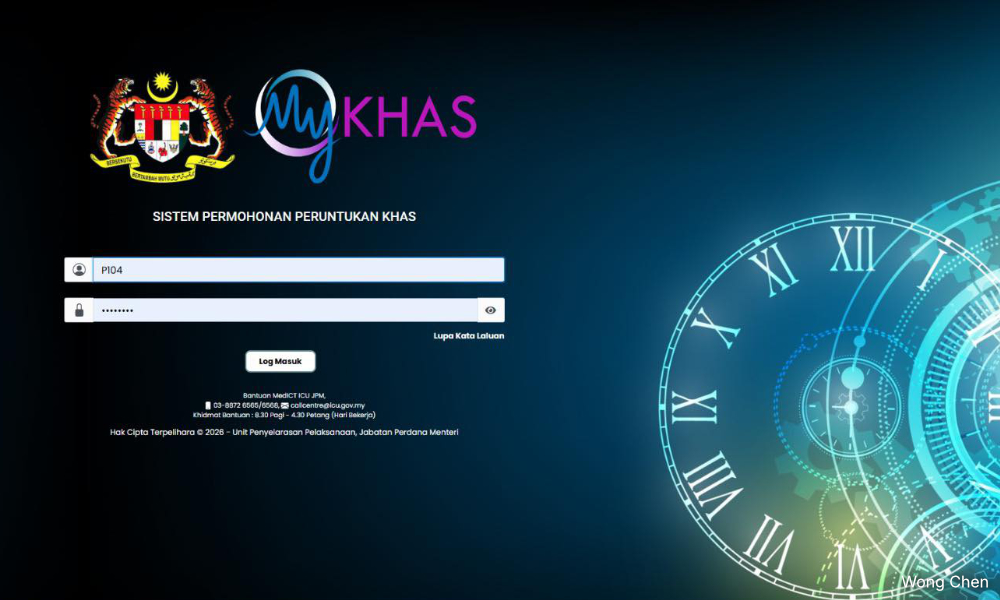
Most recently, Subang MP Wong Chen and Petaling Jaya MP Lee Chean Chung were reported to have lost access to the Implementation Coordination Unit (ICU) website used to apply for development allocations for their constituencies.
Access to development allocations should not be determined by political differences or by one’s relationship with the government of the day. Public funds exist fundamentally for the benefit of the people and the development of constituencies, not as instruments of political reward or punishment.
We also note the reported statement by Johor DAP chairperson Teo Nie Ching that appointments to positions in government-linked companies (GLCs) or statutory bodies could be considered for the outgoing Skudai assemblyperson if she no longer serves as an elected representative after the next Johor election.
We stress that appointments to GLCs and statutory bodies must be based on merit, qualifications, and institutional needs, rather than partisan political considerations.
Appointment processes that are opaque or perceived to be politically influenced can undermine public confidence in the integrity of these institutions.
This concern is supported by Ideas’ research through the “Pantau Kuasa” initiative and the report “Who Sits at the Table: From Political to Public Appointees in Malaysia’s Federal Statutory Bodies”.
As of October 2025, Ideas recorded 238 political appointments to the boards of federal GLCs and statutory bodies under the Madani government.

The report also found that 78 percent of chairperson positions in statutory bodies were occupied by politically connected individuals, while comprehensive legal frameworks and clear qualification standards remain absent.
This increases the risk that political considerations may outweigh merit, expertise, and the public interest in appointments to important institutions.
Don’t treat positions like prizes
Accordingly, we reiterate that appointments to GLCs and statutory bodies must be carried out transparently, based on merit, and accompanied by independent review mechanisms.
Positions in GLCs and statutory bodies should not be treated as political bargaining chips or consolation prizes for politicians who lose elections.
Using such positions as rewards or political pathways runs contrary to the spirit of governance reform and reinforces a culture of political patronage.
As Malaysia approaches the 16th general election, it is crucial for all parties and politicians to uphold democratic principles.
In a mature democracy, differences in political principles and ideologies must not be used as grounds to discriminate against elected representatives or deny the citizens they represent access to public resources.
Likewise, GLCs and statutory bodies should not be treated as prizes or rewards for politicians due to shifting strategies or political expediency.
Public trust and confidence in national institutions, as well as a robust democratic system, must not be taken for granted. - Mkini
Issued by:
Coalition for Clean and Fair Elections (Bersih)
Institute for Democracy and Economic Affairs (Ideas)
The views expressed here are those of the author/contributor and do not necessarily represent the views of MMKtT.

No comments:
Post a Comment
Note: Only a member of this blog may post a comment.