



MALAYSIA’S next general election may not simply be another contest between established coalitions. It could determine whether a new political force emerges, one capable of reshaping the country’s political landscape in the years ahead.
In that equation, Parti Bersama Malaysia (Bersama), led by Datuk Seri Rafizi Ramli, may become one of the most significant political developments ahead of GE16.
Its importance lies not necessarily in its ability to capture Putrajaya, but in its potential to influence how political power is negotiated, distributed and contested within Malaysia’s evolving democratic system.
For more than two decades, Malaysian politics has revolved around large coalition structures, ethnic bargaining and personality-driven leadership.
Even after Barisan Nasional’s (BN) historic defeat in 2018, many of the underlying characteristics of the political system remained intact. Coalition instability, factional defections, race-based mobilisation and elite political negotiations continued to shape the national conversation.
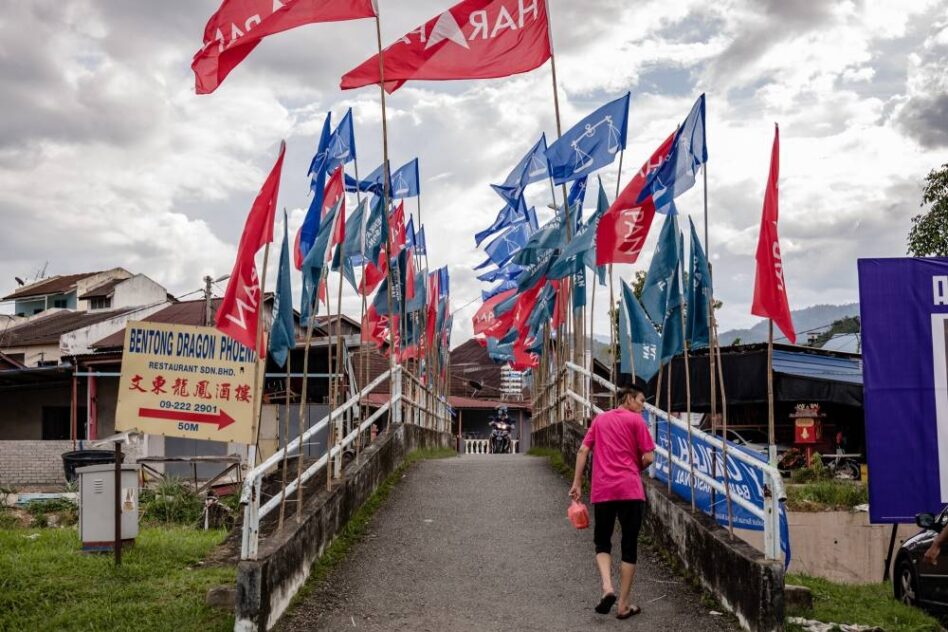
At the same time, many voters, particularly younger Malaysians and urban middle-class citizens, have become increasingly disillusioned.
They feel disconnected not only from the old political establishment but also from reformist movements that have gradually become part of traditional governing arrangements. This growing sense of political detachment has created an opening that Bersama hopes to fill.
Unlike conventional opposition parties that position themselves primarily against the government of the day, Bersama seeks to redefine political participation itself.
Rafizi understands that Malaysia’s electorate is undergoing a significant demographic shift. By GE16, voters from the Undi18 generation and automatic voter registration will play an increasingly influential role in many mixed and urban constituencies.
These voters tend to be less attached to historical party loyalties and more concerned with issues such as economic mobility, governance, institutional credibility, wage growth and corruption.
This demographic transition could create fertile ground for a new political movement.
What makes Bersama particularly interesting is not the prospect of sweeping electoral victories, but its ability to influence outcomes in closely contested parliamentary seats.
Malaysia’s electoral geography means that relatively small shifts in voter preferences can have significant consequences. Even a modest movement of urban and semi-urban Malay votes could affect the outcome of numerous constituencies.
In three-cornered contests, Bersama could emerge as a disruptive factor capable of denying outright dominance to either Pakatan Harapan (PH) or Perikatan Nasional (PN). Such a scenario would make the party politically significant regardless of whether it wins a large number of seats.
Should Bersama secure between 15 and 25 parliamentary seats, it could potentially emerge as a coalition kingmaker in a fragmented Dewan Rakyat.
Malaysia’s political future may increasingly be shaped by coalition arithmetic rather than single-bloc dominance, allowing smaller but disciplined parties to wield influence beyond their numbers.
However, Bersama’s potential significance extends beyond parliamentary calculations.
Rafizi is not entering the political arena as an unknown figure. He has long been recognised as one of the principal strategists behind the growth of Parti Keadilan Rakyat (PKR).
During the Pakatan Rakyat and later PH years, he played a key role in developing policy narratives, mobilising grassroots support and crafting election strategies that contributed to the coalition’s electoral success.
His influence was particularly evident in the lead-up to the 2018 general election, which ended BN’s six-decade hold on power.
Throughout Malaysia’s subsequent political turbulence, Rafizi established a reputation as a politician capable of combining data-driven analysis with effective public communication.
Whether admired or criticised, he remains one of the few Malaysian political figures able to translate complex economic and governance issues into language that resonates with ordinary voters.
This gives Bersama a level of strategic credibility that many newly formed parties often lack.

The party also represents a possible shift from patronage-based politics towards performance-based political legitimacy.
Its emergence suggests that future political competition may increasingly revolve around administrative competence, economic reform, institutional transparency and governance outcomes rather than purely ethnic or ideological narratives.
If successful, this could have important implications for Malay politics. For decades, political competition within the Malay community has largely centred on questions of identity, religion and patronage networks.
Bersama offers an alternative framework focused on economic opportunity, accountability, meritocracy and social mobility.
Yet the party faces substantial challenges. Electoral success in Malaysia still depends heavily on local organisation, grassroots networks, candidate quality and constituency-level engagement.
Public enthusiasm and social media support alone are rarely sufficient to build a durable political movement. Bersama must therefore develop organisational depth while preserving the reform-oriented identity that distinguishes it from established parties.
Ultimately, Bersama’s significance may not be measured solely by the number of seats it wins in GE16. Its greater contribution may lie in accelerating Malaysia’s transition towards a more competitive and mature multi-coalition democracy.
If Rafizi succeeds in institutionalising the party beyond his own political personality, Bersama could become a model for a new generation of Malaysian political movements: agile, reform-oriented, technologically connected and focused on cross-ethnic economic concerns.
GE16 may therefore mark not merely the arrival of another political party, but an important test of whether Malaysian voters are ready to embrace a different approach to political representation, governance and democratic competition.
R. Paneir Selvam is Principal Consultant at Arunachala Research & Consultancy Sdn Bhd (ARRESCON), a think tank specialising in strategic and geopolitical analysis.
The views expressed are solely of the author and do not necessarily reflect those of MMKtT.
- Focus Malaysia.

No comments:
Post a Comment
Note: Only a member of this blog may post a comment.