


The Kuala Lumpur High Court has ordered former premier Najib Abdul Razak to repay SRC International Sdn Bhd US$1.18 billion (RM4.77 billion) for losses the government-linked company had suffered.
He was also directed to repay US$120 million of SRC funds that flowed into the former finance minister’s bank account.
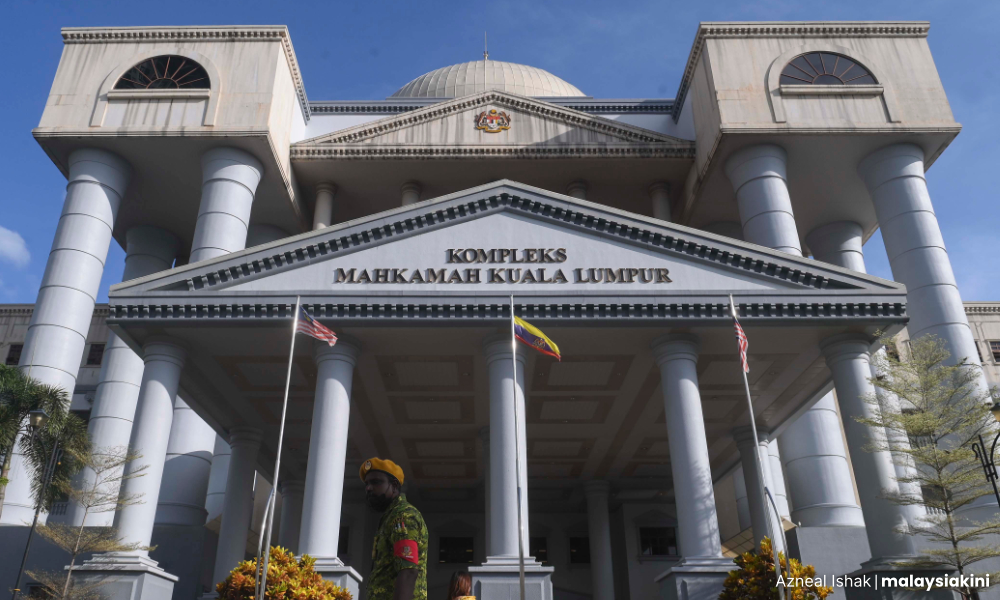
Judge Ahmad Fairuz Zainal Abidin delivered the ruling today in SRC’s civil suit against Najib and the company’s former chief executive officer, Nik Faisal Ariff Kamil, who is still at large.
In his verdict, Fairuz said Najib was liable for breaching his fiduciary duty and committing misfeasance in public office, with the totality of the evidence that “tips overwhelmingly in favour of SRC’s version” based on documentary records, fund flows, and personal admissions.
The court, however, allowed an interim stay of execution to enable Najib to file a formal application for a stay pending appeal within 14 days.
The issue of legal costs arising from the case will be determined at a later stage.
The civil action, filed in 2021, is part of efforts by SRC and related entities to recover billions lost in transactions linked to the wider 1MDB scandal.
Proceedings have seen testimonies from former directors and officials, including claims that major investment decisions were approved without proper scrutiny.
‘Not supported by evidence’
Fairuz described a number of objections raised by the defendant on the admissibility of banking documents with redacted portions as “speculations” which were “not supported by evidence”.
Citing a witness statement during the trial, the judge said the court was able to trace the origin of the US$120 million and its eventual destination - Najib’s bank account identified by its last three digits, “694”.
“The second prosecution witness’ detailed verbal testimony was consistent with the documentary evidence,” he said.
Fairuz further raised multiple contradictions in six arguments made by Najib’s defence team, which the judge said suggested fabrication of facts.
“The defence claims that the prime minister, in his capacity as finance minister, did not monitor his own bank accounts.
“However, this position conflicts with the defence witness. If he did not manage or monitor the accounts, it raises the question of how he could have formed any belief regarding the source of the funds,” said the judge.
“If he (Najib) was genuinely uncertain about the source of the funds, then any assertion of belief as to their origin becomes untenable,” he added.
Fairuz said Najib had full discretion over his account and could have taken various actions, including reporting the matter to the authorities, but instead had allowed the account to be used to launder funds.
He noted the money trail passed through five layers: SRC International, SRC BVI, Enterprise Emerging Markets Fund (EEMF), Blackstone Asia, and Najib’s personal account, with each entity serving as a pass-through to obscure the ultimate destination.
Furthering own interests
In his verdict, Fairuz ruled that Najib had breached his duties, including the duty to disclose any personal interest in the funds, and instead acted in furtherance of his own interests rather than those of SRC.
“This court has comprehensively established the abuse of power.
“The first defence witness (Najib) secured government guarantees through the cabinet and overruled safeguards at every stage.
“He wielded his position not to serve SRC’s interests, but to facilitate systemic misappropriation,” said Fairuz.
The civil proceedings are distinct from Najib’s earlier criminal trial involving RM42 million in SRC funds, for which he was convicted.
While the criminal case focused on specific transactions into Najib’s personal accounts, the civil suit concerns broader losses suffered by SRC as a company.
‘Multiple acts of concealment’
On elements required to prove misfeasance or wrongful exercise of lawful authority, Fairuz said “multiple acts of concealment” showed that Najib was aware of what could and could not be done in the exercise of his ministerial powers.

“He failed to inform the Yang di-Pertuan Agong of SRC’s default. Concealment is indicative of knowledge.
“Najib also authorised three out of the four short-term loans.
“These actions demonstrate a consciousness that proper due process would not yield the desired outcome,” he said.
He said it was also established that Najib had intended to injure SRC with conduct designed to deprive the company of its assets.
“The RM3.6 billion investment was pre-determined to be placed offshore before any due diligence was undertaken, and extraordinary speed was ensured to avoid scrutiny.
“The subsequent cover-up further demonstrates an intention to harm, particularly in D1’s (Najib) response once the fraud was exposed,” he said.
Suit filed in 2021
SRC filed the suit in 2021, seeking a declaration that Najib and Nik Faisal are liable to account for fraudulent breaches of duty and trust.
The suit also concerns an RM4 billion loan from the Retirement Fund Inc (Kwap) to SRC in 2011 and 2012.
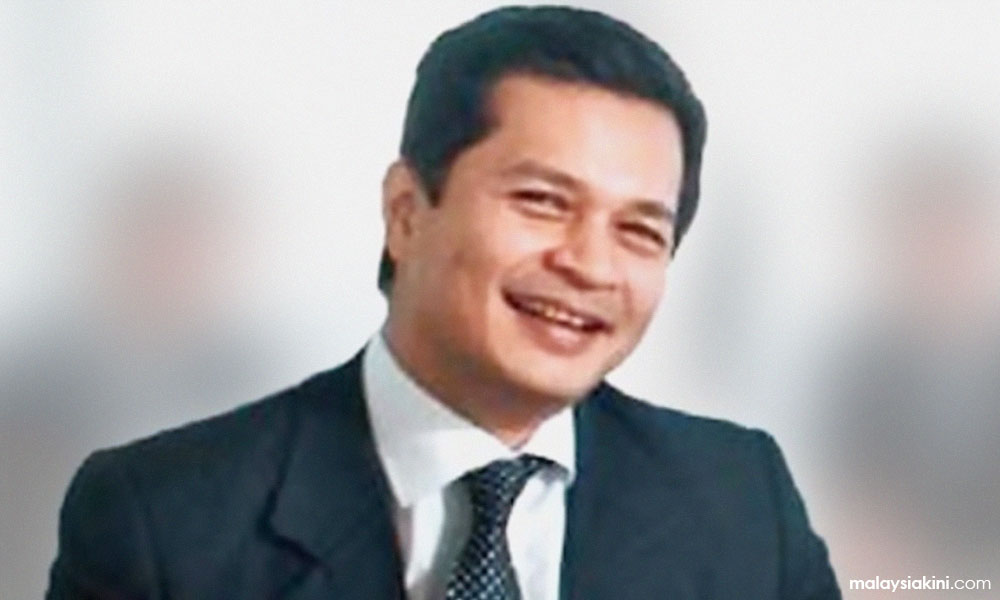
“Without D1’s abuse (of power), Kwap would not have extended the RM4 billion loan, nor would the funds have been disbursed offshore.
“D1’s misfeasance directly caused SRC’s injury, resulting in the loss of its capital. With all the reasons above, it was found that D1 committed the tort of misfeasance in public office,” said Fairuz.
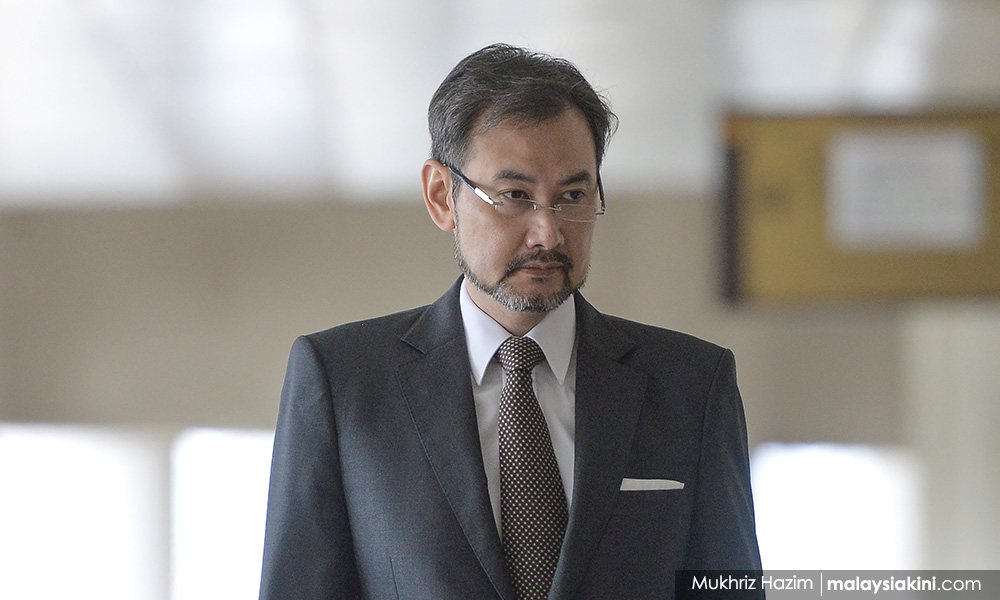
On Nik Faisal’s role, Fairuz said coordinated conduct over several years, including on the timing of funds transferred into Najib’s account, inferred an agreement between him and Najib.
“Their acts cause SRC’s loss of US$1.18 billion. These acts were unlawful and without justification, and D1 and Nik Faisal are jointly liable,” he said.
SRC was also seeking the defendants to compensate SRC in equity, as well as to repay the US$1.18 billion, which was the loss of proposed investment funds and alternatively the loss of use of the said sum to be determined and assessed by the court.
Court dismisses Najib’s third-party claim
Fairuz also dismissed Najib’s third-party claim against SRC’s former directors.
He said that SRC’s Memorandum and Articles of Association (M&A) gave Najib powers which “no other” in the company possessed.
This included articles that gave Najib the power to hire and fire any director, and Fairuz noted that this created a structural dependency.
He also reiterated that Najib was the shadow director of the company, as he controlled its operations.
Initially, the suit had also named former company board members Ismee Ismail, Suboh Yassin, Azhar Osman Khairuddin, Shahrol Azral Ibrahim Halmi, and Che Abdullah @ Rashidi Che Omar as defendants.
They were dropped later, only for Najib to bring them back as third parties. - Mkini

No comments:
Post a Comment
Note: Only a member of this blog may post a comment.