


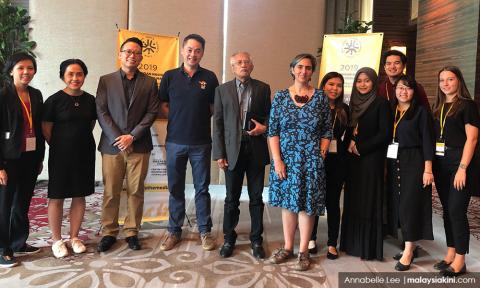
A draft bill for the establishment of a media council is set for completion by the end of next month, according to the Centre for Independent Journalism (CIJ) and the Malaysian Centre for Constitutional and Human Rights (MCCHR).
This was decided following a two-day consultation in Kuala Lumpur, which was attended by journalist associations, editors, media owners, NGOs, academics, think tanks and lawyers.
CIJ director Sonia Randhawa said she was satisfied with the formation of a steering committee to draft and eventually finalise the bill.
“The steering committee will consist of a majority of journalist associations, with representatives from other groups as well. There will one representative from civil society organisations and one from academia.
“We are also going to be extending an invitation to editors and (media) owners, who have come up with a (separate) draft, to also join the committee and hopefully bring their draft to the table,” she said after the event.
Malaysiakini CEO Premesh Chandran told the conference yesterday that local editors and media publishers had drafted their own proposal to legislate the media council.

The National Union of Journalists (NUJ), the Institute of Journalists (IOJ), the Foreign Correspondents Club of Malaysia (FCCM) and Geramm agreed to be part of the steering committee for the For the CIJ and MCCHR initiative.
The committee, Sonia noted, plans to publish ongoing drafts of the bill on the CIJ Facebook page, which the public will be able to comment on for a limited time.
“We have set a deadline for April 30 to come up with either a draft bill and/or a constitution (for the media council).
“We think it’s really important to have an open, transparent and participatory process that feeds into any discussions (we are having) at the moment,” she said.
Yesterday, the prime minister's special adviser on communications and media affairs A Kadir Jasin said he hoped that the media council could be set up within the year.
'Oppressive laws must go'
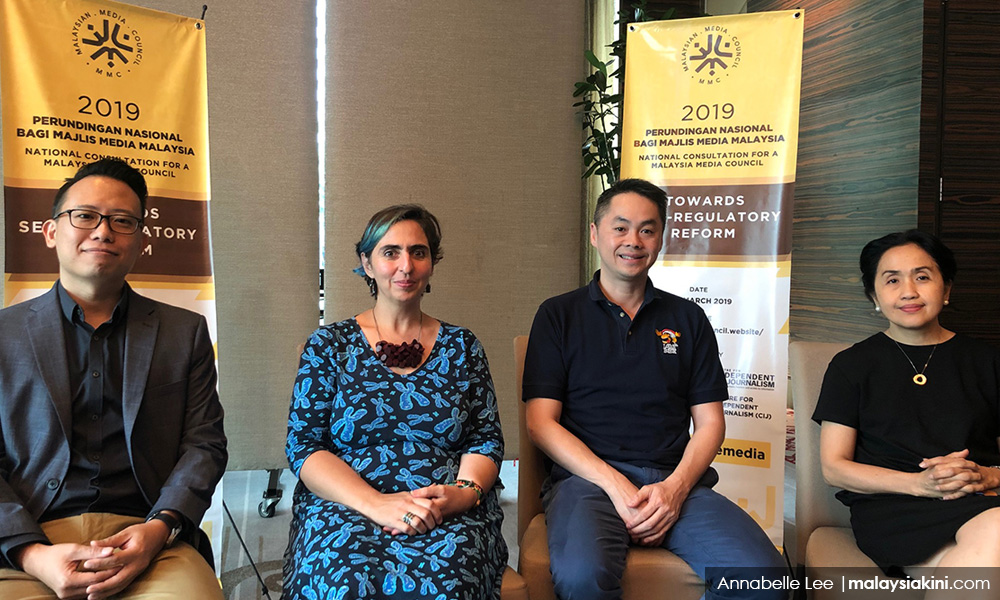
The end-April deadline notwithstanding, MCCHR director Edmund Bon (second from right in photo) stressed one precondition for the establishment of a media council – the Parliament addressing laws said to be contradictory to a self-regulating media environment.
These include the Printing Presses and Publications Act 1984, the Sedition Act 1948, Sections 211 and 233 of the Communications and Multimedia Act 1998, and the Official Secrets Act 1972.
“The laws must go first, or they must be improved to increase the freedom for journalists to operate in before the media council is in place,” he said.
Similarly, Unesco adviser for communication and information Lim Ming-Kuok agreed that these laws needed to be repealed first.
“We encourage the government to seriously look into the repeal of national laws relating to the freedom of expression that are not aligned with international standards.
“In an ideal situation, they (the government) would have to repeal the laws first (before setting up the media council),” he said.
Lim, along with Southeast Asian Press Alliance executive director Tess B Bacalla, noted that the consultation was an important preparatory step for the eventual formation of a media council.
During the consultation, participants discussed the roles, functions and composition of the proposed council, as well as what a code of ethics for media practitioners would entail. - Mkini

No comments:
Post a Comment
Note: Only a member of this blog may post a comment.