


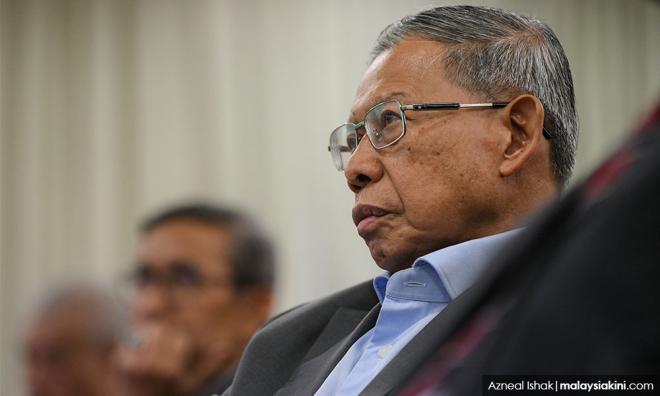
Economic Affairs Minister Mustapa Mohamed said there might be some reviews needed in the 12th Malaysia Plan (12MP) to address the unexpected economic impact of the Covid-19 outbreak and the global oil crisis.
Mustapa (above) said when he first assumed office, plans for the 12MP, which applies for the years 2021-2025, were "almost ready" under his predecessor Azmin Ali.
However, due to the movement control order (MCO) which was implemented to combat Covid-19 and the rapid fall in oil prices, the health of the economy had deteriorated over the last month, affecting the country's economy and income.
“The plans were made when the economy was good. Last year's was good, the previous year's - 2018 - was pretty good. So now we need to realign."
“When I came in (office) five to six weeks ago, the 12MP was almost complete. But with the current situation, (government) revenue is affected so we need to review some of the assumptions made in the last few months when preparing the 12MP," he said.
Mustapha said this during a telecommunication session organised by the Institute of Democracy and Economic Affairs (Ideas) on Zoom, which was facilitated by Ideas chief executive officer Ali Salman.
It is understood that the 12MP was set to be finalised and tabled by the time Parliament resumed its session later in the year.
Mustapa said that post-Covid-19 and MCO, it would take time for companies to recover, small and medium enterprises (SMEs) to regain their footing, and to restore investors confidence.
“The economic outlook for Malaysia for this year and next year was good, but then Covid-19 came along, and now we are in a difficult situation, facing negative growth."
"When it comes to planning, some of the numbers which we crunched earlier are no longer relevant.
"Now we have to go back to the drawing board in terms of forecast and growth, and of course, allocations will also be affected," he said.
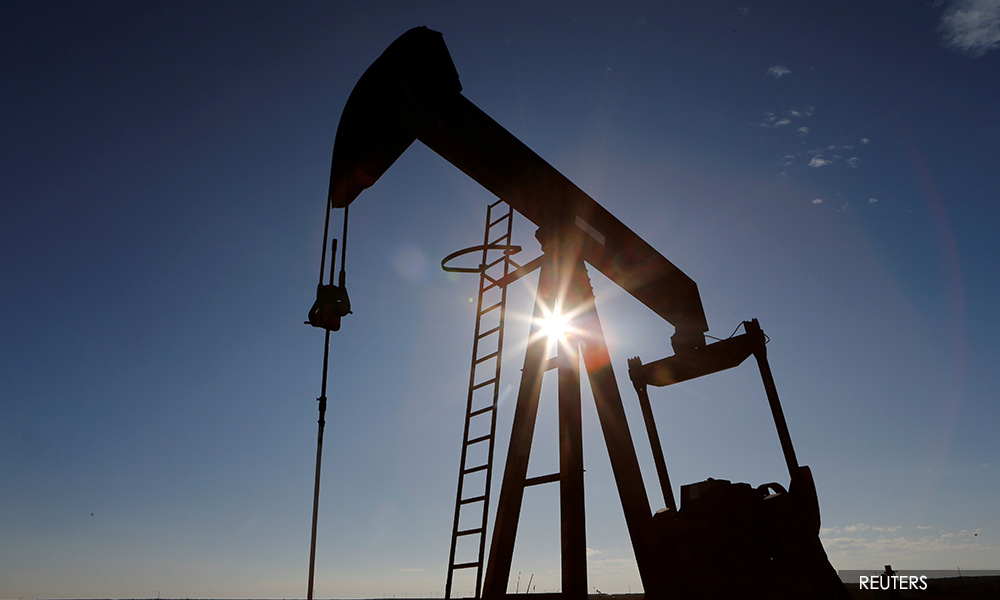
To make matters worse, he said the sharp decline in oil prices across the globe, has affected the country which has a degree of dependence on revenue from the commodity over the past 30 years in the form of taxes, duties and dividends from the petroleum sector.
"For some years (in the past) it's as much as 40 percent of the total government revenue. Now it's around 20 percent. The 20 percent is still quite a large percentage. Oil has got a big impact on our economy," he said.
"When growth is negative, there will be less tax collection, less dividends from Petronas, and many other implications. Export earnings as well have been adversely affected," he added.
Meanwhile, when asked whether the government should liquidate assets to sustain economic recovery, Mustapa said there were two views on the matter.
One view is that the government should hold on to assets and only sell it when it is profitable, while the opposing view was that assets need to be sold now because the government is cash strapped.
"(However) my personal view is that it’s not a good thing to do at this moment, because prices across the board are very low and we’re not going to get a good price for whatever we have to sell," he added. - Mkini

No comments:
Post a Comment
Note: Only a member of this blog may post a comment.