


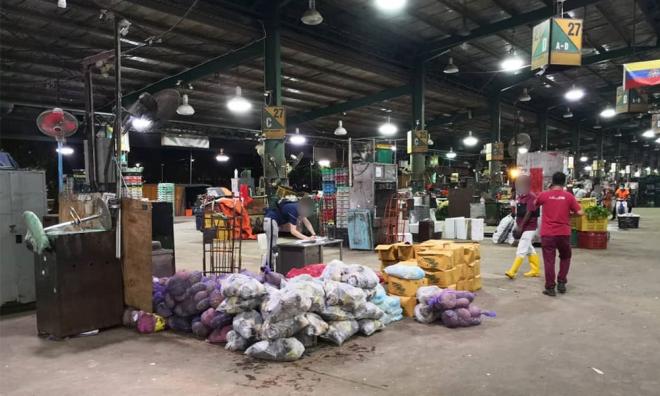
The Kuala Lumpur Wholesale Market reopened today after an unprecedented five-day closure mandated by the authorities to prevent the spread of Covid-19.
However, the market - the biggest food market in the country - was not its usual colourful and rowdy self as only a handful of wholesalers returned to work.
Their primary obstacle were the strict conditions imposed by Kuala Lumpur City Hall (DBKL) which mandated wholesalers to provide papers proving that they are not infected with Covid-19.
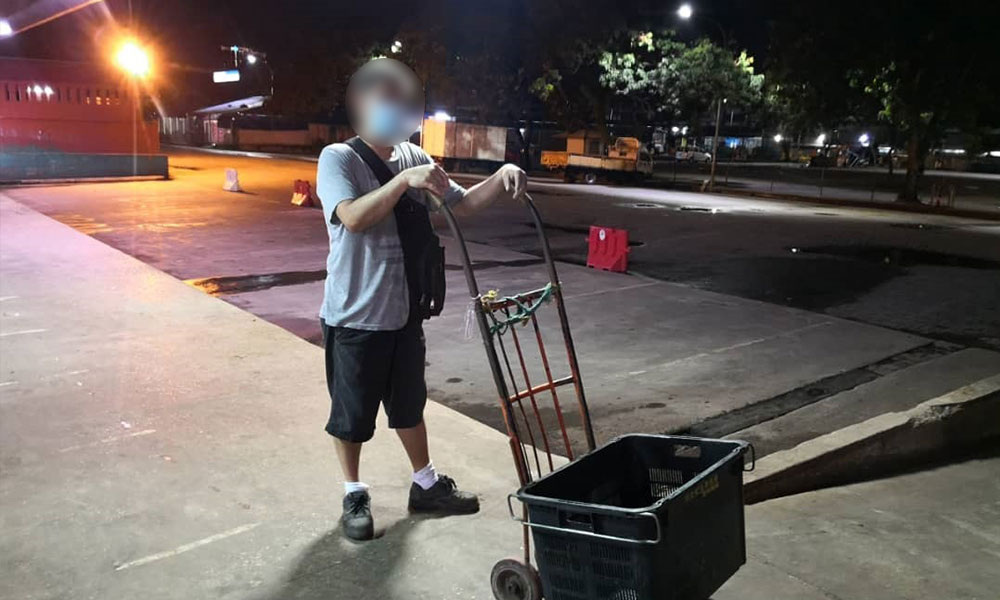
As of noon, only 65 out of 216 vegetable stalls were opened according to Kuala Lumpur Vegetable Wholesalers' Association secretary Law Tek Kim. This means that only 30 percent of vegetable wholesalers were working today.
"Out of all the licensed wholesalers, only 110 are eligible to operate today because they have completed 14-days quarantine after the Covid-19 test," he told Malaysiakini.
"DBKL wants us to first produce a medical report on Covid-19 before issuing us the (temporary) passes. Our members still rushing to get the passes and some of them yet to receive the medical report for their staff."
Law said some of the eligible wholesalers cannot start work because their staff are trapped in the enhanced movement control order (MCO) area adjacent to the market.
"In my case, I have gotten my papers but I cannot start work. All five of my employees and my brother-partner are being locked down.
"I cannot operate the stall all by myself. How am I to carry a vegetable basket that weighs easily up to 50kg?" asked Law.
He said the migrant workers comprise up to 80 percent of the labourers in the market.
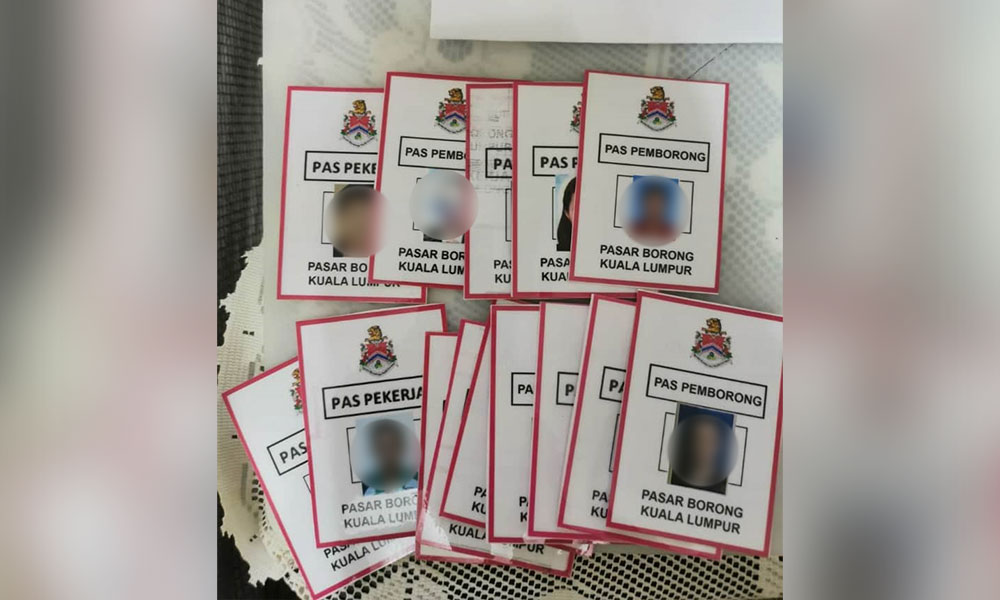
Additionally, DBKL also imposed a condition for visitors to produce a medical certificate before being allowed to enter the market. This reporter was not allowed to enter the market at 6.30am today.
"This had deterred many of our suppliers and clients as not many are able to get the medical report on Covid-19," he said, adding he saw a sharp reduction of 90 percent of clients and suppliers entering the market.
Law said Klang Valley folks should be prepared to see less variety in the coming days as fewer shipments are entering the market.
"Before dusk, I only saw leafy greens arriving. A few more varieties came from Cameron Highlands and other parts of the country hours later. But there is no sign of imported vegetables from Thailand and China yet."
He expected the reduction of vegetable supplies sold at the wholesale market would impact the markets, eateries, supermarket and hypermarket.
"Ninety percent of the vegetable supplies sold at the wet markets come from this wholesale market. I heard some vegetable retailers could not operate when we were ordered to close down earlier this week."
The KL wholesale market was shut since April 18 due to a Covid-19 infection cluster. At the time of writing, there are at least 28 confirmed cases and one death in this cluster.
The market was shut for sanitisation works but the reopening was postponed twice - on Sunday and Tuesday.
A random check at a wet market in Kepong, Kuala Lumpur saw leafy greens being sold at prices up to three times January's average prices based on data acquired from the Federal Agricultural Marketing Authority's (Fama) website.
Malaysiakini found that the very commonly used sawi hijau (green mustard or choy sum) was being sold at RM12 per kg when it used to be sold for RM3.83 per kg on average in the Kuala Lumpur area in January according to Fama's data.
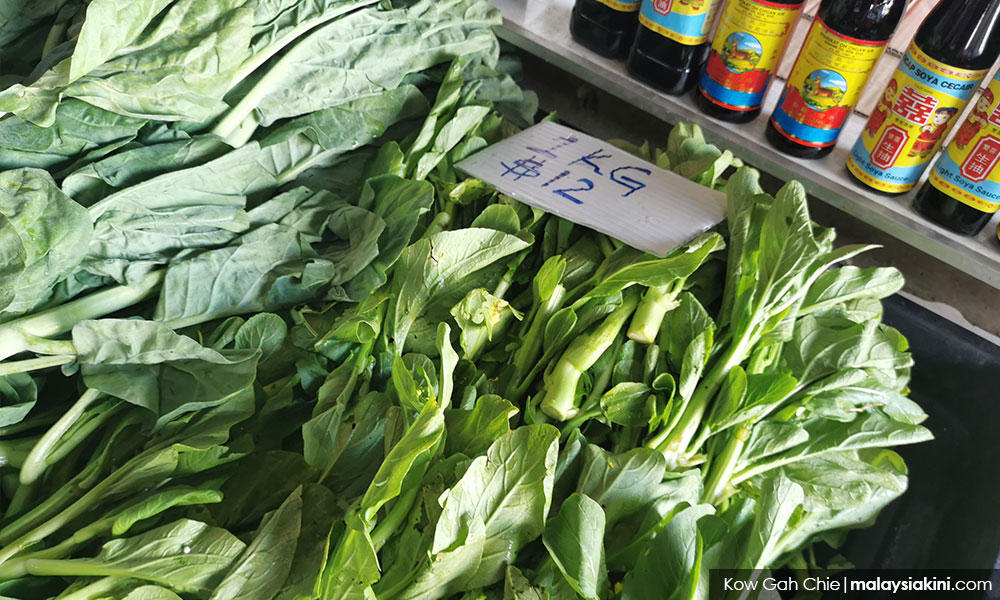
A wet market vegetable seller in Jalan Kelang Lama, Kuala Lumpur told Malaysiakini that vegetable prices have been very volatile during the MCO period.
"The retail price was high in the past week. Taking local choy sum for instance, the lowest retail price recorded was RM2.50 per kg before the Covid-19 outbreak. Now, we are selling at RM7 per kg," she said.
"Onion prices also fluctuated. It went up to RM20 per kg at the early stage of the MCO, now it is priced at RM15 per kg," she said.
Meanwhile, Kuala Lumpur Hoi Seong Fish Wholesaler Association president Sing Kian Hock believes only 30 seafood wholesalers out of 168 would reopen by tonight.
The wholesalers faced the same problem like the vegetable wholesalers as such most of the wholesalers prefer not to reopen soon, he said.
Even those who reopen, he said, may not dare to place new orders for fresh seafood and only sell their existing stock.
Previously, Sing complained that the prolonged closure of the wholesale market caused havoc to the seafood wholesalers who were unable to unload 500 tonnes of seafood worth RM10 million at the market when the seafood containers arrived early this week.
"Yesterday, we were alerted that a seafood wholesaler tested positive for Covid-19. I am not sure if more people will be infected and result in the closure of the market again," he said.
Prior to this, only vegetable wholesalers and their staff were infected while the seafood and fruit wholesalers were not
Such unpredictable situations made it hard for the wholesalers to place new orders for fresh seafood for the time being, he said.
As such, he also foresees a shortage of seafood, including those popular during the Ramadan month.
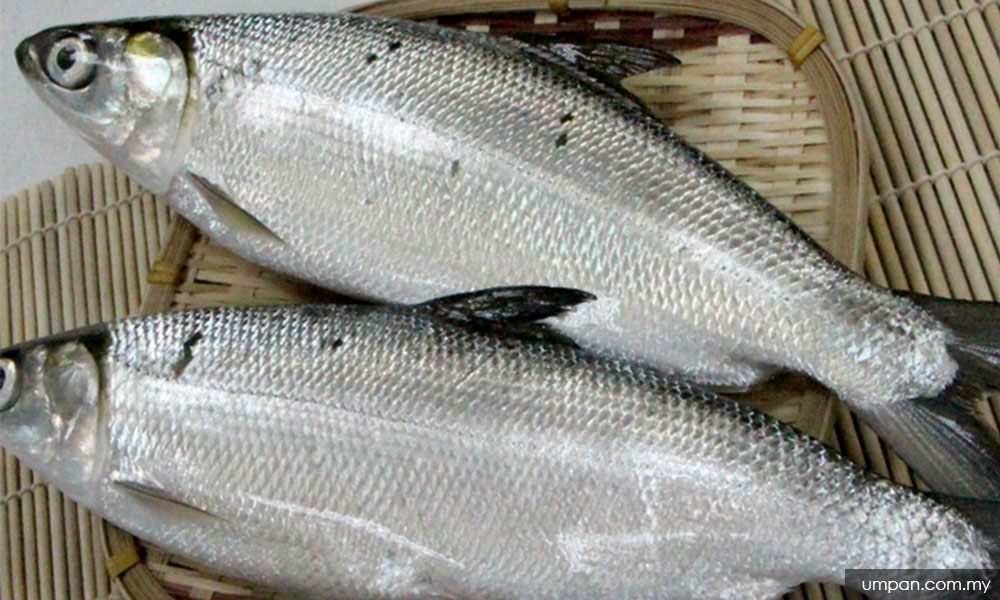
"The most popular seafood during Ramadan month are stingray, red snapper, crab and cuttlefish. We expected to see a 30 percent increase in demand during this festive month.
"These items are mainly imported from Indonesia because little can be found in the Straits of Malacca," he said.
Meanwhile, Kuala Lumpur Fruits Wholesaler Association president Chin Nyuk Moy said only one out of 64 fruit stalls was open for business today at the wholesale market.
"This is because we have yet to get the papers issued by DBKL for our staff yet," she said when contacted.
"The only stall that opened today was not doing business. But the trader has their staff pack fruit for one of the supermarket chains," she said, adding the other members will reopen tomorrow.
She, however, said this would not impact the fruit supplies in the country as fruit could be kept refrigerated for days.
"But definitely you can observe fewer fruits in the market and fewer varieties. In some cases, our members would (bypass the wholesale market and) get the fruits and sent them directly to the clients," she said.
"The wholesale market supplies at least 50 percent of the fruits needed nationwide. Even supermarkets and hypermarkets get their supplies here," she said. - Mkini

No comments:
Post a Comment
Note: Only a member of this blog may post a comment.