


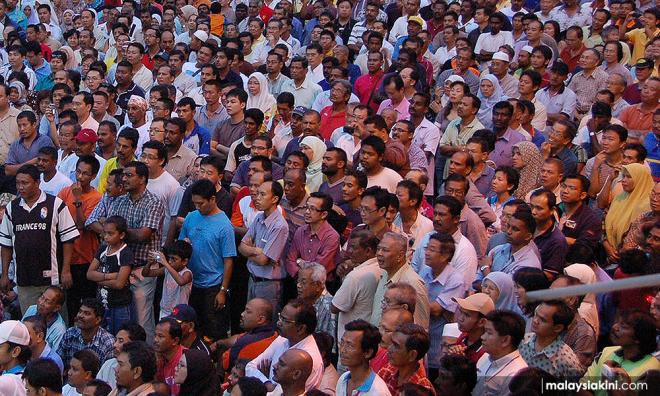
When everything seems to be falling down, be it the global oil prices, gross domestic product (GDP), or the global economy as a whole, there are a few macroeconomic indicators in which values are rising, one of which is unemployment.
Earlier this month, the Department of Statistics Malaysia (DOSM) had released the results of a survey on the "Effects of Covid-19 on Economic and Individuals (Round One)" with a total of 168,182 respondents nationwide participating in it.
According to the study, almost 47 percent self-employed workers had lost their jobs – about 19,677 respondents. As for those who still have jobs, 35.5 percent reported a decrease in income by over 90 percent.
If the percentage is taken on an actual scale, this means that out of the 2.86 million self-employed workers, 1.34 million workers have lost their jobs. And almost 540,000 experienced a 90 percent decline in income.
However, this is only for those who are self-employed, not even taking into account workers who have employers.
Although DOSM said this is not the official statistics, it can still be used to explain the current situation.
By definition, the self-employed group involves farmers, breeders, fishermen and the ones who have their own businesses without hiring workers. This includes Makcik Kiah, who sells pisang goreng at the stall on her own. - Mkini
At the same time, on the global front, the International Labor Organisation (ILO) estimated that nearly 25 million workers would lose their jobs, with loss of incomes of approximately US$3.4 trillion (RM14.8 trillion) if the virus is not controlled.
Meanwhile, the Malaysian Institute of Economic Research (MIER) also estimated that about 2.4 million Malaysians would lose their jobs due to the Covid-19 crisis.
To make things worse, these estimates are based on the period of a one-month implementation of the movement control order (MCO). This means that with the MCO recently extended until May 12, that number is likely to increase as well.
Of course, the extension of the MCO has helped Malaysia in dealing with the spread of the virus outbreak, but it also would exacerbate the economic crisis that has begun to worsen even before the Covid-19 outburst.
Direct fiscal injection worth RM35 billion through the Prihatin stimulus package would inevitably help Malaysians to cope with the outbreak, but this might not be the case for the long term. And Malaysia cannot prevent the rise in the unemployment rate.
As a result, the increase in jobless rate will indirectly put pressure on the government and Bank Negara to revive the economy, whether to provide compensation to the affected workers, or to convince the employers to keep their employees until this pandemic is fully mitigated.
Failure to construct well-designed policies would result in a more severe recession, resulting in the possibility of government having to consider additional stimulus packages to improve the existing stimulus.
The increase in unemployment is not only happening in Malaysia but also across the world. The unemployment rate in the US had risen to 16.25 percent in just five weeks, which equals to 26.5 million Americans.
In Spain, the unemployment rate has surpassed 14 percent, the highest among developing countries.
So, what can be done?
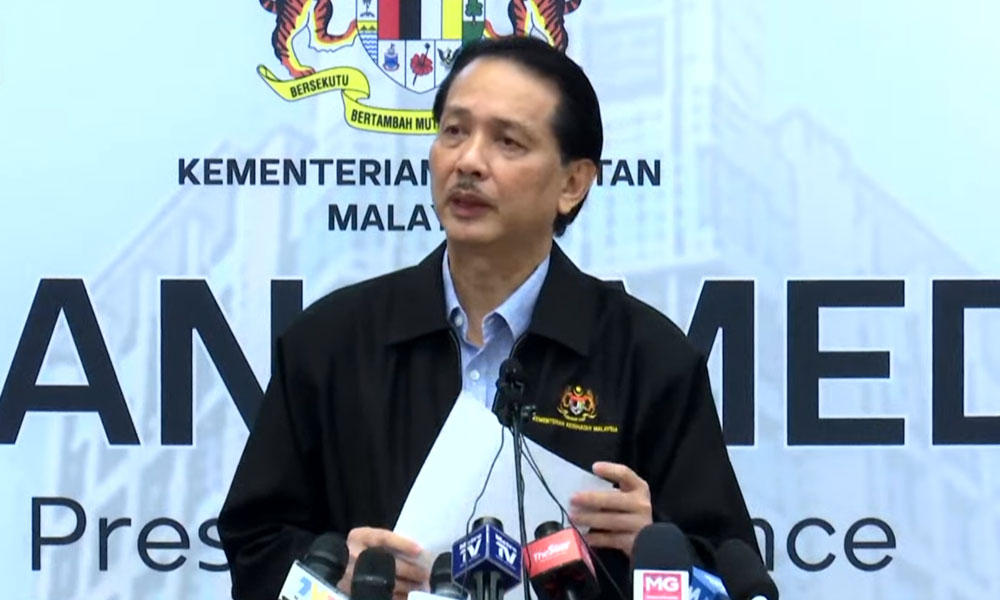
The Health Ministry led by its director-general Dr Noor Hisham Abdullah (photo) has been recognised as one of the best institutions in curbing the spread of the pandemic.
The Malaysian government, with strict implementation of the MCO, assisted by various parties, including the armed forces as the frontliners, has provided some flexibility for the essential services to continue operating. This is to ensure that the economy still runs despite the ongoing MCO.
So far, there is still no case or a new cluster from these essential services infected by Covid-19. This deserves to be lauded.
The same measure should also be imposed on other services in stages to ensure the survival of the nation's economy without compromising the precautionary measures – social distancing, no direct contact between individuals and to make it compulsory to have face masks on if business owners want to continue with their operations.
These measures would help reduce the burden shouldered by the employers from earning zero income, to provide an opportunity for the employers to retain their existing employees as well as to reduce the unemployment rate indirectly.
Besides this, an economic recovery plan needs to be created on an urgent basis that includes short-term, medium-term and long-term measures in order to diversify the economy and create new employment opportunities.
It should include measures to strengthen the national food security, to provide means for digital transformation such as the Fourth Industrial Revolution (4IR), to develop green technology and others.
For individuals, the increased number of free online classes like the ones offered by Harvard University that have been made available during the MCO should be fully utilised in order to enhance existing skills as well as an additional preparation in finding a job in the future.
Until now, we still don't have a clue on the level and intensity of Covid-19 outbreak, but what is certain is that when the MCO is fully lifted, the health crisis will continue to haunt us in many aspects.
Many expect the global economy to experience a V-shaped recovery, in which economic collapse occurs when everyone is ordered not to leave the house, and when they are allowed to leave the house, the economy will recover drastically.
However, in reality, I think the economy will experience a W-shape recovery, in which after the MCO is over, the economy will turn around for a while, but will fall again due to the debt burdens that are overdue, then followed by a rise after the economy is able to run normally.
AMIR JALAL is a research associate at EMIR Research, an independent think tank focused on strategic policy recommendations based on rigorous research. - Mkini

No comments:
Post a Comment
Note: Only a member of this blog may post a comment.