


COVID-19 | The National Recovery Council's (NRC) recommendation that Malaysia's borders should be reopened fully to all countries as early as next month has triggered concerns among several pandemic experts.
They warned that doing so when the Omicron wave is expected to be peaking may lead to an overload of positive Covid-19 cases in the country and risk overwhelming Malaysia's healthcare system.
"I don't think our borders should be fully opened by early March, as the Omicron surge is expected to peak in March.
"The borders should only open after the Omicron surge is flattened in order not to further burden our healthcare resources," Dr Moy Foong Ming told Malaysiakini when contacted yesterday.
Moy is a professor in epidemiology at the Centre of Epidemiology and Evidence-Based Practice, Department of Social and Preventive Medicine, Faculty of Medicine, Universiti Malaya.
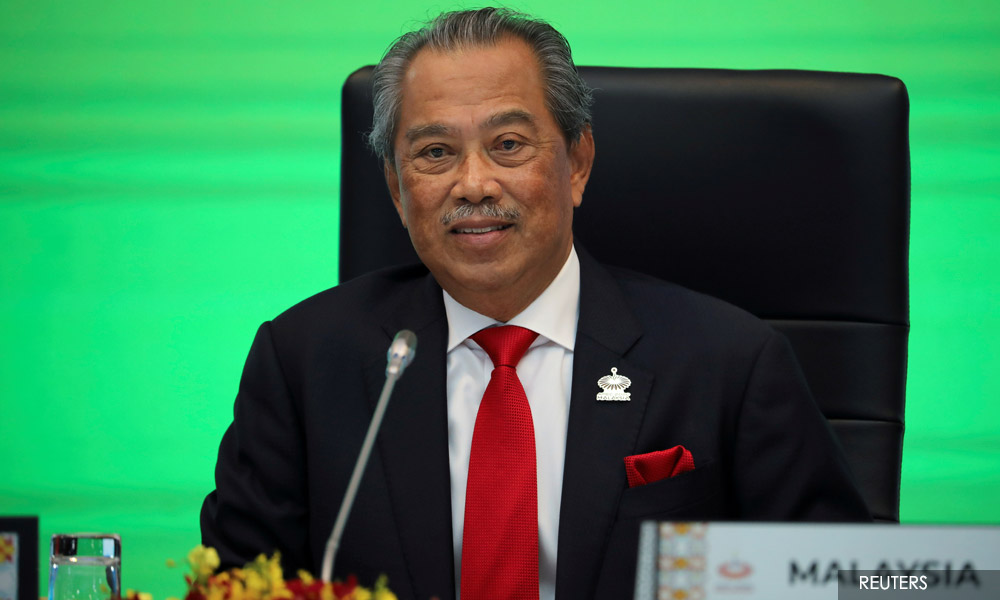
Two days ago, NRC chairperson Muhyiddin Yassin told a press conference that they suggested Malaysia's borders be fully opened to all countries as early as March 1 without requiring travellers to undergo compulsory quarantine and rely on double testing before departure and upon arrival in Malaysia.
Muhyiddin said the recommendation was made in the interest of Malaysia's economic recovery and because it is difficult to ban only certain countries since the Omicron variant of the Covid-19 virus has been detected throughout the world.
However, Moy argued that fully reopening the borders for economic recovery may inflict further damages if the number of Covid-19 cases spikes.
"The opening of borders is to boost the tourism and economy sectors. Although Omicron is already in our community, if the international travellers come in with the virus, they may spread the virus to locals and increase the surge further.
"This may affect our economic sectors if too many people are infected and need to be quarantined. There will be a shortage of workers, which will affect the economy," she said.
'Repeat of past mistake'
Public health policy researcher Dr Lim Chee Han, meanwhile, described the suggestion as an adoption of the "European way" in handling border control.
He warned that the country may pay a high price should it decide to rely on testing alone, without imposing mandatory quarantine on travellers.
"I wonder when will they learn that health is wealth? If people seriously still want to come or return to Malaysia, quarantine them for at least five days. Why should it be a big deal?
"If the government wants to do it the European way, then prepare to suffer like their (European) healthcare system and pay the social cost," he said.

Lim said reopening Malaysia's borders when the country is facing the Omicron wave may also lead to a repeat of what transpired in December 2020.
This was when the country saw spikes in the number of cases when the government decided to reopen state borders, a decision Lim described as "premature".
"The measure is also not wise as it encourages Malaysian family members abroad to come back while it is probably riskier here.
"At the same time, many Omicron cases are actually imported cases. The move to open borders means that the government is prepared to let Omicron viruses overload and dominate in the local transmission.
"I am not too sure how leaky the two PCR tests are to prevent more imported cases as such," Lim said.
Meanwhile, independent specialist in health policies Dr Khor Swee Kheng urged Putrajaya to resolve the public administration issue that surrounds NRC and make a clear distinction of its role.
"Malaysia must resolve a public administration issue, where the National Recovery Council may be perceived to be a ‘parallel government’ that makes decisions that should really be made by the actual government.
"Therefore, there should be a clear distinction between the roles of the Health Ministry, Parliament and the NRC. The NRC is a temporary entity, not a permanent entity like MOH or Parliament," Khor said in a text message to Malaysia.

Khor however declined comment on the border reopening proposal by NRC.
Sound entry protocols needed
Infectious disease specialist Dr Christopher Lee meanwhile called on the government to ensure that there are "sound entry protocols" at the borders and have a good surveillance system.
While he agrees that keeping Malaysia's borders closed is not good for the country's socioeconomic situation, Lee said reopening borders must be done cautiously.
"Reopening borders will lead to some increase in entry of cases from abroad. However keeping borders closed will have a tremendous impact on our socio-economic well-being.
"With our high vaccinations and hopefully high booster rates as well, the country will be in a good position to face Omicron. Nevertheless, as infections increase, risk of new variants will also increase, so it's crucial to ensure sound entry protocols at our borders and good surveillance to detect large clusters early.
"A cautious opening with good surveillance and sound entry SOPs will be key," Lee added.

On the other hand, the Association of Private Hospitals Malaysia (APHM) welcomed Muhyiddin's announcement, saying that it would help the country's medical tourism industry.
Its president Dr Kuljit Singh said the reopening of borders to all countries will allow medical tourists to return to Malaysia, something that has been on a halt since early 2020.
"This will allow medical tourists to return to Malaysia for their medical care (which generated RM1.7 billion for Malaysia in 2019). This has been on a halt since early 2020.
"The association has 151 member hospitals throughout the country, with the majority of them treating medical tourists, particularly from neighbouring countries.
"However, private hospitals will strictly adhere to all standard operating procedures by the Health Ministry on the screening of medical tourists before accepting medical tourists for treatment," Kuljit said in a statement.
He added that APHM members will accept fully vaccinated medical tourists and prefer those who have received their booster dose.
"This is so that there is less risk of them falling very ill should there be a Covid-19 infection during the course of treatment and further to protect our local healthcare providers," he said. - Mkini

No comments:
Post a Comment
Note: Only a member of this blog may post a comment.