


Our nation’s recovery begins with the empowerment of early childhood education and meaningful assessment of children’s developmental potential.
We will need a whole-of-society implementation to make this work.
The launch of the newly announced National Education Plan 2026–2035 is highly anticipated by the wider community, especially students, parents, educators, and all who aspire for a quality education system capable of withstanding both present and future challenges.
The proposed reforms, with a strong emphasis on language proficiency, early childhood education and vocational training, aim to prepare students for the demands of a rapidly evolving global economy.
While these ambitions are commendable, the true success of this plan must not be measured by policy announcements alone.
Its success will depend on consistent implementation, long-term commitment and a clear national vision that ensures quality, equitable, and relevant education for every child, regardless of socio-economic background, differing abilities, or geographical location.
Crucially, the execution of these reforms must be pragmatic; the transition mechanisms must be designed to ensure they do not impose any additional administrative burden on teachers, financial strain on parents, or undue psychological stress on students.
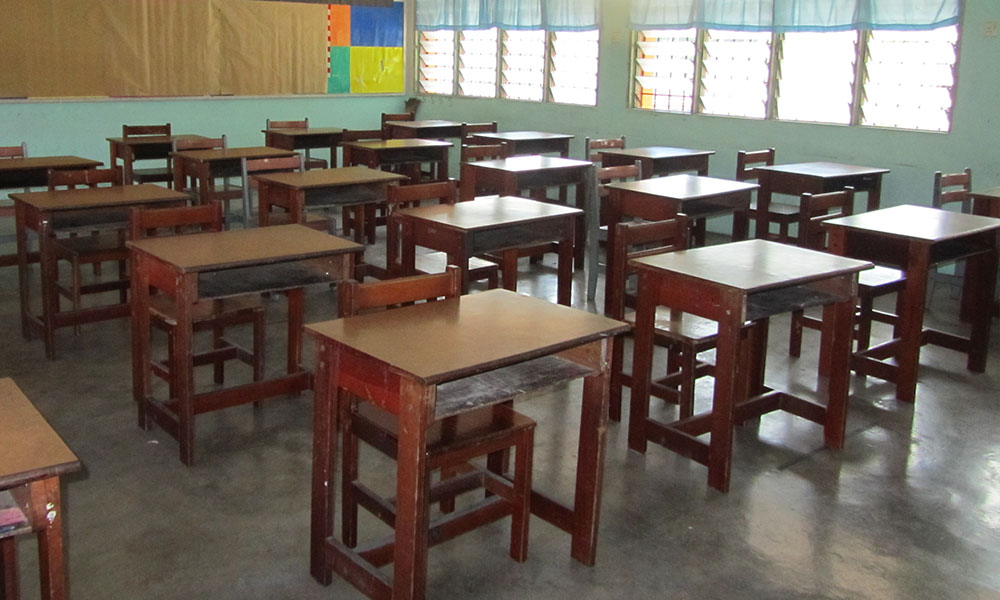
The introduction of voluntary enrolment into Year One at age six aligns Malaysia with global education practices and benchmarks the country against nations that have long adopted similar approaches.
Early exposure to structured learning environments allows timely intervention, helps identify developmental needs, and better prepares children for lifelong learning.
This supports a shift away from rote memorisation as the dominant mode of learning towards critical thinking.
Bringing schooling earlier to six years old aligns with practices in 143 other countries.
However, in making this shift, the ministry must ensure that the logistics of enrollment and the adjustment to new schedules are seamless, ensuring that no extra burden falls upon families trying to navigate the new system.
Fostering learning with equity and care
However, it must also be pointed out that research revealed that starting later will not be detrimental to a student’s reading ability, as this would ultimately depend on teaching quality and education equity. Preschool also plays an important role in cultivating the reading habit.
Data from the Organisation for Economic Co-Operation (OECD) revealed that students who attended a year of preschool had better reading skills than those who did not.
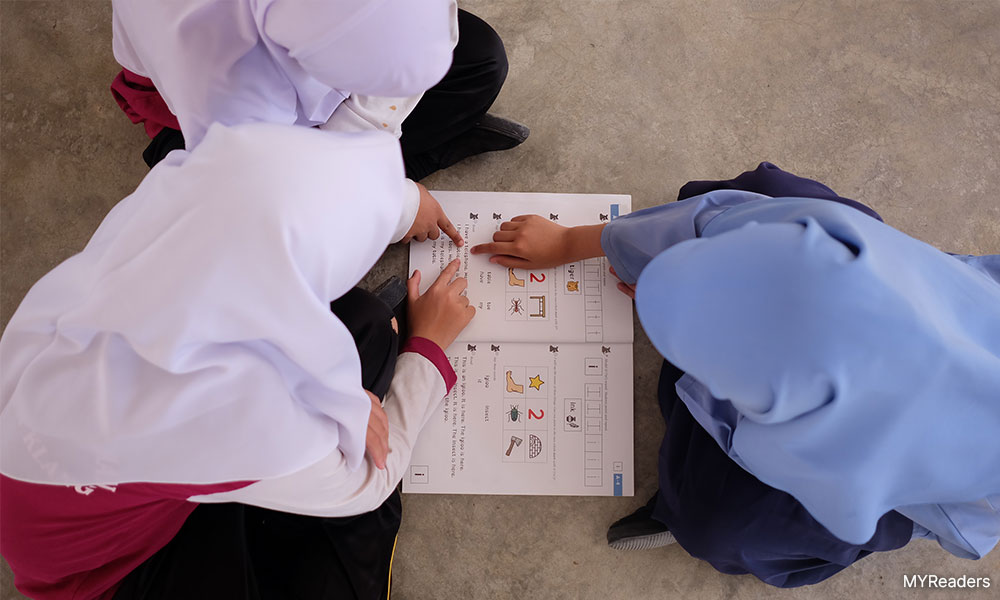
Learning should cultivate curiosity and resilience rather than passive recall. To achieve this, the transition in teaching methods must be supportive, ensuring students are not overwhelmed by sudden changes in assessment styles or workload.
Education must be guided by a strong moral compass - ethics, integrity, empathy and social responsibility should form the foundation of teaching and learning, ensuring that academic achievement goes hand in hand with character development.
Education is a shared responsibility, and the educational well-being of children must be supported not only within classrooms but also at home and in the wider community.
Therefore, any changes to the system must be user-friendly and efficient, ensuring that teachers can focus on teaching rather than paperwork, and parents can focus on support rather than navigating complex bureaucracy.
The plan presents an important opportunity to transform Malaysia’s education landscape.
Its success, however, will be determined not by policy design alone, but by sustained implementation and involvement with all stakeholders - teachers, educators, parents, Parent-Teacher Associations, educational institutions, civil society organisations, and policymakers - all of us, by placing children and their future at the centre of our national priorities.
The decision for the Higher Education Ministry to take charge of the entire pre-university education system, including Form Six and matriculation, starting from 2027, will be good in the long term to better plan places in public universities and for resource optimisation.
The decision was made following concerns over the limited availability of popular courses, particularly for minority students who have achieved excellent examination results but struggled to secure university places.
After all, it takes a whole village to raise a child. - Mkini
NURUL IZZAH ANWAR is the deputy president of PKR.
The views expressed here are those of the author/contributor and do not necessarily represent the views of MMKtT.

No comments:
Post a Comment
Note: Only a member of this blog may post a comment.