


After Singapore’s recent general election, some Malaysian friends asked: Should Malaysia emulate Singapore’s Group Representation Constituency (GRC)?
This question is not new, as many Malaysians have long been attracted by its idea of minority quotas in political representation.
What is GRC?
GRC is simply merging several constituencies under the First-Past-The-Post (FPTP) system that both Malaysia and Singapore have into one.
Every party can nominate several candidates, but voters would be given only one vote, and whichever party takes the most votes takes all the seats.
This was introduced in 1988 to ensure an ethnically inclusive Singapore Parliament on two premises.
First, as a fact, Singapore has no more ethnic enclaves, as every Housing and Development Board (HDP) public housing estate is allocated based on an ethnic ratio roughly similar to the national make-up.
The idea of producing multi-ethnic neighbourhoods mirroring the nation’s multiethnicity is, of course, one of Singapore’s solutions to curb identity politics.
In other words, no minority candidate can win a seat based on ethnic solidarity because there is no majority-minority constituency, as is the case for Indian candidates in Malaysia.
Second, as an assumption, someday, Chinese Singaporeans may vote for only ethnic Chinese candidates, hence producing a monoethnic Parliament.
In implementation, every GRC is designated as such that at least one of the candidates must be of Malay or Indian/other origin, and those candidates must obtain an official certificate to prove their ethnicity.
The size of a GRC was three members in 1988, later increased to four to six and has been four to five since 2020.
The percentage of GRC parliamentarians amongst the directly elected members was 48 percent in 1998 and is now 85 percent.
The remaining MPs come from normal FPTP constituencies called single-member constituencies (SMCs).
GRCs have achieved the stated goal of ensuring minority representation, and also more women representation.
When you have four to six seats in a GRC, it makes no sense for parties not to nominate a woman candidate.
So, every GRC today has at least a woman MP, while six five-member GRCs (40 percent) - Ang Mo Kio, East Coast, Jurong East-Bukit Batok, Marine Parade-Braddell Heights, Nee Soon and Tanjong Pagar and two four-member GRCs (50 percent) - Pasir Ris-Changi and Punggol - have two.
It is a no-brainer that a demographic quota is easiest to introduce by having multi-member constituencies rather than counting on the benevolence or sincerity of party leaders.
GRCs in practice
In practice, GRCs are more than ensuring minority representation. The ruling People’s Action Party (PAP) conveniently places one or more ministers in every GRC as the anchor candidate to incentivise voters to vote for the government.
By voting for the opposition, voters risk losing a cabinet minister who can bring more development. This explains why the opposition can only win the first GRC in Aljuned in 2011, the sixth GE since the introduction of GRCs.
In this election, Prime Minister Lawrence Wong moved his deputy prime minister, Gan Kim Yong, and chief negotiator on tariff from his safe seat Chua Chu Kang GRC to lead the PAP team in Ponggul GRC, where the main opposition, Workers’ Party (WP) put up a strong team led by prominent lawyer Harpreet Singh.
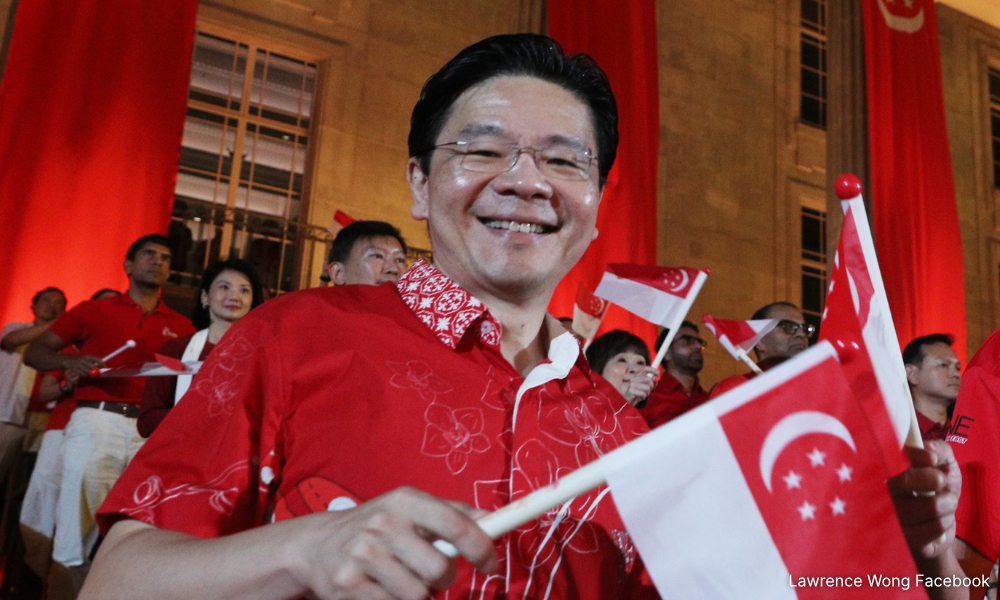
Wong played the minister card well in the economic crisis caused by US President Donald Trump’s tariffs.
He appealed to Singapore voters not to give more GRCs to the opposition, as every GRC lost would mean one senior minister out of the cabinet.
Contesting his first GE, the soft-spoken fourth-generation PM won his bet. Not only did Gan keep Ponggul GRC, PAP also won in Tampines GRC, East Coast GRC and West Coast-Jurong East GRC, which could have changed hands. With the DPM and two more ministers at stake, PAP retained 14 seats from the three GRCs.
Not known to many foreigners, Singapore’s GE is actually a 2-in-1 national and local election. Town councils, a form of local government with limited power, mainly running the HDP estates, are run by MPs.
After the election, the 18 GRCs and 15 SMCs will soon be consolidated into a smaller number of town councils (17 in the last Parliament, with four to seven MPs per council).
For example, WP’s three constituencies would likely remain as the town councils of Aljuned-Hougang and Sengkang.
In every town council, there would be a division of labour where senior MPs (for PAP, ministers and ministers of state) would focus on national policies while junior MPs would lead the town council.
Above the town councils are five Community Development Councils headed by a mayor who is normally an MP, sometimes a junior minister.
Town councils were introduced to ground national politics into local affairs so that political swings out of some national mood would be somewhat mitigated.
Singapore’s unique practice of redrawing electoral boundaries before every election by the Election Department under the Prime Minister’s Office makes this more convenient.
Does it really protect Singapore from electoral volatility? Put more accurately, it only raises the threshold for change, which the opposition failed to meet in this election despite the unprecedented crowd in WP rallies.
In this GE, some 2.429 million voted in a 92.47 percent turnout (lowest since 1968), aided by the compulsory voting requirement. PAP won 65.57 percent of votes, up from 61.23 percent in 2020.
Had 9,153 (0.37 percent) voters swung from PAP to WP in the GRCs of Ponggul and Tampines, nine seats would have changed hands.
Had 26,620 more (1.1 percent) swung from PAP to WP and Progress Singapore Party (PSP) in East Coast and West Coast-Jurong West, PAP would lose 10 more seats.
In short, as an amplified variant of FPTP, GRC makes it very hard for the challengers, but if the latter can pass the threshold, a tsunami could happen over a small swing in the right constituencies.
It is like a gamble - good for you if luck is on your side.
What alternatives to GRC?
If Malaysia were to copy Singapore’s GRC, it is almost certain that every GRC would see a minister leading the government team.
It is also possible for some form of town councils to be adopted, although it is hard given Malaysia’s fixed local government boundaries and more rigid electoral boundaries redrawing.
So, if we want the inclusion benefit of GRCs but not its winner-takes-all pitfalls, what option do we have?
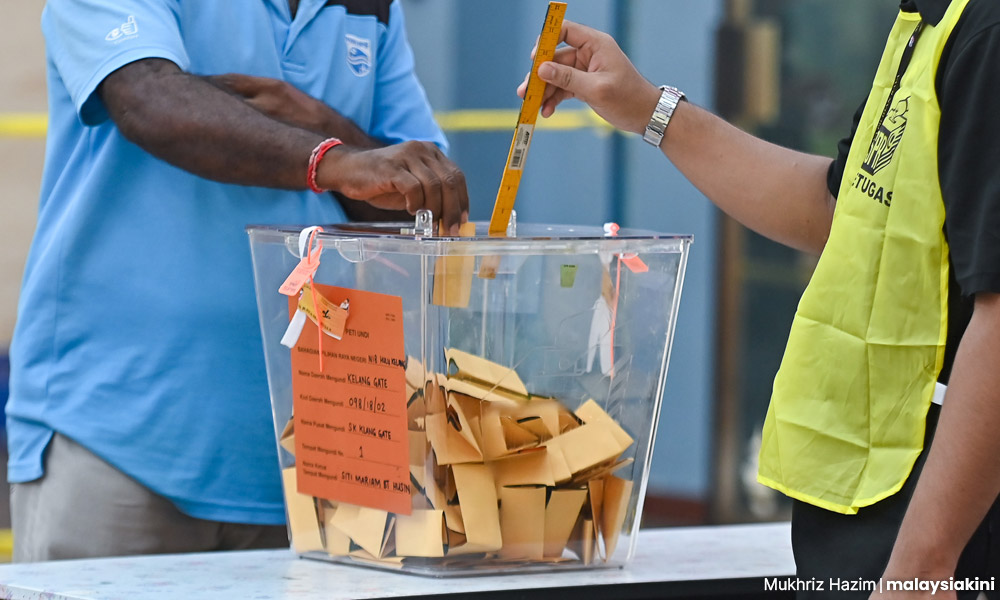
The answer is Closed List Proportional Representation (CLPR) with legislated quotas on the desired demographic criteria - ethnic, gender, age, etc.
CLPR is exactly the same as GRC in three ways: first, every constituency elects several MPs; second, every party puts up a list of candidates, not individuals; and third, every voter has only one vote for one of the parties.
The difference? CLPR will allocate the seats to contesting parties based on vote share. The seats would then go to the parties’ candidates based on their fixed sequence on the list (hence the word “closed”).
So, the ruling party would have to put the indispensable ministers top of the list, and even these ministers would be retained even if they do not win the majority of votes in the multimember constituency.
In other words, no “emotional blackmail”.
How to ensure ethnic or gender inclusion? Impose a legislated quota, say, one of the top two candidates listed must be an ethnic minority or woman, then every party that wins at least two seats would have a minority or woman MP. Very simple.
What if Singapore GRCs had used CLPR?
Here is the thought experiment: what if Singapore used CLPR in their GRCs while voters voted exactly the same way?

This is the simulation using the simplest formula - Largest Remainder with Hare Quota, which is 1/(number of seats). A five-seat GRC would have a Hare Quota of 20 percent.
Any party that wins a full quota gets one seat, and any unallocated seats go to the parties with the highest remainder (the fraction after the decimal point).
If Parties A, B and C get 2.3, 2.1, and 0.6 quotas in a GRC, then A and B get three seats while C gets one (on its largest remainder of 0.6). Not complicated, just Primary Six mathematics.
The outcome: PAP would have won 58 out of the 82 GRC seats, still a comfortable majority with all ministers intact.
WP would have won 11 seats but has to concede two seats each to PAP in its strongholds, Aljunied and Sengkang, enabling at least one PAP Minister in each GRC.
PSP, Singapore Democratic Party (SDP) and Red Dot United would have entered Parliament with three seats each, while three other parties could take four additional seats.
I would show the calculations in the Bersih seminar on Singapore GE this coming Wednesday, 8.30pm. You are welcome to join the Zoom discussion by registering here. - Mkini
WONG CHIN HUAT is a political scientist at Sunway University and a member of Project Stability and Accountability for Malaysia (Projek Sama).
The views expressed here are those of the author/contributor and do not necessarily represent the views of MMKtT.

No comments:
Post a Comment
Note: Only a member of this blog may post a comment.