


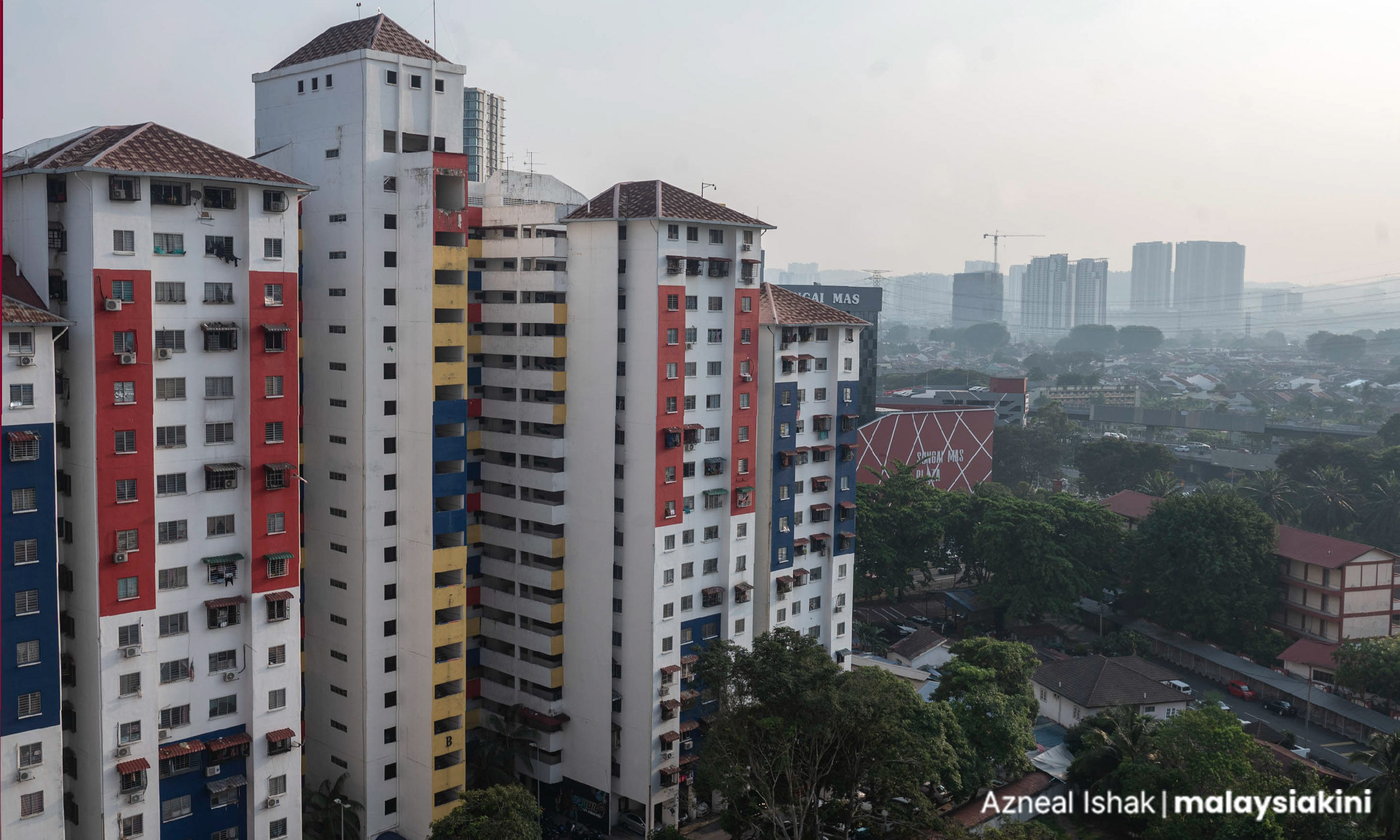
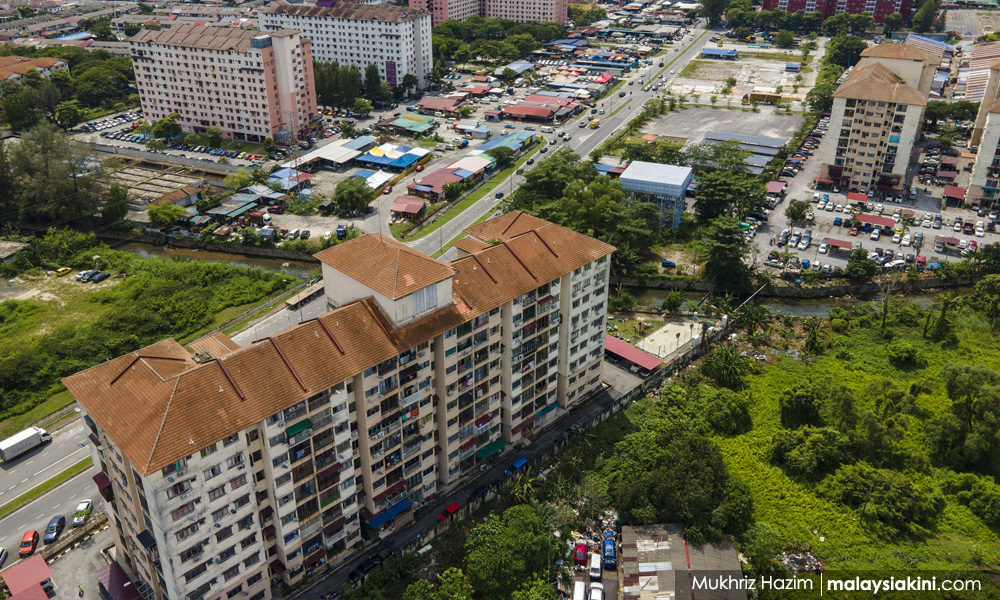
In June last year, Housing and Local Government Minister Nga Kor Ming announced that a large-scale nationwide operation would be carried out to identify owners of people’s housing projects (PPR) who illegally rent out their units.
The ministry, he said, has found numerous PPR tenants in breach of their contracts by renting their properties to foreigners, including illegal immigrants, and warned that the impending operation will be extensive.
“PPR is a heavily subsidised social housing project costing about RM300,000 per unit. However, initial buyers only paid RM45,000, while the government covered the remaining cost. These owners apply for PPR claiming to lack housing, but end up renting out their units for profit,” he said.
In an immediate response, I wrote: “But they had been and continue to collect about RM600 to RM800 in rentals (which more than covers the servicing of their loans), and many of them have settled their loans and are now enjoying fixed monthly income.
“Every right-thinking Malaysian will support the ministry’s actions, which will once and for all cleanse the system of miscreants and cheats who milk the system to line their own pockets.”
I also noted that a senior official in the Petaling Jaya City Council stays in a double-storey corner terrace house but also owns a low-cost apartment in Ara Damansara.
“By her own admission, she is not the only director who owns a low-cost flat. Questioned by a councillor, she charged that there are other ‘directors and deputy directors’ who own such properties.”
‘Actively conducting review’
In November, I requested details of the operation and the number of individuals identified as “culprits.” It issued a statement:
“The National Housing Department is actively conducting a review of PPR housing units that have been abused by participants who have failed to comply with the conditions outlined in the offer letter and rental contract. Some of the main issues that have been given attention include:
Unpaid rent arrears;
Rental of units to third parties (sublet);
Occupation by foreigners;
Units not occupied by the original participants; and
Renovation of premises without permission from the authorities.
“The department’s primary focus is on 22 PPR projects that are under the supervision of the ministry, and this data collection process is underway and is expected to be completed by the end of 2024.
“Several units have been identified as violating the conditions set, and the department has so far issued 3,388 notices (cumulative total) for various violations of the conditions.
“The ministry is now planning to implement stricter enforcement actions against participants who default. This action is taken to ensure compliance with regulations and prevent the abuse of PPR facilities that are intended for eligible groups.”
There has been no update on the ministry’s figures, and this means that an average of 154 residents who are occupying the units in each of the projects are not eligible and are occupying them illegally.
RM70m in unpaid rent
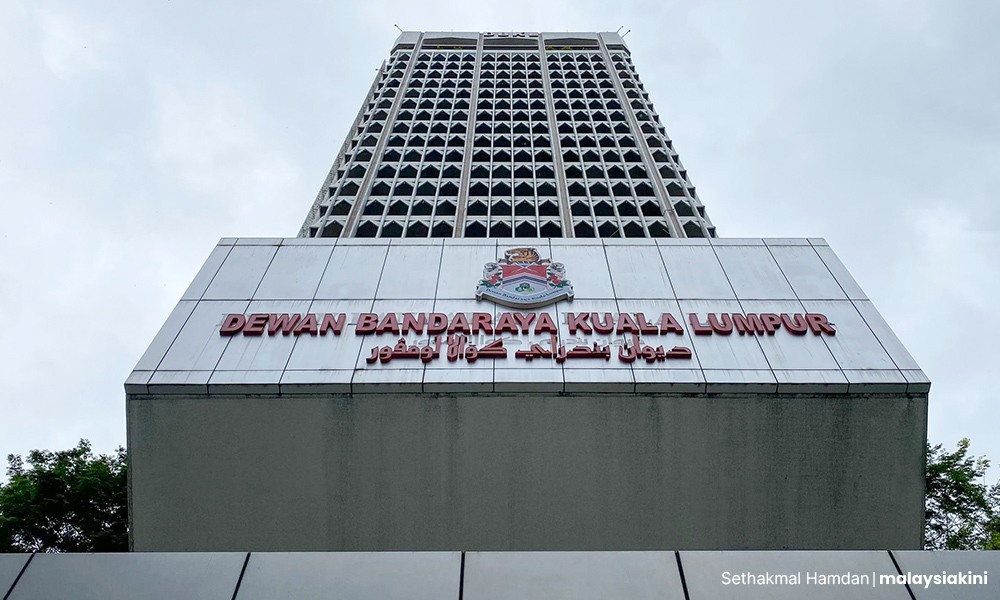
On Monday, Kuala Lumpur mayor Maimunah Mohd Sharif dropped another piece of unsavoury and distasteful news: Unpaid rent for the PPR and public housing under the purview of Kuala Lumpur City Hall (DBKL) has reached RM70 million.
Bernama quoted her as saying that the arrears were impacting the maintenance and management of facilities for communities in areas under DBKL’s jurisdiction.
Maimunah said DBKL had taken several steps to address the arrears, including cutting off the water supply, issuing notices, holding financial advocacy programmes, and offering tenants an instalment payment plan.
But more shocking and disturbing news emerged thereafter: Some of them have not paid a single sen in decades.
Like the DBKL notices, those from the ministry will also be ignored unless there is a political will and determination to put an end to such malpractice.
Political warlords at play
Why is it that local authorities, including DBKL, have used the courts to evict occupants on land that is disputed and for the collection of arrears of assessment, but not those who have fallen behind in rentals?
The answer is obvious: The political warlords are the “protectors” of this group of people as they form the vote bank for political parties. Any attempt to impose penalties or evict them will put the council in a difficult position, as they are likely to be rebuked by the party leaders.
It is disheartening when council chiefs and their officers appear subservient to self-serving politicians who prioritise their voters over the community.
Besides, some see the subsidised rentals as their entitlement. Never mind that the money will help improve the community's standards; their “privilege” is beyond question.
Any attempt, even to bother them for money, becomes an issue, with the race card thrown in – one race is targeted because they want to change the façade of this area to one that represents another race.
Take note of how the “race card” has been played by some parties about the proposed Urban Renewal Act. The same applies to anything that some quarters oppose.
What about recouping?
What about the councillors or “advisers” in the case of DBKL? Most are political party nominees, but why are they not interacting to help recoup the arrears?
They will never intervene or help because they prioritise party interests over those of the people, fearing that not doing so may result in not being reappointed after their term ends.
Even putting the names of defaulters on a rogues’ gallery on the websites of local councils, as I had previously suggested, will not help. They have become untouchable, aided by political chieftains for their political expediency.
Yes, it is agreed that there must be cross-subsidy and support for lower-income groups, but when some quarters demand everything free as an entitlement, the system goes out the window.
If they try to use the system selfishly, they must be stopped.
While we all have compassion and empathy for such groups, the kindness shown should not be seen as a weakness. - Mkini
R NADESWARAN is a veteran journalist who tries to live up to the ethos of civil rights leader John Lewis: “When you see something that is not right, not fair, not just, you have to speak up. You have to say something; you have to do something.” Comments: citizen.nades22@gmail.com
The views expressed here are those of the author/contributor and do not necessarily represent the views of MMKtT.

No comments:
Post a Comment
Note: Only a member of this blog may post a comment.