


A new property czar is in the making. If a bill in Parliament is approved, it will be Housing and Local Government Minister Nga Kor Ming who will head a powerful council overseeing, approving, and selecting developers for all urban renewal projects.
The Urban Renewal Bill being considered by Parliament places too much authority under the Housing and Local Government Ministry and other government agencies, which basically decide how a renewal project proceeds.
This will cause more problems than the approval limits set for the redevelopment of built properties, which require between 51 and 80 percent approval depending on the age and status of the property.
Much room for patronage, corruption
It gives considerable room for patronage and even corruption, with few checks and balances built into the legislation.
While much has been written about approval limits and their potential for abuse, coercion, and deprivation of minority rights, I will focus this article on the powers that the government has and the lack of clear safeguards for compensation and profit-sharing for existing owners.
Instead of vesting power effectively in the hands of the minister, it’s better to form an Urban Redevelopment Commission to handle this professionally, with set guidelines and an Act of Parliament to govern it.
Under the bill, the power to decide redevelopment comes out of the double-barrelled single gun - the two barrels being the Federal Executive Committee (FEC) and the smaller State Executive Committee (SEC). The SEC must consult the big brother, FEC, always.
Now, here comes the killer. Under Section 5(2) of the proposed Urban Renewal Act (URA), the FEC will have the minister as chairperson.
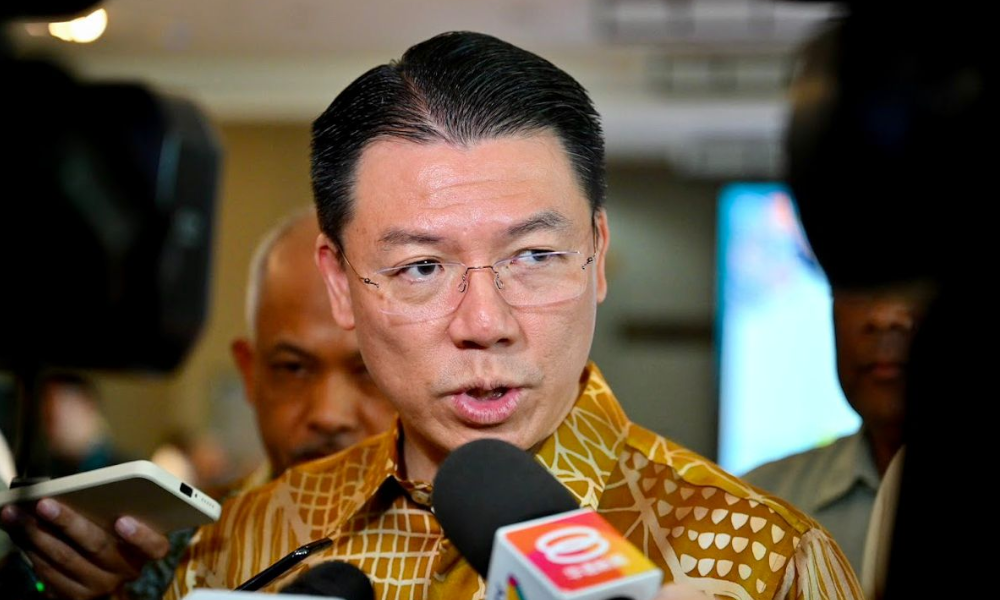
That would be Nga, the rising voice of DAP and a strong advocate of the URA, which property developers love. He would steer the FEC.
Other members include one member of the State Executive Council for each state; the chief secretary of the ministry; the director-general of town and country planning as the FEC secretary; the director-general of federal lands and mines; the chief secretary of treasury or his representative; the inspector-general of police or his representative, and the president, mayor or chairperson for the local authority.
It should also include not more than three members who shall be appointed by the minister from among public officers; the State Economic Planning Unit director; the state director of lands and mines for the state which participates in an urban renewal project; one representative of the body appointed under Subsection 8(1) or 14(1); and not more than two other members who have knowledge and experience in any field related to urban renewal.
Government controls council
It is obvious that the government, and especially the housing minister, fully controls the FEC.
It has wide powers of approval and plenty of opportunity for patronage and even corruption - the minister not long ago estimated projects worth over RM300 billion.
An example of this is telling. Nga, in an article titled “Urban Renewal Act: Finding a balance between progress and societal needs” published in June last year on The Edge, enthused: “Imagine, if we can push for RM322 billion GDV (gross development value), how many jobs can be created, how much profit can be made?”
The FEC’s powers under Section 6(1) include advising the SEC on the declaration of urban renewal and the viability of projects, certifying any approved developer and incentives, and approving qualifying developers, amongst others.

Crucially, the SEC must consult the FEC. It appears that the FEC approves developers, even for state projects or any urban renewal initiative anywhere in Malaysia.
This represents a huge concentration of power in the hands of the minister, together with the concomitant scope for abuse through patronage and corruption.
Yet the latest URA bill makes no mention of compensation, profit-sharing, where people are to live while development is taking place, or other key factors.
It seems to leave matters entirely in the hands of developers on one side and property owners, including those in low-cost flats, on the other. The result is a strikingly one-sided arrangement.
There appears to be nothing in the legislation to ensure that property owners at any level are not short-changed by unscrupulous developers and their agents, who have 1,001 ways of securing the requisite 51, 75, and 80 percent approval thresholds through dubious means.
Set up property commission
The only way for such protection is to incorporate a full-time functioning property commission as I suggested here.
Industry professionals will helm this and be guided by an Act of Parliament, which provides for independence, competence, and incorruptibility, much like the Securities Commission for markets and the Energy Commission for energy.
As it is, the government is usurping land and development control for itself, a move which can be abused for any number of purposes, including patronage, corruption, and raising funds for future elections.
The point is that such powers must not be given because of their potential for abuse by current and future governments.
There are many areas in property yet to be resolved, including preventing the RM113 billion in abandoned projects, as I explained here.

A few strong measures would have curbed this, of which the main one would be not touching purchasers’ money until the development has a certificate of fitness.
6 provisions
The URA bill should be deferred and sent back to the drawing board.
These six provisions, at a minimum, should be inserted before being presented to Parliament again:
Set up a property commission as outlined earlier.
Increase approval limits to 90 percent of owners across the board.
Ensure no one gets a worse deal than others.
Alternative accommodation must be provided at the developer’s cost.
When buyers want to opt out, a profit-sharing scheme should be implemented.
Mediation must start at the beginning through the commission.

Nga, by promoting this heinous piece of legislation, does a great public disservice to his nation, party and the many who voted Pakatan Harapan because they thought it would provide a better framework for governance than what we knew before under Umno.
Instead, the Madani government is rapidly turning out to be as bad or worse than Umno by coming up with such legislation, which includes the toothless Procurement Act that has become law, pushed through while attention was focused on the URA bill.
How insidious is that! - Mkini
P GUNASEGARAM dreads the next legislative change.
The views expressed here are those of the author/contributor and do not necessarily represent the views of MMKtT.

No comments:
Post a Comment
Note: Only a member of this blog may post a comment.