


Many of us are trying to make sense of the world today. Donald Trump's policies and actions are causing much confusion and uncertainty. Both within and outside America.
His governing style is unmistakable. He speaks of enemies within, traitors to be purged, and adversaries abroad to be crushed.
To some, it feels reminiscent of Mao’s Cultural Revolution - a campaign to change the national mindset, demand loyalty, and silence dissent.
The comparison is compelling but not exact.
Trump is not sending Red Guards into the streets. At most, he deploys the National Guard in Chicago, unarmed and with uncertain mandate.
Yet he is clearly attempting to reset America and the world around a single idea: only dominance guarantees peace. For Trump, Pax Americana alone secures the world.
The pillars of power
At home
Trump seeks to remake the federal bureaucracy by reviving plans to strip job protections from thousands of civil servants. Bureaucrats must be loyal - or they must go.
The state, in this vision, is not a neutral machine but an instrument of the president’s will. The Constitution vests executive power in the president, and with the Republican Party controlling Congress and the Senate, Trump has room to manoeuvre.
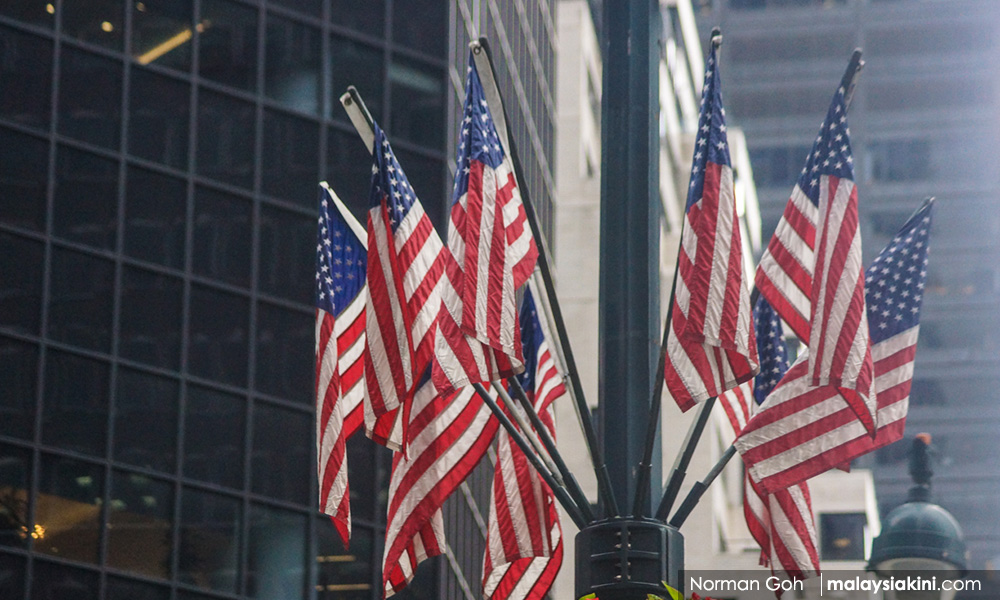
Not every state is in Republican hands, but strategies such as aggressive redistricting, as seen in Texas, are designed to take control. There is a deep battle between the Republicans and the Democrats, the conservatives and the liberals. The courts are often the battleground.
On trade
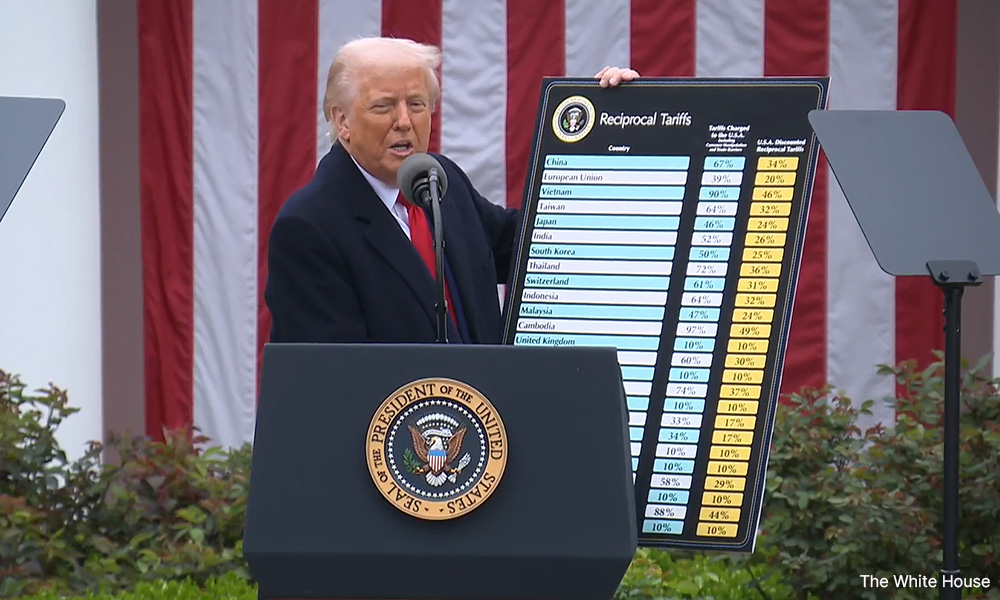
Tariffs are Trump’s universal weapon. If you want to export into America, you pay. It is leverage against allies and adversaries alike, a blunt reminder that access to the US market comes with conditions.
America remains the largest economy in the world, and Trump intends to wield that leverage aggressively. But in practice, American consumers bear much of the burden through higher prices.
Many exporters are themselves US-owned companies based abroad to minimise costs. Some countries - especially smaller ones - have no choice but to comply. Others, like China, resist. India is weighing its options.
On immigration
Declaring national emergencies, Trump deploys the Guard to secure the border. It is both symbol and substance: sovereignty enforced visibly and harshly.
The age-old promise of America as a haven for the “huddled masses” is being deliberately rolled back. To some, this is understandable - the open-door policy cannot continue indefinitely.
Yet, it is not the America the world has long known. The policy change is dramatic in its impact and causes much hardship to the “Dreamers” in America.
On foreign policy
Trump casts himself as the consummate dealmaker. Nato allies are pressured to pay more. Ukraine is told to “make a deal,” even as Russia escalates its war - and after Trump forced a mineral concession from Kyiv.
In the Middle East, he backs Israel’s onslaught on Gaza while courting Arab powers with transactional bargains.
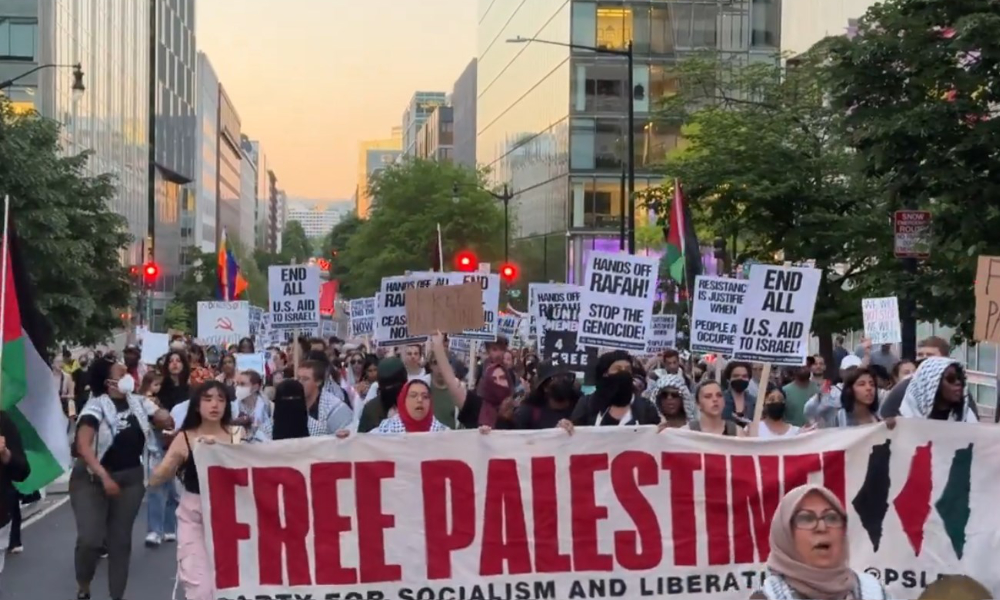
This is not a principle-driven policy but a leverage-driven strategy - inconsistent, transactional, and personal. And in the case of Gaza, it lacks compassion.
On American aid
For decades, America contributed more foreign aid than all other nations combined. This was its soft power. Trump has slashed it, showing contempt for the UN, Nato, climate agreements, and the International Criminal Court.
Global institutions are no longer seen as instruments of order, but as constraints on American power. This abrupt stoppage of aid has left thousands without food, medicine and the facilities they enjoyed through the generosity of Americans.
The logic
Trump’s architecture rests on a single conviction: the world only works when someone is in charge. That someone must be the United States. Multipolarity is chaos.
China is the primary challenger, and Trump believes Brics must be broken before it consolidates power.
This is not the careful scaffolding of post-war America - the America that helped win WWII, build the UN, establish the World Bank and the International Monetary Fund, and rebuild Japan and Germany.
This is raw, personal, leader-driven power: the power of Donald Trump himself.
The upside
Trump’s tactics do get results. Nato has moved toward higher defence spending. Allies respond, albeit reluctantly, when pressured.
Trump sets the agenda, forcing others to react to him, not the other way around. In this sense, he reclaims America’s centrality. But the long-term consequences remain uncertain.
The risks
The risks are already visible:
In the courts: Sweeping tariffs face legal challenges. Judicial pushback remains a guardrail.
In the states: Governors and cities resist federal crackdowns on immigration.
With allies: Resentment simmers. Europe hesitates, the UK wavers, India and Brazil watch warily. Push too hard, and they may drift toward China and Russia - a drift already in motion.
With enemies: Forcing Ukraine toward “deals” risks legitimising Russian aggression. Europe, reluctant to act alone, may still follow Washington’s lead - but at the cost of credibility. Strategic rethinking in Europe is underway.
China slowly moves into the vacuum created by the withdrawal of American soft power.
This is not Mao’s Cultural Revolution. America still has guardrails: courts, elections, and federalism. Yet the echoes remain - purge the disloyal, reward the loyal, redefine the national mindset.
Strategy or gamble?
Trump’s vision is clear: America must be dominant to safeguard its interests. Power must be wielded to preserve supremacy. But his chosen path - tariffs, purges, immigration crackdowns, transactional deals - is a gamble.
It may yield quick wins, but risks isolating the United States, provoking counter-coalitions, and undermining the very global order it seeks to preserve.
In doubling down on dominance, Trump may accelerate the fragmentation he fears - while other nations quietly build alternative systems of survival without America.
America must acknowledge the changes reshaping the global order. China is now the second-largest economy, India the fifth. Population centres are shifting to Asia and Africa, where markets and resources abound.
Manufacturing, once concentrated in China, is dispersing across Asia. Innovation thrives not only in Silicon Valley but also in China, Japan, South Korea, and increasingly New Delhi.
America will be pushed hard to maintain its status as the global hegemon. Current policies risk confrontation without a solution. A more enlightened leadership is required - one that sees today’s competition not as ideology versus ideology, but as a contest for markets, resources, and influence.
Communism is no longer an expansionist force. Russia, China, and Vietnam all run market economies. The confrontation of the future is not Cold War ideology - it is economic rivalry.
For America, the question is stark: dominance or a rules-based system? Is Trump’s plan taking us to a peaceful place? - Mkini
DAVID DASS is a lawyer, Malaysiakini subscriber, and commentator.
The views expressed here are those of the author/contributor and do not necessarily represent the views of MMKtT.

No comments:
Post a Comment
Note: Only a member of this blog may post a comment.