


Over the past three weeks, the principal players, heroes and villains of Malaysian football had their say on the International Federation of Association Football’s (Fifa) decision to sanction and impose penalties on the Football Association of Malaysia (FAM) and seven foreign players who masqueraded as Malaysians.
Excerpts from their statements and utterances may sound familiar, but when scrutinised - both individually and collectively - they reveal a damning indictment of a football system weakened by administrative incompetence, riddled with legal ambiguities, and dominated by unchecked power dynamics.
The integrity of the government, its leaders, and the very systems of governance and rule of law have been called into question. This isn’t mere mismanagement; it is a systemic rot that has hollowed out the game from within.
Malaysia’s bid to reclaim its place in Asian football was not a simple misstep, but a slow-motion collapse, decades in the making.
From fielding foreign-born players under dubious documentation to clubs not paying salaries to players and repeatedly seeking government funds, the warning signs were everywhere.
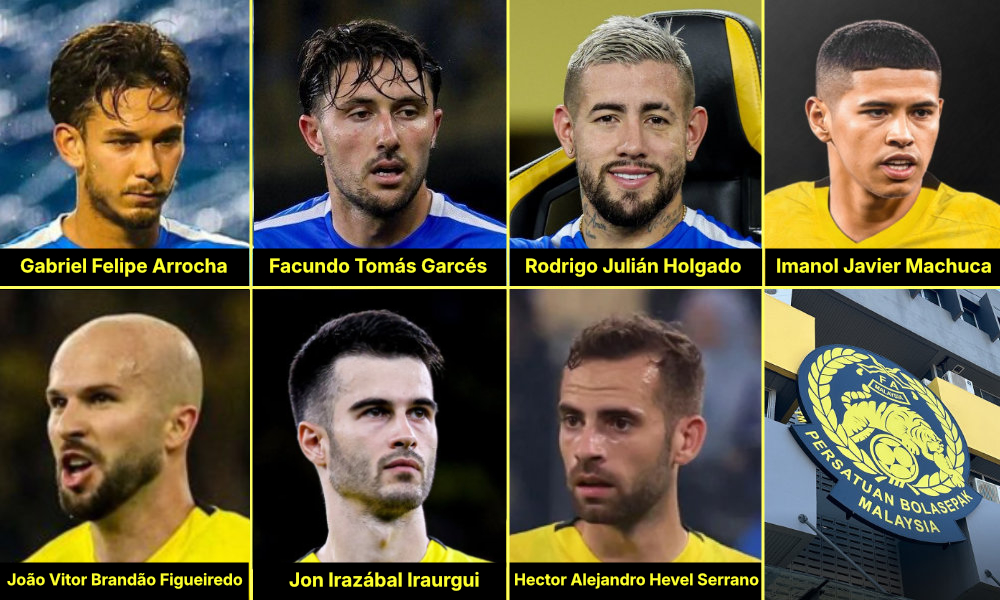
Leadership was absent, long-term planning was nonexistent, and interference from outside parties was rampant. The result was a campaign that didn’t just falter - it imploded.
For Malaysians, these revelations are more than a re-examination or an inquest. They are a mirror held up to a sporting culture where ambition routinely outruns accountability. And when that happens, failure isn’t just likely - it’s inevitable.
If there is one consolation FAM can take, this “disease” is contagious, having inflicted other sports associations.
Blurring the lines
Into this chaos stepped national coach Peter Cklamovski, who poured gasoline on the fire with a startling endorsement: “From what I am told, there’s a lot of negativity towards TMJ (Johor regent Tunku Ismail Sultan Ibrahim), which is unfair and unwarranted.
“He is a visionary leader, and without him, Malaysian football would have been finished long ago. Who gets the funding and support from the prime minister? It is the TMJ, not FAM.
“Who arranges the chartered flights, ensures we prepare professionally, and organises our logistics? It is the TMJ. The support he gives us to perform at our best is immense.
“All the mess with Fifa, the administrative errors - that’s FAM, not TMJ. My message to all Malaysians is this: without TMJ, Malaysian football is finished. I will leave it at that.”
This declaration that Malaysian football would be “dead” without Tunku Ismail was particularly striking given that the TMJ holds no official position within the FAM, aside from owning Johor Darul Ta’zim (JDT).
It raises critical questions: Why is a club owner arranging national team logistics and private jets? Why is the national coach so quick to absolve him of blame?
While no one has formally accused TMJ of wrongdoing, his public challenges to Fifa’s sanctions have blurred the lines between club influence and national football governance.
This blurring of lines is further complicated by the role of the government itself.
The FAM expressed its gratitude for the government’s direct involvement by expressing its gratitude to Prime Minister Anwar Ibrahim, who, apart from financial assistance through special allocations, also “facilitated the documentation of new heritage players” to enable them to play in the AFC Asian Cup Final Qualifiers.
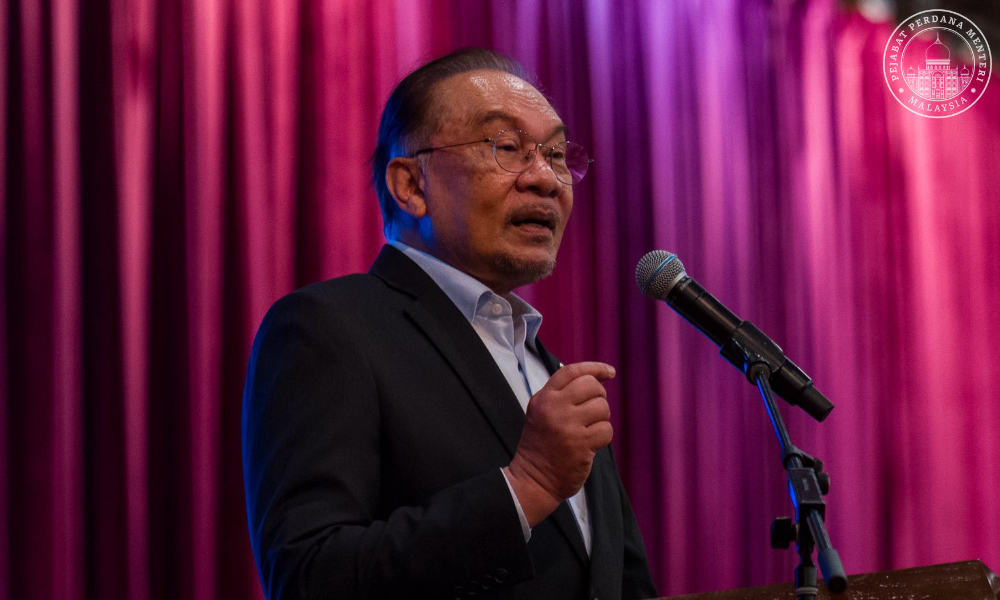
This gratitude suggests a level of state facilitation in the controversial process of naturalising players.
The mechanics of this process, however, were deeply flawed, as revealed by the National Registration Department’s statement on Sept 19, which, among others, said: “The players submitted documents listing their grandparents’ details.
“We conducted cross-verification and received supporting documents from Argentina, Brazil, and Spain. However, original handwritten birth records couldn’t be retrieved. Instead, official copies were issued based on secondary evidence.”
‘Misleading the public’
The legal basis for this expedited citizenship was then brought into sharp focus by Home Minister Saifuddin Nasution Ismail, who defended the actions in Parliament:
“Article 20(1)(e) (of the Constitution) provides discretionary power to a home minister when considering a citizenship application from a foreigner, particularly in the fulfilment of the minimum residency requirements… the minister can use his discretionary powers.”
This interpretation was immediately challenged, with human rights lawyer Eric Paulsen accusing the minister of misleading the public.
He said Saifuddin misled the Dewan Rakyat by citing Section 20(1)(e) of the Federal Constitution to justify the naturalisation of seven “heritage” players, but the legal provision he referenced relates to calculating the period of residence for persons who have already resided in the country for a certain number of years when applying for citizenship.

This misinterpretation is not a minor technicality. It suggests that a constitutional provision was stretched to fast-track citizenship for footballers, raising a profound question: if such discretionary power can be applied here, why has the same interpretation not been applied to help the thousands of stateless children in the country?
The central question remains: Did the prime minister and his government, beyond the sizable financial donation, actively facilitate the documentation for the seven foreign players as suggested by the FAM? If not, why the effusive and specific thanks from FAM?
Given that football is the No 1 spectator sport in the country, the RM30 million can be justified, but it came with several caveats, including that it should be used for development and strengthening the national team.
Anwar has maintained stoic silence, and the collective picture is one of a system in crisis, where the pursuit of victory on the pitch has been fatally undermined by a failure of integrity, legality, and governance off it.- Mkini
R NADESWARAN is a veteran journalist who tries to live up to the ethos of civil rights leader John Lewis: “When you see something that is not right, not fair, not just, you have to speak up. You have to say something; you have to do something.” Comments: citizen.nades22@gmail.com
The views expressed here are those of the author/contributor and do not necessarily represent the views of MMKtT.

No comments:
Post a Comment
Note: Only a member of this blog may post a comment.