


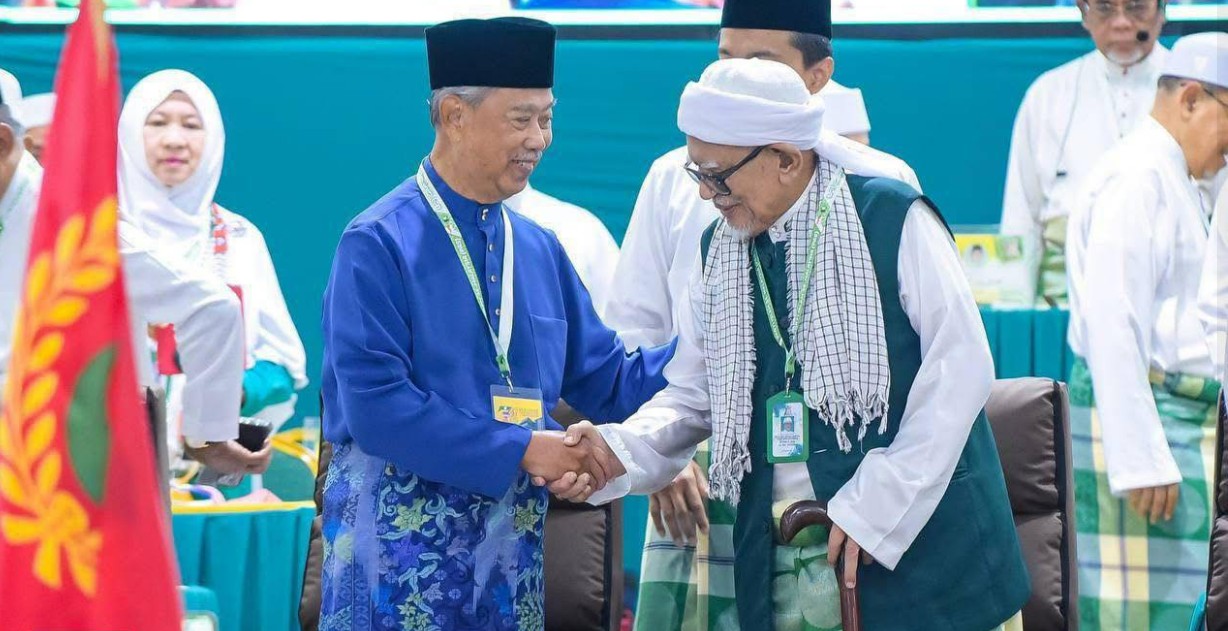
IT IS not entirely reasonable to criticise the opposition under the Bersatu leadership of Tan Sri Muhyiddin Yassin for rejecting the concept of a unity government in the immediate aftermath of the 15th General Election (GE15).
Both Pakatan Harapan (PH) and Perikatan Nasional (PN) did not have the required parliamentary majority to form a government.
It was in this context that the former Yang di-Pertuan Agong (YDPA) proposed the formation of a unity government to resolve the parliamentary impasse.
I don’t think Bersatu or PAS had a different view on the notion of the unity government. Their stand was basically not to have a political alignment with DAP which is a component party in the PH coalition.
Before the formation of the PH-led grand coalition of BN and the coalitions in Sabah (Gabungan Rakyat Sabah) and Sarawak (Gabungan Parti Sarawak), PH by itself had less parliamentary seats than PN.
For PN to have aligned with DAP would be a political suicide. However, it really did not matter for PH chairman Datuk Seri Anwar Ibrahim who wanted to be the Prime Minister at any political costs.
Grand coalition for political power
If PN had aligned with DAP, it would have been a death knell for the Malay-based opposition. The fact that the PN could keep intact its Malay support was a testimony to its correct political stand of not cooperating with DAP.
PH on its part did not have a clear parliamentary majority. In fact, its strength of parliamentary seats was less than PN. Without the formation of the grand coalition, PH had less parliamentary seats than PN.
Unfortunately, PN’s parliamentary majority over PH was not good enough for the formation of the unity government.
Ultimately, PH was able to succeed in bringing together coalitions such as BN and those from Sabah and Sarawak to form the unity government under Anwar.
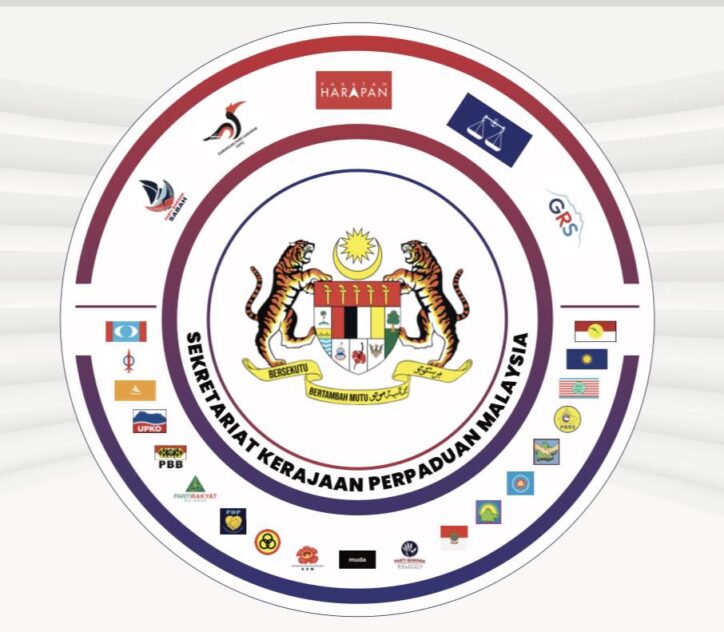
Anwar’s unity government was nothing more than a grand coalition put together for political convenience and political power. The subsequent demands made by the two regions including the 40% revenue for Sabah illustrate the tenuous nature of federal relations in the country.
PN was not against the idea of a unity government but was certainly against power sharing with DAP.
The argument that Bersatu president Muhyiddin had acted without consultation with PAS is nothing but an afterthought of some disgruntled elements in Bersatu.
If only PN had cultivated non-Malay support before the last general elections, it would have been a different story today.
However, things are changing politically in favour of PN. The formation of Ikatan Prihatin Rakyat (IPR), a loose opposition coalition of 12 political parties outside the government bloc, might augur well for the opposition in the country in the near future.
Former DAP stalwart and Penang deputy chief minister II Prof Ramasamy Palanisamy is chairman of the United Rights of Malaysian Party (Urimai) interim council.
The views expressed are solely of the author and do not necessarily reflect those of MMKtT.
- Focus Malaysia.

No comments:
Post a Comment
Note: Only a member of this blog may post a comment.