


The idea that “sex education corrupts children” remains one of the greatest hurdles faced by advocacy groups calling for more comprehensive approaches to reproductive health.
The issue has gained renewed urgency in light of two recent rape cases - one in Malacca and another in Baling, Kedah - that have shocked the nation.
The incidents involving minors have sparked widespread outrage and calls for harsher punishment against perpetrators.
However, experts warn that while public anger often centres on retribution, far less attention is given to addressing the underlying causes of such crimes.
These include the persistent stigma surrounding sex education, the lack of awareness about consent, and the continued reluctance to engage young people in open, age-appropriate discussions about sexual health and boundaries.
Suyasha Srii Sukendran from youth-run gender advocacy group Pocket of Pink (Pop) said stigma and cultural shame continue to surround the subject.

“Because any questions pertaining to sex are often seen as inappropriate… so teenagers fear judgment if they were to seek help or ask questions, especially from their parents,” she said.
Research suggests silence is harmful. The Health Ministry’s 2022 National Health and Morbidity Survey found that many Malaysian teenagers engage in sexual activity before the age of 14.
More alarmingly, 88 percent of sexually active teenagers surveyed admitted they did not use condoms or contraception.
Despite such findings, adolescent reproductive health and sex education remain taboo. Official figures show that 6,144 teenage pregnancies were recorded nationwide between January 2023 and March this year.
On Aug 13, Deputy Women, Family and Community Development Minister Noraini Ahmad told Parliament that poverty, lack of access to education, and limited job opportunities all heighten teenagers’ vulnerability.
“In a conservative society like Malaysia, parents often see sexual health as a moral issue, rather than a medical right, which prevents youth from accessing confidential care,” Suyasha added.
Fear of seeking help
Federation of Reproductive Health Associations Malaysia (FRHAM) acting chairperson, Dr Annuar Hussein, said stigma often drives young pregnant women away from medical assistance, exposing them to unsafe or illegal abortions.
He also added that many teenagers hesitate to seek professional medical care, fearing various legal repercussions.

For example, consensual sexual intercourse amongst adolescents below the age of 16, which is the legal age of consent, would still be considered as statutory rape under Malaysian law.
Hence, many young girls fear the possibility of their male partners facing legal charges, especially if they happen to be older.
Further, the law also required medical professionals to report pregnancies involving girls under 18 to government-run child protection services.
Malaysia’s child protection services are structured under the Child Act 2001 and overseen by the Women, Family, and Community Development Ministry.
“So that puts the issue of confidentiality out of the window, which adds to the stigma or the reluctance of these young mothers to come forward and seek help.
“In fact, in some cases, the child protection services also have the power and authority to take the pregnant teenage mother away from their family, and put them in a safe house.
“The reason they have this authority is because they are afraid that the unmarried teenage mother might be abused by their family members,” he said.

However, many who end up in shelters are not only ostracised by their family and community, but also often victims of sexual and physical violence. In some cases, these young girls have also become pregnant as a result of incest.
Cycles of poverty and marginalisation
Although government-run safe houses exist, many observers believe they provide insufficient support for young mothers to continue their education or reintegrate into society.
This leaves many trapped in poverty, often raising their children alone.
Further, Annuar emphasised that many teenage pregnancies often go unreported, also due to fear and stigma.
Their outcomes are uncertain - but often involve unlawful terminations, unregulated adoptions or, in the worst cases, baby dumping, infanticide, and trafficking.

“For every one or two cases of teenage pregnancies reported, there will also be similar numbers that go unreported,” he said.
Even health professionals judge
Dr Nadirah Babji of the Reproductive Rights Advocacy Alliance Malaysia (RRAAM) agreed that official figures only scratch the surface, saying stigma persists even among healthcare professionals.
“Even I, as an unmarried medical professional in my 30s, am often questioned and made to feel stigmatised by other healthcare professionals for wearing a contraceptive implant. When in fact, I’m wearing it because of a medical condition.
“So what more would be the stigma faced by young teens below 18 who might want to reach out for help and guidance?” she asked.
She welcomed the government’s plan to roll out a new sex education module (Peers) by 2027, but stressed that it must not rely on an abstinence-only approach.
“It is not enough to just tell people that they need to wear condoms, or they need to wear this and that, and whatnot.
“At the same time, we are also not addressing whether those methods of contraceptives are even easily accessible to young people in the first place,” she added.
Nadirah also urged a survivor-centred approach to encourage underage women and victims of sexual violence to seek help.
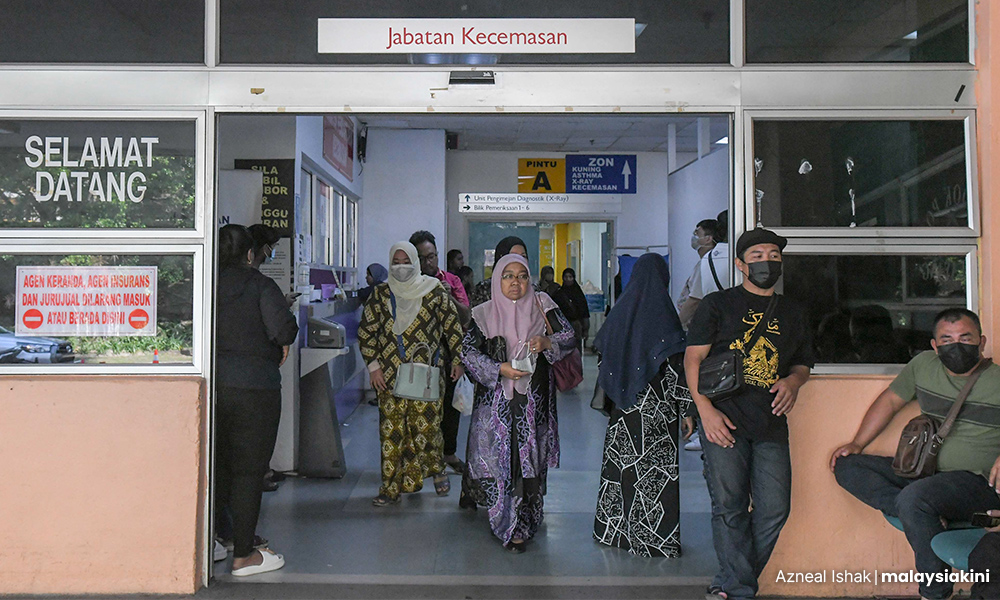
She noted that while many government hospitals provide one-stop crisis centres with multidisciplinary teams, including the police, many victims avoid these official services due to lengthy procedures and legal hurdles.
Both RRAAM and FRHAM told Malaysiakini they have not yet been consulted on the Peers module, but look forward to contributing.
“This module is really needed, and as a medical practitioner, I also hope that the government will also include professionals and NGOs outside the Health Ministry and the Education Ministry, such as youth-based organisations and reproductive rights advocacy groups, to give insight,” said Nadirah.
Pop’s Suyasha warned that stigma and silence from parents and educators also reinforce a cycle of misinformation, particularly online.
“At Pop, we have a book where we educate kids as young as eight years old through arts and cartoons.
“Our book teaches kids about consent, body safety, and boundaries, and this is sometimes met with suspicion because we start with children as young as eight years old.
“So we focus on topics like ‘good touch’ and ‘bad touch’ and teach children to respect their own bodies. But often, parents at schools hesitate, fearing it will encourage inappropriate behaviour,” she added.
‘High time for reform’
Annuar, a gynaecologist for nearly 30 years, said his experience with teenage pregnancies showed that stigma and lack of awareness are not just a problem among adolescents, but amongst Malaysians across all demographics and income brackets.

“At the end of the day, I think a lot of these issues stem from failure to access proper sex education, and also a lack of access to contraception.
“I am not advocating that we should go around everywhere and dish out contraceptive pills to young people, no. But we should educate them on issues of safe sex, contraception, pregnancy, and other aspects of their reproductive health, and so forth,” he said.
Abandonment: Statistics not actual reflection
While police statistics show a slight drop in baby abandonment cases - from 96 between January and September 2023 to 75 over the same period last year - Nor Aishah Osman, trustee of the OrphanCare Foundation, cautions that these figures may not reflect the full picture.
Aishah added that the decline in reported numbers may also reflect changes in categorisation or public attention rather than an actual reduction in incidents.
Aishah told Malaysiakini that official data often paints a more optimistic picture than what the organisation witnesses on the ground.
“It’s something that we can’t really trust. What I mean is that some cases go unreported, usually from rural areas. Usually, the average from the past is about a hundred, but there are more that go unreported,” she said.
Like Annuar, Aishah also highlighted that financial difficulties and poverty are increasingly cited as key reasons behind child abandonment.
The situation is further exacerbated when families are left to care for children with special needs, for whom therapy can be a significant financial burden.

She noted, however, that the situation could be somewhat more favourable if the child comes from an influential, progressive, or well-educated background.
“Again, the income background comes into play because you are a bit more highly educated, and you see things differently,” Aishah said, adding that the stigma on unwed mothers also extends to professional career women.
“The youngest birth mother that we received here is 16, and then we do have the eldest to be 40 years old, and 60 percent of the mothers are in the age group of 20 to 25,” she added.
Mitigation to prevent abandonment
Many of these young mothers, after counselling, choose adoption, while some decide to parent their children, Aishah said.
Adoptions at OrphanCare are semi-open, allowing birth mothers to also choose prospective adoptive parents from the readily available profiles, and maintain some level of contact under guidance, helping ensure the child’s emotional well-being and a healthy family structure.

“Of the cases that we handle, through counselling, close to 70 percent agree to have their children adopted. The rest, after counselling, choose to parent the children themselves,” she added.
OrphanCare also ensures prospective adoptive parents are properly prepared, conducting training to help them manage children with complex needs, to prevent abandonment.
“So we make it compulsory for them to attend training so that we can prepare them with all the possibilities, so they have to be prepared.
“They have to be ready to expect what to expect when they adopt a baby and must know that the child is not theirs despite this comprehensive education,” she added.
Aishah emphasised the need to strengthen family support and social protection, including dedicated maternity assistance for low-income or unwed mothers.
She also urged that sex education and reproductive health awareness be introduced from an early age, ensuring children understand their rights and responsibilities.
Highlighting the importance of societal attitudes, Aishah called for a more compassionate, non-judgmental approach to reduce stigma and provide safe pathways for both mothers and children. - Mkini

No comments:
Post a Comment
Note: Only a member of this blog may post a comment.