


We wish all our readers, relatives and friends a HAPPY NEW YEAR 2026.
We hope this coming year will be joyous, prosperous, successful, healthy and fortunate year for all.
from:
MALAYSIANS MUST KNOW the TRUTH

We wish all our readers, relatives and friends a HAPPY NEW YEAR 2026.
We hope this coming year will be joyous, prosperous, successful, healthy and fortunate year for all.
from:
MALAYSIANS MUST KNOW the TRUTH
Bomba berkata kebakaran berlaku di tingkat bawah sebelum merebak ke tingkat lain.

Penolong Pengarah Bahagian Operasi Jabatan Bomba Pulau Pinang John Sagun Francis berkata pihaknya menerima panggilan kecemasan mengenai kebakaran itu pada 5.10 petang.
Katanya, kebakaran melibatkan enam unit kedai tiga tingkat itu bermula di tingkat bawah sebelum merebak ke tingkat lain.
“Komander operasi membuat ‘size up’ dan melakukan kerja-kerja pengawalan serta pemadaman secara ‘Defensive’ dan ‘Offensive’ dan membuat ‘fire break’ bagi menyekat api mereka ke banguna lain,” katanya dalam kenyataan lapor Bernama.
Katanya, api berjaya dikawal 6.34 petang tetapi sehingga 10 malam kerja-kerja pemadaman masih dijalankan.
Menurutnya, pihak bomba juga membuat pengudaraan serta pengalihan asap di dalam bangunan dengan menggunakan kipas pengudaraan.
Beliau berkata operasi dijalankan lebih 50 pegawai dan anggota bomba daripada Balai Bomba Bandar Perda, Penanti dan Sungai Bakap serta dibantu Pasukan Bomba Sukarela.
Punca kebakaran dan jumlah kerugian masih dalam siasatan. - FMT
Malaysia Corruption Watch says confidentiality must not be used as justification to conceal missteps in financial governance or abuse of power.

Malaysia Corruption Watch (MCW) said the investigation had exposed systemic flaws in governance for defence procurements, adding that the focus should not be merely on the prominent individual implicated.
MCW president Jais Abdul Karim said the uncovering of alleged corruption in high-value military contracts raised questions about the effectiveness of control mechanisms for defence procurements.
“In defence procurements, there are supposed to be various layers of reviews such as in planning, financial approval, execution, as well as audits and monitoring.
“If problematic practices can go undetected, it shows flaws in structural and control structures,” he told FMT.
The Malaysian Anti-Corruption Commission is investigating a senior military officer, his family members and about 40 companies suspected of being involved in the payment of bribes in connection with the contracts.
A source from MACC said several companies had repeatedly secured high-value military contracts from 2023, raising suspicions.
Army chief Hafizuddeain Jantan, who was slated to take over as armed forces chief, has been put on leave pending investigations.
Jais said there must be a balance between transparency in defence procurements and national security.
He said confidentiality must not be used as justification to conceal financial governance missteps or abuse of power.
“Balance can be reached through procedural transparency, independent audits with limited access, as well as parliamentary oversight through select committees,” he said. - FMT
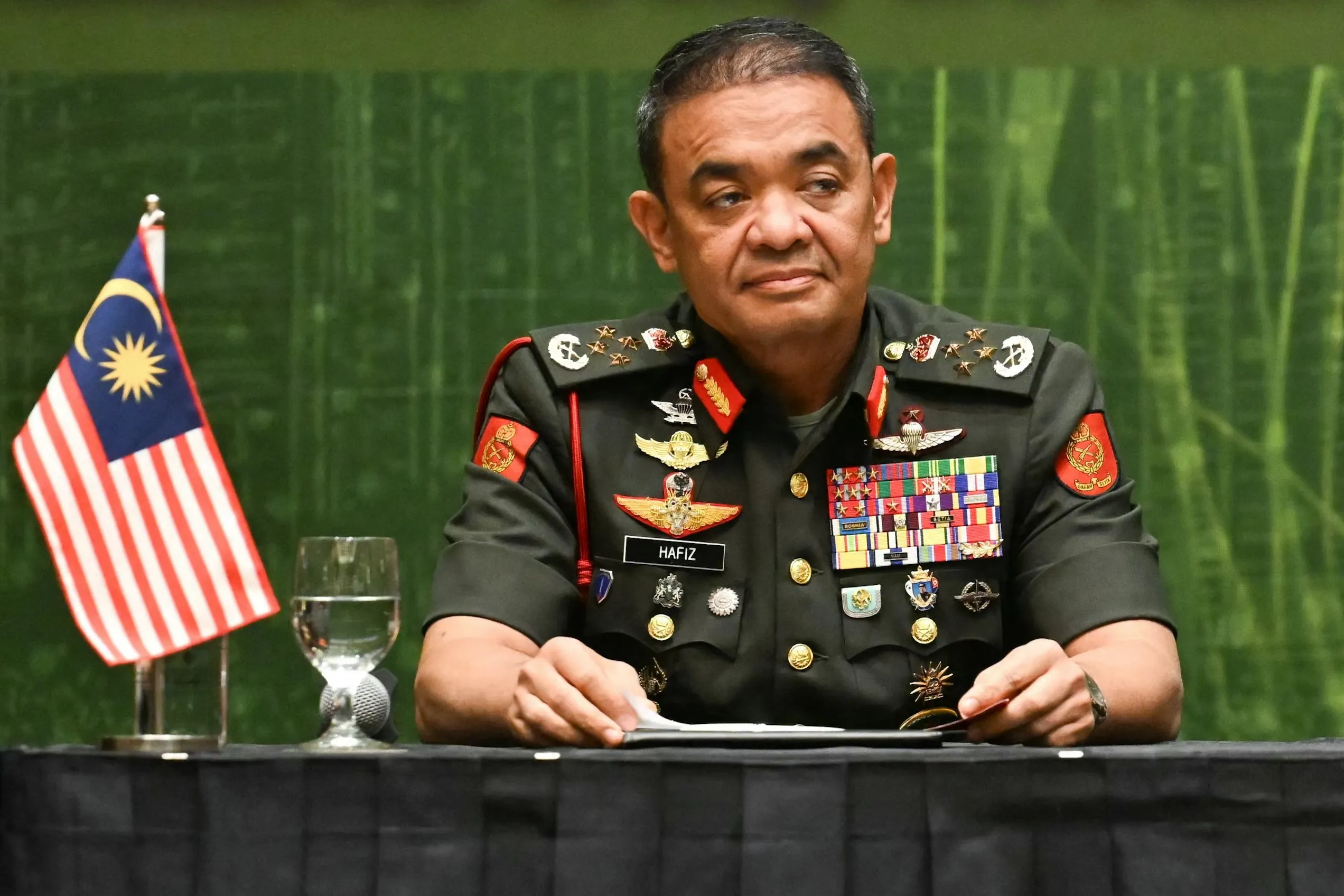
THE decision to place Army chief General Tan Sri Muhammad Hafizuddeain Jantan on leave pending investigations into allegations against him is far more than a routine administrative manoeuvre.
It represents a moment of institutional reckoning that reaches into the foundations of governance, accountability, and civil–military relations.
At stake is not merely whether misconduct occurred but whether the state is prepared to subject even its most powerful and traditionally insulated institutions to the same standards of scrutiny that apply elsewhere.
This question is not uniquely Malaysian; it echoes a global struggle over how democracies reconcile military authority with the rule of law.
For decades, Malaysia’s armed forces have occupied a distinctive place in public perception. They are widely regarded as disciplined, professional, and largely untouched by the scandals that have undermined trust in political and corporate elites.
This reputation has reinforced public confidence and legitimised the military’s role as a stabilising institution. However, such exceptional standing can also foster a belief that the armed forces exist beyond the reach of ordinary governance norms.
The current investigation challenges that belief by drawing a clear line between respect for an institution and exemption from accountability.
Placing a serving Army chief on leave during an investigation should be understood as a governance safeguard rather than a presumption of guilt. Temporarily removing a senior figure protects the integrity of the investigative process, prevents potential interference, and preserves institutional credibility.
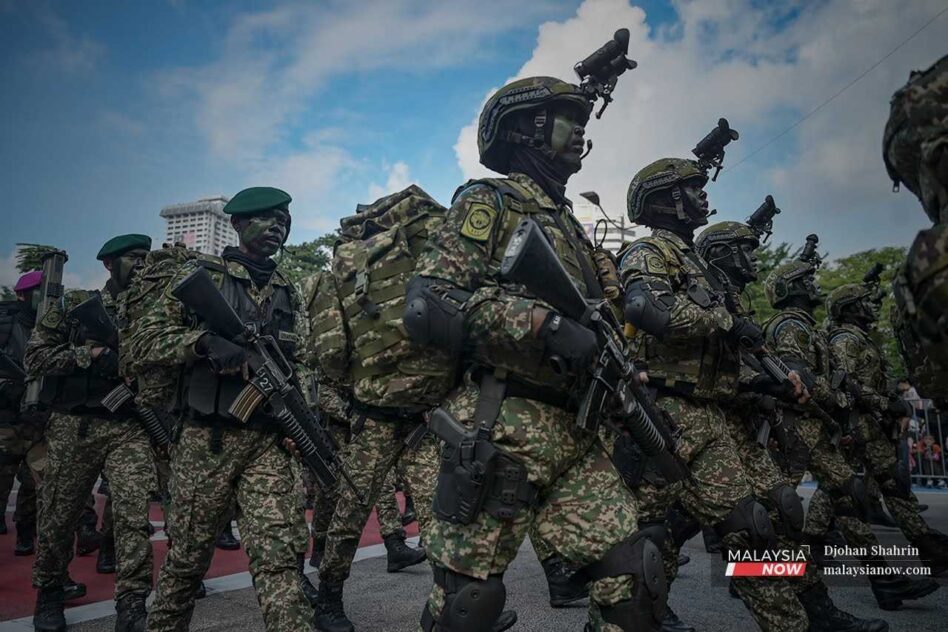
In many systems committed to the rule of law, such measures are standard practice. What makes this case significant is not the mechanism itself, but the level at which it is applied—the highest tier of military command, where scrutiny has historically been rare and politically sensitive.
The deeper significance lies in what this decision signals about evolving institutional norms. Historically, senior officials in powerful organisations often benefited from deference that translated into informal protection.
Investigations were delayed, quietly narrowed, or allowed to fade without resolution, reinforcing perceptions that accountability was selective.
By contrast, placing top military leadership under scrutiny suggests a growing recognition that institutional credibility depends on consistency rather than hierarchy. This shift mirrors broader global trends where public tolerance for opaque authority has steadily diminished.
International experience provides important context. Across the world, states have grappled with how to hold military leaders accountable without undermining operational effectiveness or morale.
In the United States, senior officers have faced investigation and prosecution for corruption linked to defence contracting and procurement fraud.
These cases exposed how vast budgets, technical complexity, and close relationships between the military and private contractors create fertile ground for abuse if oversight is weak. Crucially, accountability measures did not weaken the armed forces; they reinforced civilian control and restored public confidence in defence governance.
Latin America presents similar lessons. In Brazil, senior military officers have faced legal action for corruption related to infrastructure and defence projects. These cases challenged the long-standing perception of the military as a moral counterweight to civilian politics.
While controversial, they underscored the principle that professionalism does not preclude accountability. In fact, shielding the military from scrutiny was shown to undermine its legitimacy over time, particularly in societies with painful histories of military intervention in politics.
What unites these global examples is a shared structural reality: defence institutions operate in high-risk environments for corruption. Procurement processes are complex, financial stakes are immense, and decision-making authority is often concentrated among a small circle of officials.
Secrecy, justified by national security concerns, limits external scrutiny and reduces transparency. These conditions do not imply inevitable misconduct, but they demand stronger safeguards than in less sensitive sectors.
Accountability, therefore, is not an optional intrusion but an essential component of effective defence governance.
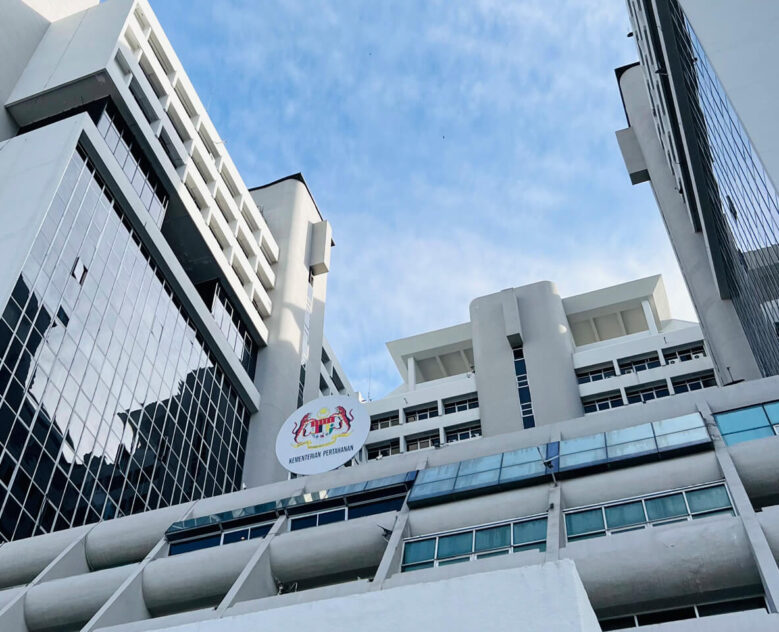
Malaysia has not been immune to these structural challenges. Past defence-related controversies, including failed or delayed procurement projects, have exposed weaknesses in oversight without fully resolving questions of responsibility.
In some cases, inquiries focused on technical failures rather than command accountability, reinforcing perceptions that enforcement stopped short of senior leadership.
The present investigation disrupts that pattern and raises expectations that accountability will no longer be confined to the periphery of military institutions.
The implications extend beyond legal outcomes into the broader realm of civil-military relations. In healthy democracies, armed forces derive legitimacy not only from operational competence but from their subordination to constitutional authority and civilian oversight.
Accountability strengthens this relationship by affirming that the military serves the state and the public, not itself.
Conversely, shielding the armed forces from scrutiny risks fostering insularity, entitlement, and eventual erosion of legitimacy – dynamics that history shows can be destabilising.
Yet symbolism alone is insufficient. The true significance of this moment will depend on process and follow-through. A thorough, independent, and transparently concluded investigation would reinforce confidence and signal institutional maturity.
A stalled or quietly abandoned process would do the opposite, confirming fears that accountability remains conditional. Around the world, failed military accountability efforts have often done more damage than none at all, deepening cynicism and weakening trust.
Equally important is what happens if irregularities are substantiated. Focusing solely on individual culpability risks obscuring deeper structural weaknesses.
Global experience shows that lasting impact comes from coupling accountability with reform: strengthening procurement rules, clarifying lines of authority, enhancing internal controls, and embedding civilian oversight mechanisms that respect security needs without sacrificing transparency.
Ultimately, this moment offers Malaysia an opportunity to align itself with global best practices in civil-military accountability. When scrutiny reaches the highest levels of military power, it does not weaken the state.
It strengthens authority by rooting it in legitimacy and deepening public trust. It also affirms that no institution, however revered, stands beyond the rule of law.
R Paneir Selvam is the principal consultant of Arunachala Research & Consultancy Sdn Bhd (ARRESCON), a think tank specialising in strategic national and geopolitical matters.
The views expressed are solely of the author and do not necessarily reflect those of MMKtT.
- Focus Malaysia.

RECENTLY, Housing and Local Government Minister Nga Kor Ming expressed dismay on his social media about littering on the streets of Bukit Bintang.
He also shared images of the city centre after the Christmas revelry, where rubbish lined walkways and corners in what should be one of Kuala Lumpur’s most presentable streets.
As someone who’s been actively doing community work in Bukit Bintang, I am not unfamiliar with the eyesore. This is why I fully support the Nga’s reminder that come 2026, the government will be enforcing littering laws more firmly.
Cleanliness is not just a cosmetic issue. It is part of the city’s user experience, just like safety, lighting, walkability and public order. When people step into a city centre, they form an impression within minutes.
Overflowing bins, pavements strewn with food wrappers, and food waste lining the roadside, even for short periods such as after a New Year’s countdown, leave the area feeling unpleasant.
Littering also has a real cost—one that residents and businesses pay twice. First, through assessment rates and taxes that fund daily clean-ups.
Second, through lost spending when people shun the place, tourists take fewer photos and shoppers cut their visits short. A messy street is bad for business, especially as we welcome Visit Malaysia Year 2026.
There is also a bigger picture. Less litter on the streets usually means we recycle more. It supports sustainability goals and reduces waste finding its way into drains and rivers.
Cities that are serious about the environment start with basic discipline. You cannot talk about climate goals while ignoring rubbish at your doorstep.
Strict enforcement of littering laws can certainly help. Many Malaysians often look up to Singapore for its cleanliness and civic behaviour. That is partly achieved through strict enforcement, which is something we should emulate.
But enforcement alone will not solve everything. This is also about mindset. We cannot demand First World facilities while keeping a Third World attitude. It is time we stop treating public space as someone else’s problem. That mindset must change. Public space belongs to everyone and we all have a duty to protect it.
Local authorities like the Kuala Lumpur City Hall (DBKL) have a role to play too. People are more likely to litter when bins are hard to find or already full. Hotspots need more bins at strategic locations, on top of strict enforcement, including using technologies like Artificial Intelligence.
Clean-up strategies can also be smarter. Anyone who lives or works in Bukit Bintang knows the pattern. After New Year countdowns, weekends or big events, rubbish piles up fast. Cleaning resources should match these peaks. Sufficient crew should be deployed immediately after crowds disperse.
Foreign visitors must also be part of the equation. Multilingual and tourist-friendly signages, especially on penalties for littering, help. Visitors usually follow rules when they understand them.
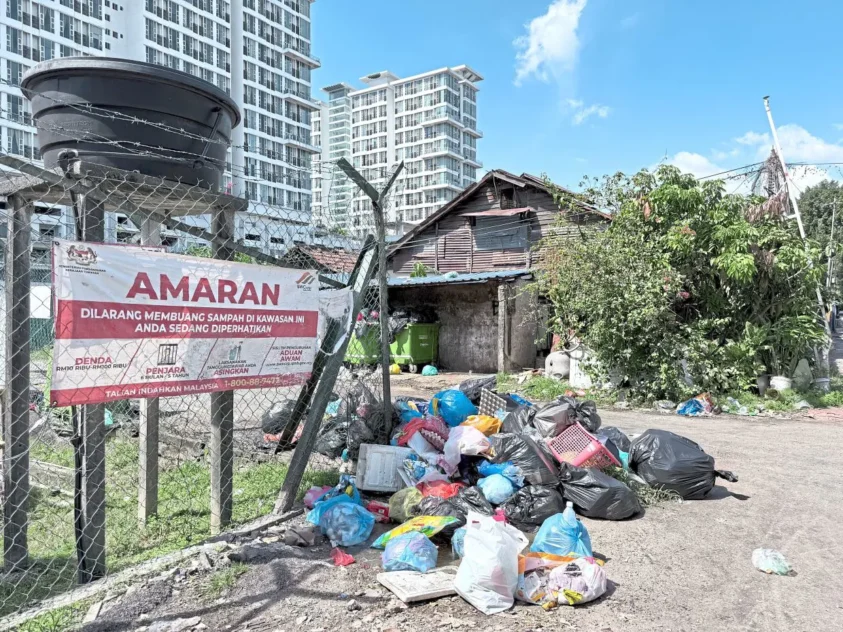
Nga was right to remind visitors that they, like Malaysians, are subject to fines of up to RM2,000 and 12 hours of community work if caught littering from 2026.
From personal experience, litter management in Bukit Bintang is a daily battle. I am sure this is not confined to only Bukit Bintang.
I have seen cleaners hard at work, only for the same spots to be littered again shortly after. It is frustrating but also shows how unfair it is if we don’t do something about it.
That is why firm enforcement matters. It sends a strong message that bad behaviour has consequences.
As the “heart” of the nation’s capital, Bukit Bintang can lead the way. In many respects, the area is Malaysia’s “face” to the world, one where many visitors would often visit. If discipline, enforcement and shared responsibility can take root in one of the country’s busiest districts, there is no reason why it cannot happen anywhere else.
Clean streets are not about image alone. They reflect who we are as a society. Keeping our streets clean is how we show that our values are not just talked about, but lived.
Ben Fong Kok Seng is the chairperson of the Bukit Bintang Parliamentary Zone Residents’ Representative Council.
The views expressed are solely of the author and do not necessarily reflect those of MMKtT.
- Focus Malaysia.
