


Malaysia stands today at a critical juncture in its nation-building journey. National unity and social harmony are increasingly strained by divisive rhetoric and insensitive labelling.
Derogatory references to South Indians as “botol kicap” (soy sauce bottle)and branding of non-Malays as “pendatang” (immigrants) are among the corrosive forms of language that persistently surface not only in chauvinistic circles, but even brazenly in the media and public domain.
These racially tinged narratives have been compounded most recently by controversies over the landholding status of long-established Hindu temples that date back to colonial Malaya.
They risk deepening mistrust and undermining the shared values and mutual respect among ethnic groups upon which our nation was founded.
As a nation shaped by its unique historical confluence of diverse cultures and yet shared aspirations, Malaysia must continually reaffirm the foundational principles upon which its sense of national affiliation and progress depend.
Central to this endeavour is a clear and honest recognition of our past, a principled commitment to justice in the present, and a collective vision for an inclusive future for every Malaysian.
We must begin by acknowledging historical truths with integrity and respect. Unity cannot be built on selective or distorted history; rather, it must be grounded in truth, justice, and mutual respect. A truthful nation must have the courage to acknowledge all its beginnings, and not merely the convenient ones.
Historical truths we must acknowledge
To begin with, let us acknowledge that the Orang Asli are the earliest inhabitants of Peninsular Malaysia who have lived on this land for tens of thousands of years. Their presence represents the foundational layer of our nation’s history. Our Orang Asli brothers and sisters are an integral part of our multi-tiered society.
As noted by Iskandar Carey in “Orang Asli: The Aboriginal Tribes of Peninsular Malaysia”, the Orang Asli occupy a “special position as the truly indigenous inhabitants” of the peninsula. He further emphasised that they lived in the region “before the arrival of the other races, that is, the Malays, the Chinese and the Indians”.
Centuries later, the Malays (early migrants) emerged as the definitive people of the peninsula, shaping its political institutions, cultural identity, and systems of governance through the establishment of enduring sultanates. The rise of powerful polities such as the Malacca sultanate in the fifteenth century marked a turning point in the consolidation of Malay political authority and cultural influence in our society.
In modern times, the Malays have constituted the core of our nation’s political leadership since independence. Our civil service has been largely drawn from the Malay community.
So too have been our army and police, who help to secure our borders and ensure that law and order prevail. Malaysia’s constitutional monarchy, which is rooted in the system of Malay rulers, serves as a bedrock of stability and harmony in our often-fractious society.

This dual recognition is not contradictory. Rather, it reflects the richness, depth, and complexity of Malaysia’s historical evolution and our uniquely layered multi-ethnic heritage.
Contributions of all communities
Malaysia, as it exists today, is the product of the contributions, sacrifices, and aspirations of diverse communities. Over time, people of different ethnic, cultural, and religious backgrounds have come together – through labour, enterprise, intellect, and service – to build and sustain the nation.
From early trade networks and colonial economic development to post-independence nation-building, the contributions of multiple communities are the defining hallmark of our national identity.
Non-Malay communities (later migrants) have played a vital role in Malaysia’s nation-building and economic development.
Chinese entrepreneurs and labourers were central to the growth of tin mining, commerce, and urban centres, laying the foundations of modern industry and trade. Indian communities contributed significantly to plantation agriculture, public works, railways, security, and the civil service.
Over time, both communities expanded into business, education, medicine, law, and the professions, strengthening the nation’s human capital.
Alongside other minority groups and together with the Malays, they enriched Malaysia’s cultural diversity, stimulated economic growth, and contributed to the emergence of a dynamic and resilient multi-ethnic society.
Equally, East Malaysians, including the Ibans, Kadazandusun, and many other indigenous communities of Sabah and Sarawak, have played a vital role in nation-building. Their rich cultural heritage, stewardship of the land, and contributions in public service, defence, and governance have strengthened the Malaysian federation.
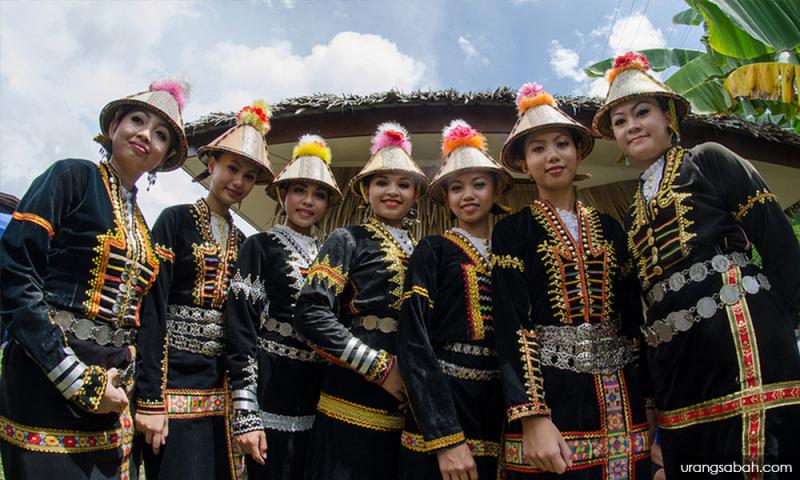
Any meaningful call for unity must fully recognise and honour their rightful place as equal partners in the nation’s past, present, and future.
Any narrative that diminishes, ignores, or excludes these contributions does a disservice to truth and undermines the very foundations of our national unity.
Eschewing the label ‘pendatang’
It is therefore both unjust and historically unsound to label non-Malays as pendatang in a derogatory manner that questions their legitimacy, belonging, or citizenship. Such a label is not only divisive; it is deeply damaging to the project of nation-building that remains challenging.
A mature and confident society does not foster unity by devaluing others. It nurtures unity by recognising shared belonging, mutual dignity, and common purpose.
Many non-Malay families, particularly the Malacca Baba-Nyonya, Portuguese Eurasians, and the Malacca Chettis, have lived in this country for generations.
They have worked, sacrificed, paid taxes, defended the nation, developed institutions, and contributed to every sphere of national life. They are not outsiders to Malaysia’s story - they are an integral part of it.
Faithful to constitutional vision
Let us remain faithful to the vision of our founding fathers and the Malay rulers: a nation that is secular in character and allows freedom of worship, multi-ethnic in composition, and ultimately just and non-discriminatory.
The framework that binds this diverse society into a cohesive nation is the Federal Constitution. It remains the supreme law of the land, providing both the structure of governance and the moral compass of the nation. It recognises the special position of the Malays and the indigenous peoples under Article 153.
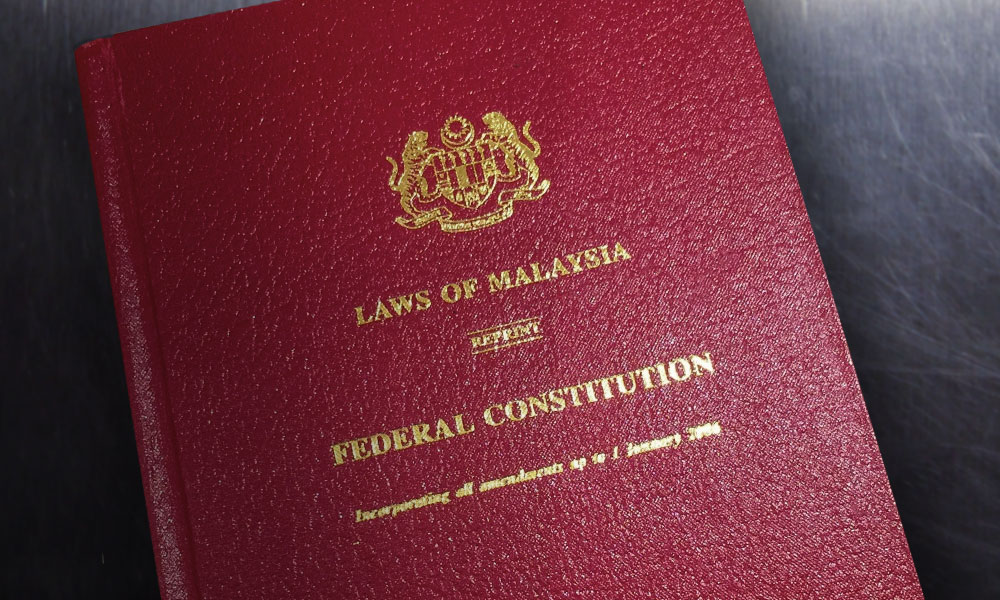
At the same time, it also guarantees equality before the law under Article 8 and citizenship rights irrespective of ethnicity. It is within this judiciously balanced constitutional framework that Malaysia’s identity as a multi-ethnic, inclusive, and just society must be understood and preserved.
A shared homeland, a shared vision
In light of these realities, we must affirm that Malaysia is a shared homeland. It does not belong exclusively to any single group, but to all who are bound by citizenship, loyalty, and a shared commitment to its future.
Unity, therefore, cannot be built on exclusionary narratives or bigoted and divisive rhetoric. It must be grounded in truth, mutual respect, and a genuine appreciation of diversity as a source of strength.
Malaysia urgently needs to rekindle its shared national vision, one that rises above ethnic suspicions and sectarian politics. Malaysia’s vision should be to become a just, inclusive, and progressive nation where every citizen, regardless of ethnicity or religion, feels a genuine sense of national belonging.
Such a vision must inspire all citizens to see themselves first and foremost as Malaysians, bound together by a common destiny. We must learn to work together, not as competing ethnic communities, but as partners in a common national enterprise.
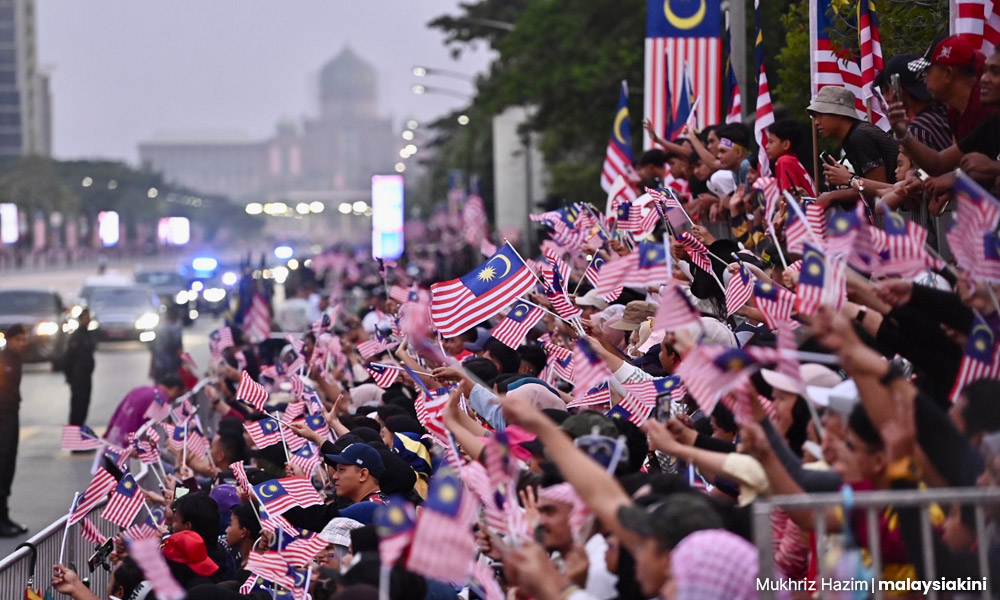
No community can build Malaysia alone. And no community should be made to feel that it does not fully belong to the nation.
What Malaysians must do
To translate this vision into reality, Malaysians must embrace certain fundamental guiding principles. There must first be a commitment to a truthful and inclusive historical understanding, one that acknowledges the contributions of all communities fairly and accurately.
Respect for diversity must be practised consistently in everyday life, transcending differences of ethnicity, religion, and culture.
Citizens must consciously reject divisive narratives that promote prejudice, exclusion, or superiority, and instead uphold constitutional values that define rights and responsibilities within a shared legal framework.
Above all, Malaysians must actively build bridges across communities, fostering trust, empathy, cooperation, and a common national purpose.
The role of government
The government bears a profound responsibility in shaping a united nation. It must ensure that education, particularly the teaching of history, reflects a balanced, accurate, and inclusive national narrative.
History can unite a nation, but only if it is narrated truthfully and inclusively. Scholars such as Azmi Sharom have cautioned against narrow historical interpretations that undermine critical thinking and inclusiveness.
Equally important, the government must uphold justice and equality through the impartial application of laws, while honouring constitutional provisions. Public policies should promote national integration and social cohesion rather than deepen divisions.
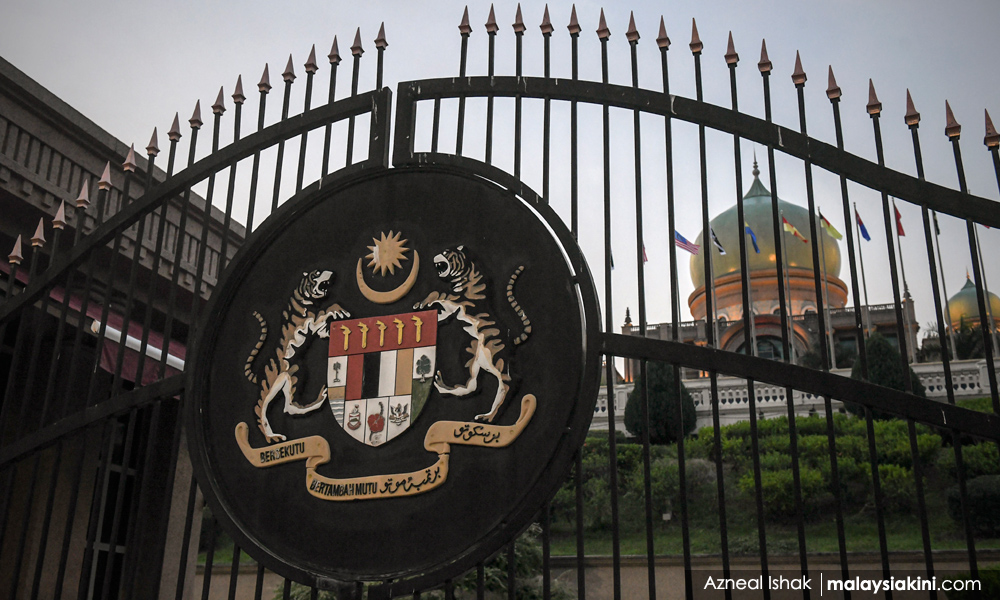
National leaders, in particular, must demonstrate integrity, reject divisive politics, and articulate a unifying vision that inspires collective purpose and national confidence.
Truth, courage, and collective will
Ultimately, a united Malaysia will not emerge by accident. It must be consciously and consistently built through courage in confronting uncomfortable truths, discipline in upholding justice, and sincerity in fostering inclusiveness.
The responsibility lies not only with institutions of governance but also with every citizen who calls this nation home.
If Malaysia is to thrive in the years ahead, it must remain steadfast in its commitment to unity in diversity.
A national pledge
Let this be our pledge:
To honour the truth of our shared past.
To uphold the principles of justice and equality.
To reject discord and embrace unity.
To work together for the common good.
And to build a Malaysia that is not only prosperous and stable, but also just, inclusive, and truly united – for this generation and those to come. - Mkini
RANJIT SINGH MALHI is an independent historian who has written 19 books on Malaysian, Asian and world history. He is highly committed to writing an inclusive and truthful history of Malaysia based upon authoritative sources.
The views expressed here are those of the author/contributor and do not necessarily represent the views of MMKtT.

No comments:
Post a Comment
Note: Only a member of this blog may post a comment.